7 Best Chatbase Alternatives in 2026 (Free and Paid)
Marvin tested ten Chatbase alternatives, including Botpress, Chatfuel, and Yellow.ai, weighing customization control, integrations, pricing, and support quality for growing teams.


A customer asked a Chatbase bot for a refund that fell outside the written policy. The bot explained the policy and opened a ticket, which is exactly what it was built to do. After the chat ended, the follow-up email, CRM update, and customer call all went back to a human.
Two more limits showed up during the same test. Stronger AI models used more message credits per reply, so the monthly plan ran out faster on busy days. Every multi-step task also had to be built as a list of written steps, with no canvas to map the conversation.
Was there a tool that could take on more of that work? To find out, I tested many Chatbase alternatives on the same support job. I trained each tool on one test help center, asked the same return, refund, and order questions, and did not let any tool approve an out-of-policy refund. I also checked every pricing page against the live plans.
Six tools stood out for the chat itself, each for a specific kind of team, and Lindy covered the support work that starts after the chat ends.
Here is what I found.
Best Chatbase alternatives at a glance
Why do people leave Chatbase?
Teams leave Chatbase because message credits run out quickly, multi-step logic lacks a visual canvas, and actions remain within the support chat. Chatbase is still a fast way to launch a bot trained on your documents, as our Chatbase review shows. These three limits push growing teams toward other tools.
These are the limits that come up most often:
- Message credits run out quickly: Hobby costs $40/month for 700 message credits, and Standard costs $150/month for 4,000. Stronger AI models use more credits per reply, so a busy month can drain a plan early. Extra credits cost $40 per 1,000, which makes monthly costs hard to predict.
- No visual flow builder: Multi-step tasks in Chatbase are built as Procedures: a list of written steps with simple if/else branches. No canvas shows each step of the conversation, so teams that want to map, test, and branch complex flows visually turn to builders such as Botpress or Voiceflow.
- Actions stay inside the chat: Chatbase Actions can collect details, create tickets, book meetings, and call your own APIs, and the number of Actions per agent depends on your plan. Nothing kicks off on its own once the chat ends, though, so follow-up work like CRM updates and customer calls still lands on your team.
How I tested the Chatbase alternatives
I tested each Chatbase alternative on five criteria: customization, integrations, pricing, human handoff, and in-chat actions. I trained every tool on the same test help center for a small support team and asked the same questions about returns, refunds, and orders. A refund request outside the written policy then showed which tools could finish the job and which ones needed a human.
Here is how each criterion was tested:
- Customization: Control over each conversation step varied widely between tools. Botpress and Voiceflow let me design every step on a visual canvas, while Chatling and Tidio produced a working bot from my help pages with no flow to draw.
- Integrations: Once connected to the systems the support team already uses, eesel AI read past tickets from a test Zendesk account, and Molin AI learned a full Shopify catalog. Lindy found a customer record in HubSpot from a single Slack message.
- Pricing: Every tool charges in its own way, whether per plan, per credit, per conversation, or per user. For that reason, the cheapest option changes with your monthly chat volume, so we compared each free tier and starting price against how costs grow with use.
- Support and handoff: To test handoff, each bot was sent a question it could not answer. Tidio and Chatling passed the chat to a live agent with the full history attached, and Chatling also added an AI summary at the top.
- Actions: During each chat, the bot was asked to complete a task, such as correcting a shipping address or checking an order. Botpress updated a test order table, and Molin AI returned a tracking link. Lindy drafted a reply and waited for my approval before sending it.
Six tools held up well enough to recommend to a specific kind of team, and Lindy handled the work that followed the chat.
Free Chatbase alternatives
Chatling, Botpress, and Tidio are the best free Chatbase alternatives. Chatling's free plan includes unlimited chats and 200 AI credits a month, and Botpress’s free plan includes 100 conversations, 3 seats, and 3 AI agents. Tidio's free plan covers 50 billable conversations a month, meaning chats, emails, or social messages a human agent replies to, plus 50 one-time Lyro AI conversations. Botpress also has an older open-source edition that can be self-hosted at no cost.
Best Chatbase alternatives with visual flow builders
Botpress and Voiceflow are the best Chatbase alternatives for teams that want to design each conversation on a visual canvas. Both tools support multi-step logic and custom code, and both connect to your helpdesk. Botpress suits teams with a developer on hand. Voiceflow suits larger CX teams that want a single agent for chat and voice.
1. Best Chatbase alternative for visual flow building with code control
Botpress: What is it?
Botpress is an AI agent platform for customer support. It is a Chatbase alternative for teams that want to see and design every step of a support conversation on a visual canvas. Each bot is built in Botpress Studio or described in plain language through Botpress Viber.
Why I picked it
I rebuilt a Chatbase return-policy bot in Botpress Studio to see how the move would work for a small support team. Each conversation step appeared as a separate card on a single canvas, so the entire flow was visible at once. When the refund question needed an order check, I added a short code card inside the flow and linked it to a test order table.
I then asked the bot to correct a shipping address on a test order. It confirmed the order number, checked the table, updated the record, and replied with the new address in the same chat. Each decision the engine made was displayed in the emulator log next to the canvas. Because of that log, I could see why the bot gave every reply before a real customer ever saw it.
Key features
- Botpress Studio: The visual builder maps each conversation as connected cards. The Team plan adds real-time collaboration on the same bot. A support lead can edit the replies while an engineer edits the logic behind them, so both roles finish one build together.
- Autonomous Engine: The engine reads your written instructions and the full conversation, then chooses the next step on its own. A bot can ask a follow-up question and complete an action in the same chat. Every decision stays inside the rules your team has written.
- Tables and Knowledge Bases: Knowledge Bases hold the help articles and documents that a bot answers from. Tables store structured records, such as orders or account details, that the bot can read and update during a chat. You can complete a refund or address change without a separate database.
- Helpdesk handoff and Botpress Desk: Botpress connects to an existing Zendesk or Intercom helpdesk with no ticket migration. Teams without a helpdesk can use Botpress Desk as a full ticket system. Every escalated chat arrives with the conversation history and the troubleshooting steps already attempted.
Limitations
Non-developers face a steeper learning curve once a bot needs code cards or API calls, which is a common reason teams compare Botpress alternatives. The older open-source edition can be self-hosted, but your own team must then install, secure, and update it. The Free plan is capped at 100 conversations with no top-ups, so a production bot needs a paid plan.
Pricing
Botpress charges per plan, with no per-seat cost. The Free plan costs $0 and includes 100 conversations, 3 seats, and 3 AI agents, with no top-ups. Plus is $189/month and includes 250 conversations a month, $25 in AI usage, and unlimited AI agents. The Team plan is $939/month and includes 1,500 conversations per month, $150 in AI usage, and unlimited seats. Enterprise pricing is custom.
2. Best Chatbase alternative for chat and voice agents in one project
Voiceflow: What is it?
Voiceflow is an AI agent platform for customer experience teams. It is a Chatbase alternative for teams that want a single agent for chat and voice. Each agent is built in a visual builder and runs simultaneously across the web, WhatsApp, SMS, and phone calls.
Why I picked it
I built a test support agent in Voiceflow that answered product questions via web chat and over the phone for the same project. An agentic playbook handled open questions and followed my global instructions. For refund requests, I used a scripted workflow, so every customer followed the same approval steps in the same order.
Before anything reached a live customer, I moved the agent through separate development, staging, and production environments. I first tested every change in staging, and LLM-powered evaluations scored each test conversation against the goals I set. I could see which replies passed and which needed work, so I built each new version of the agent on test results.
Key features
- Agentic playbooks and scripted workflows: One agent can mix free-form AI answers with fixed, step-by-step workflows. Open questions are answered flexibly, while tasks such as refunds or identity checks follow the exact order your team defines, under one set of global instructions.
- Omnichannel agents: A single agent operates across web, app, WhatsApp, SMS, and voice simultaneously. Customers receive the same answers across all channels, and your team maintains a single agent instead of a separate bot for each channel.
- Observability suite: LLM-powered evaluations score conversations at scale and show pass rates over time. Teams can review a single conversation in detail or track performance across thousands of conversations, which helps them decide what to change in the next version.
- Model choice and environments: Teams can choose models from the largest LLM providers or bring in their own model, so the agent is not locked to a single vendor. Separate development, staging, and production environments let teams test every change before it goes live.
Limitations
Voiceflow doesn't list prices on its pricing page, so the cost of a live agent remains unknown until a demo or trial account. Billing is based on usage, which makes monthly costs harder to predict before launch. The platform is built for larger CX teams, so a small team that only needs a simple FAQ bot may find the setup heavier than it needs.
Pricing
Voiceflow does not list prices on its pricing page. The page offers two entry points: agencies and partners get a free trial with no credit card and pay based on usage, while businesses book a demo to get a price. Inside the product, Voiceflow’s billing docs name four plans: Free for testing, Pro for single builders, Business for growing teams, and Enterprise with SSO and private cloud hosting.
Best Chatbase alternatives for support and live chat
Tidio and Chatling are the best Chatbase alternatives for small teams that want AI answers and live chat in one place. Tidio suits online stores that need a full helpdesk. Chatling suits teams that want a free website chatbot with no code.
3. Best Chatbase alternative for live chat and AI support in one inbox
Tidio: What is it?
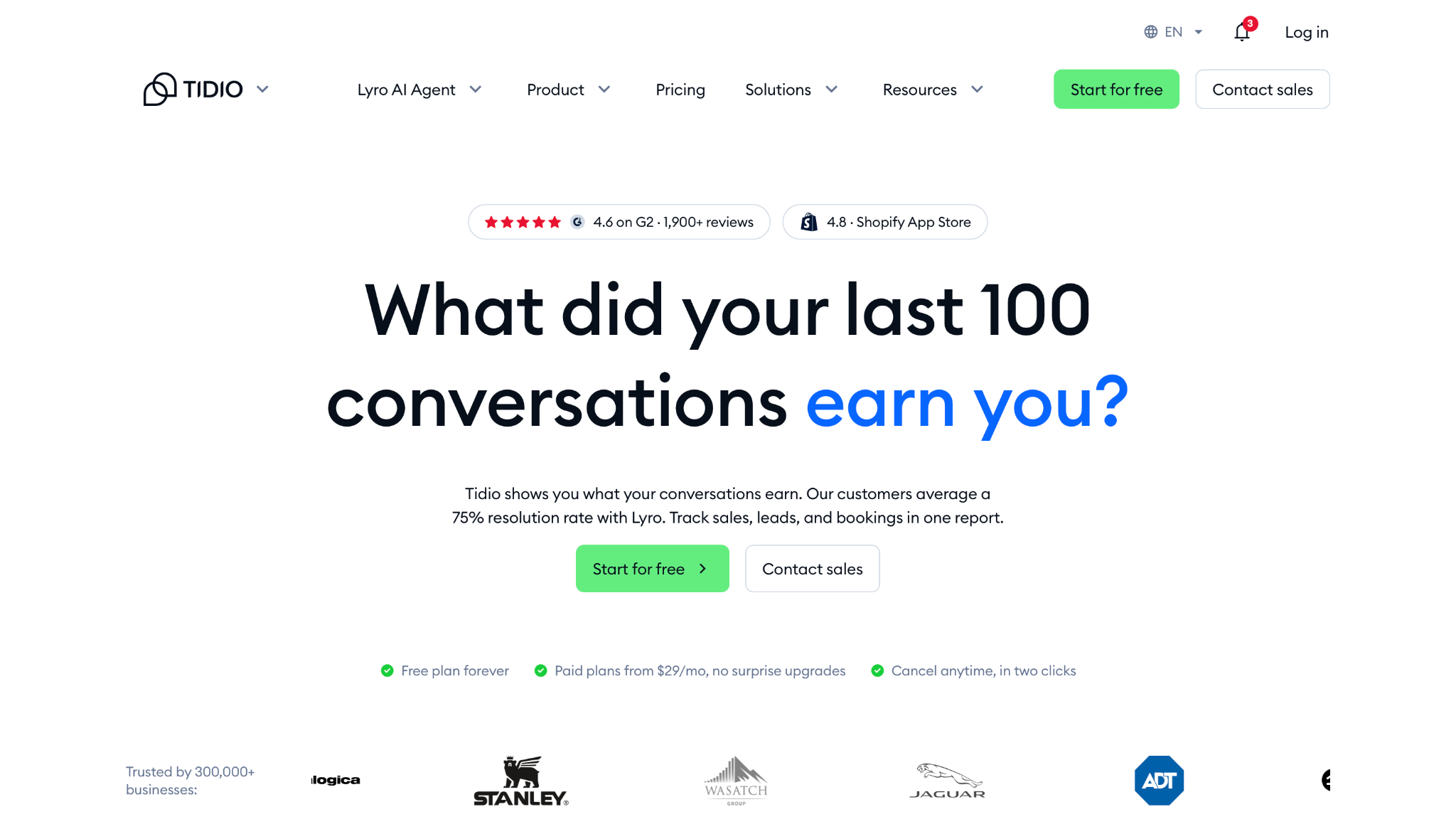
Tidio is a customer service platform that combines live chat, a helpdesk, and an AI agent called Lyro. It is a Chatbase alternative for small and mid-sized stores that want AI answers and human agents in the same inbox. Conversations from web chat, email, WhatsApp, Instagram, and Messenger all arrive in one place.
Why I picked it
I trained Lyro on a test store by running the website scraper on its help pages, and it answered shipping and return questions within the same session. When a test customer requested a refund outside the written policy, Lyro transferred the chat to a live agent in the same inbox. The agent saw the full conversation and replied, so the customer did not have to repeat anything.
I then added a Flow from the template library to collect quote requests from visitors on a product page. The visual builder showed each step of the Flow, which started when a visitor took a specific action on the page. Tidio also counts a conversation as billable only when a human agent replies, so the answers from Lyro and Flows did not use the human conversation quota.
Key features
- Lyro AI Agent: Lyro learns from uploaded FAQs, a website scraper, or imported Zendesk articles, then answers follow-up questions in natural language. It can also perform recurring tasks through Actions and hand difficult chats to a human with the history attached.
- Flows: Tidio builds no-code automation paths on a visual canvas. Each Flow starts when a visitor takes a specific action, such as viewing a product page, and it can collect data, request quotes, or handle missed conversations while agents are offline.
- AI-powered helpdesk: Emails, live chats, and social messages are turned into tickets and assigned to available agents. Tidio filters incoming tickets automatically and lets teams set ticket priority, so urgent requests are easier to find and answer first.
- Native Shopify actions: From the Growth plan, agents can view and act on Shopify order data inside the chat. Paid Lyro quotas also include product recommendations, so the AI agent can suggest items while it answers a customer's query.
Limitations
Lyro is billed separately from the helpdesk, and the 50 free Lyro conversations on every account are a one-time allowance. Lyro Connect, OpenAPI, and departments are reserved for the Plus plan, which starts at $300/month. Self-serve plans are capped at 10 seats, so larger support teams need a custom plan.
Pricing
Tidio has a Free plan with 50 billable conversations a month. Starter is $29/month with 100 billable conversations, and Growth starts at $59/month with 250 billable conversations. Plus starts at $300/month plus usage, and Premium has custom pricing. The Lyro AI Agent is billed separately on every plan.
4. Best Chatbase alternative for a free no-code website chatbot
Chatling: What is it?
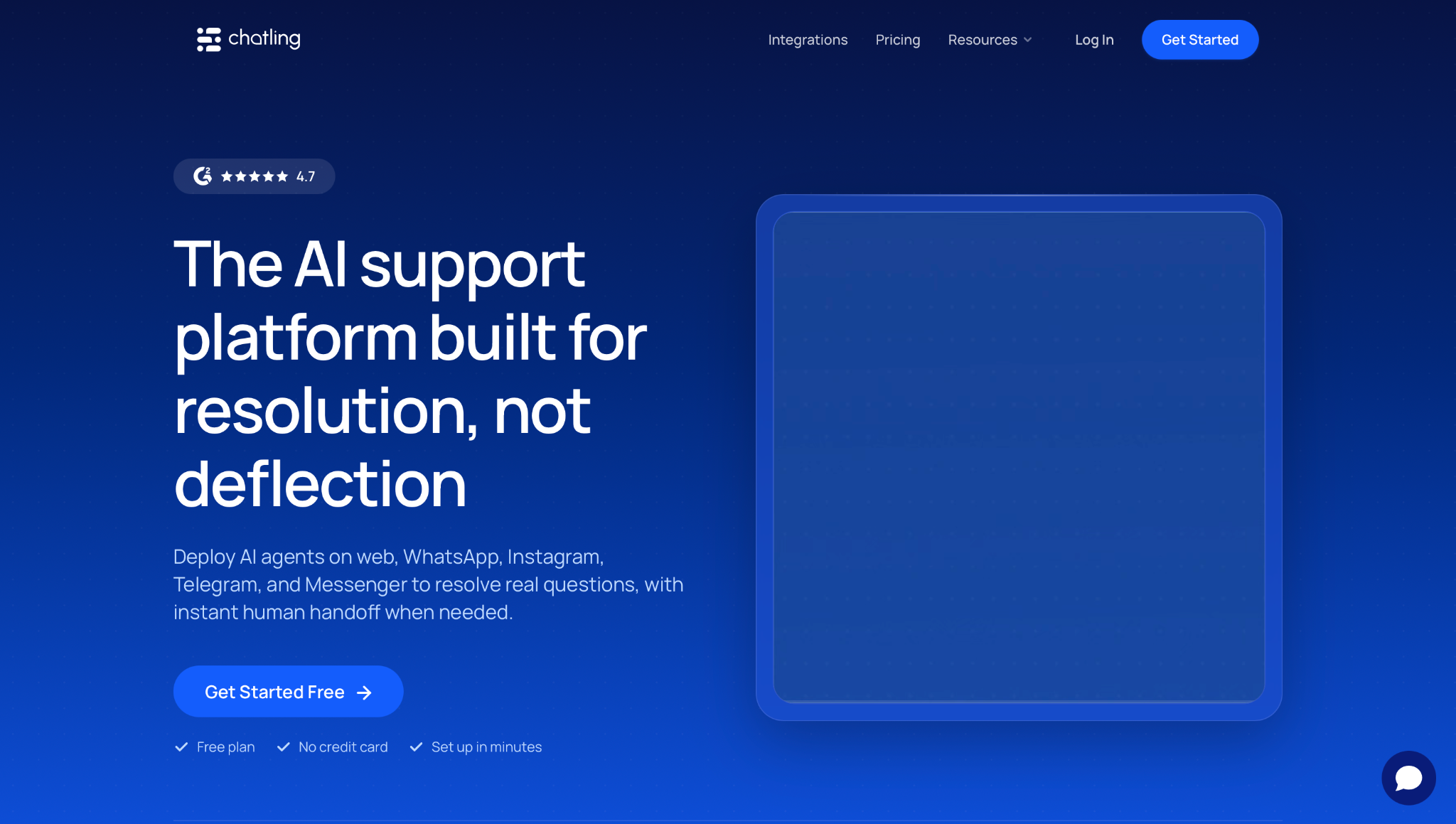
Chatling is a no-code AI support platform for small teams. It is a Chatbase alternative with a free plan that includes unlimited chats. Each AI agent learns from your website and docs, then answers customer queries via web chat, WhatsApp, Instagram, Messenger, and Telegram.
Why I picked it
I connected a test help center to Chatling, and the AI agent answered its first questions in the same session. A visual builder sat beside the knowledge base, so I added a lead-capture step and a send-email action on a paid plan without writing any code. I then switched the agent from one AI model to a lighter one, and the answers stayed accurate, while each reply used fewer credits.
The human handoff test went well. When a test customer asked for something outside the agent's knowledge, the chat moved to the live chat inbox. An AI summary of the conversation appeared at the top, so the agent who joined had the full context before replying. For a small team comparing options on our list of customer service chatbots, that setup is easy to run from day one.
Key features
- Auto-sync knowledge base: Chatling resyncs your website, docs, and help center on a schedule. The sync runs weekly on Starter and daily on Growth, so the agent's answers are based on the latest version of each page without manual uploads.
- Visual builder and workflows: The builder uses blocks for messages, captured responses, conditions, and actions. Workflows run multi-step tasks when a conversation, contact, or action event occurs, so routine follow-ups are completed without an agent.
- Model choice: Paid plans offer 36 AI models from OpenAI, Anthropic, Google, and others. Each model uses a different number of credits per reply, so a team can pick a lighter model for simple questions and a stronger one for complex answers.
- Handoff with AI summaries: On Growth and Scale, Chatling writes a short summary of the conversation when a chat moves to a human. Those plans also add round-robin routing, so handed-off chats are evenly distributed among available agents.
Limitations
Credits run out faster on stronger models, since some models use 25 credits per reply and others use as little as 0.5. The Free plan supports web chat only and includes 1 seat. WhatsApp, Instagram, and Zapier start on Starter. HubSpot requires Growth or higher.
Pricing
Chatling has a Free plan with unlimited chats and 200 AI credits a month. Starter is $25/month, Growth is $75/month, and Scale is $295/month, with more credits, agents, and seats on each tier. Extra seats cost $10/month each.
Best Chatbase alternatives for helpdesks and online stores
eesel AI and Molin AI are the best Chatbase alternatives for teams that need AI built into an existing system. eesel AI works inside Zendesk, Freshdesk, and Intercom, so tickets stay in the helpdesk your team already uses. Molin AI connects to your online store, so it can recommend products and handle orders in chat.
5. Best Chatbase alternative for AI inside your existing helpdesk
eesel AI: What is it?
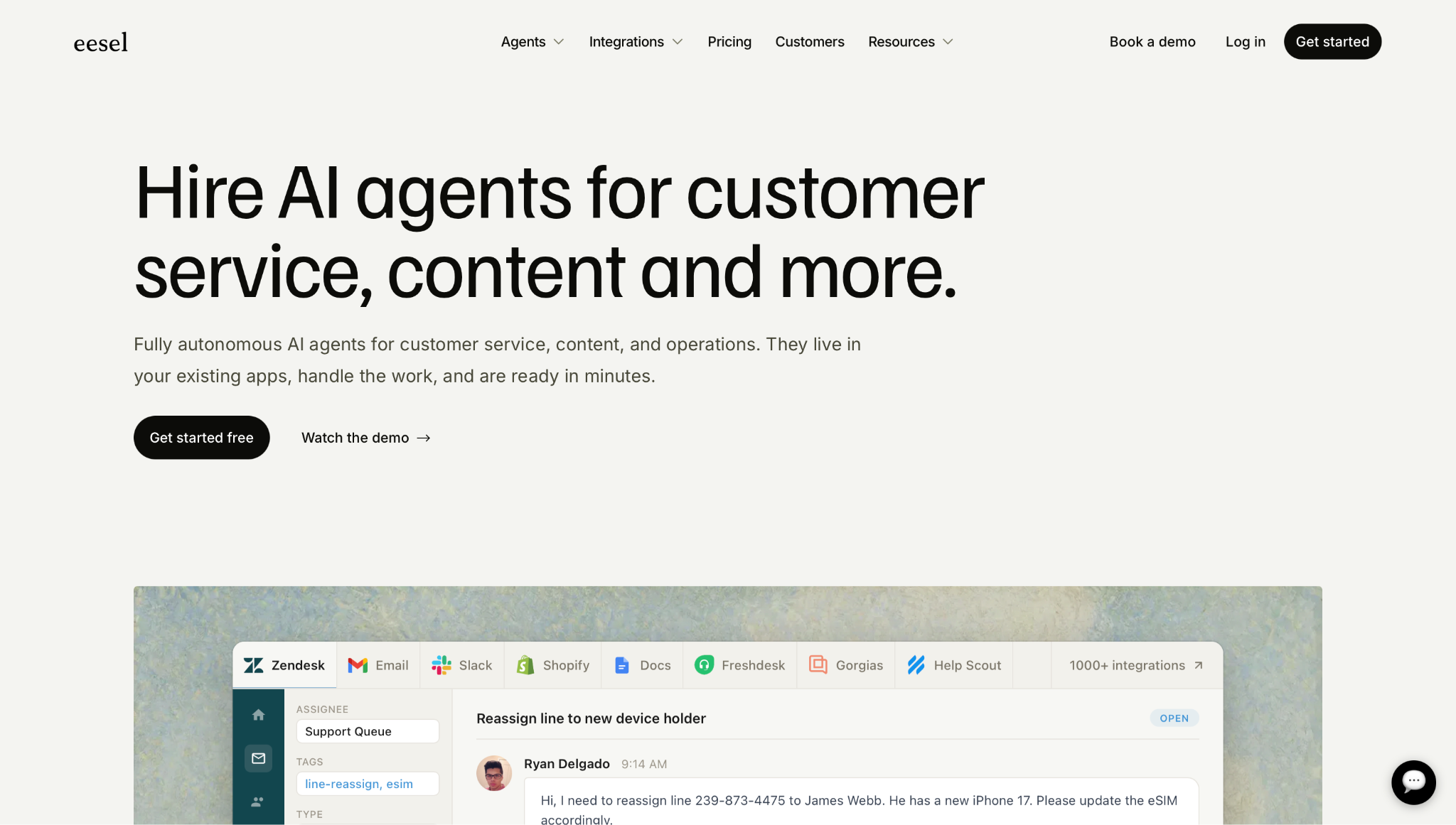
eesel AI is an AI agent platform that works inside the helpdesk your team already uses. It is a Chatbase alternative for teams on Zendesk, Freshdesk, or Intercom that want AI replies without a new support tool. The agent learns from past tickets and help docs, then answers tickets, chats, and Slack messages.
Why I picked it
I connected eesel AI to a test Zendesk account, and the agent read the help articles and past tickets in a single setup. I ran it in draft mode first, so every reply waited for my review before a customer saw it. When one draft missed a detail about our return window, I corrected the agent, and it saved the fix to its instructions. Then, when I retested the same question, the agent gave the corrected answer.
I wrote my tone and rules into the agent’s instructions, including a rule that refunds above a set amount required my approval. The agent applied that rule to every refund ticket in the test. Once the drafts were accurate, I switched them to auto-respond.
Key features
- Helpdesk-native agent: eesel AI connects to Zendesk, Freshdesk, Intercom, Jira Service Management, Salesforce Service Cloud, and Front. It reads from your helpdesk and writes replies back to it, so tickets stay in the system your agents already use.
- Draft mode and coaching: New agents can draft replies for human review before they send anything. When a team corrects an answer, the agent saves the fix to its instructions and uses it on similar tickets from then on.
- Written instructions: Teams set the agent’s tone, rules, and escalation steps in written instructions, and the agent applies them to every new ticket.
- Every channel on every plan: Each plan includes helpdesk, Slack, chat bubble, email, and browser extension channels. Plans also include unlimited agents and seats, as well as scheduled agents and reports.
Limitations
eesel AI’s SOC 2 Type II audit is still in progress, which may slow a security review. SSO and MFA cost extra unless you move to Enterprise. The Free plan is a 100-credit trial, so ongoing use requires the Teammate plan at $299/month.
Pricing
eesel AI offers a free trial with 100 credits and no card required. The Teammate plan is $299/month for 500 credits, and each ticket or chat uses 1 credit, regardless of how long it runs. Enterprise pricing is custom. Every plan includes unlimited agents and seats.
6. Best Chatbase alternative for e-commerce product and order questions
Molin AI: What is it?
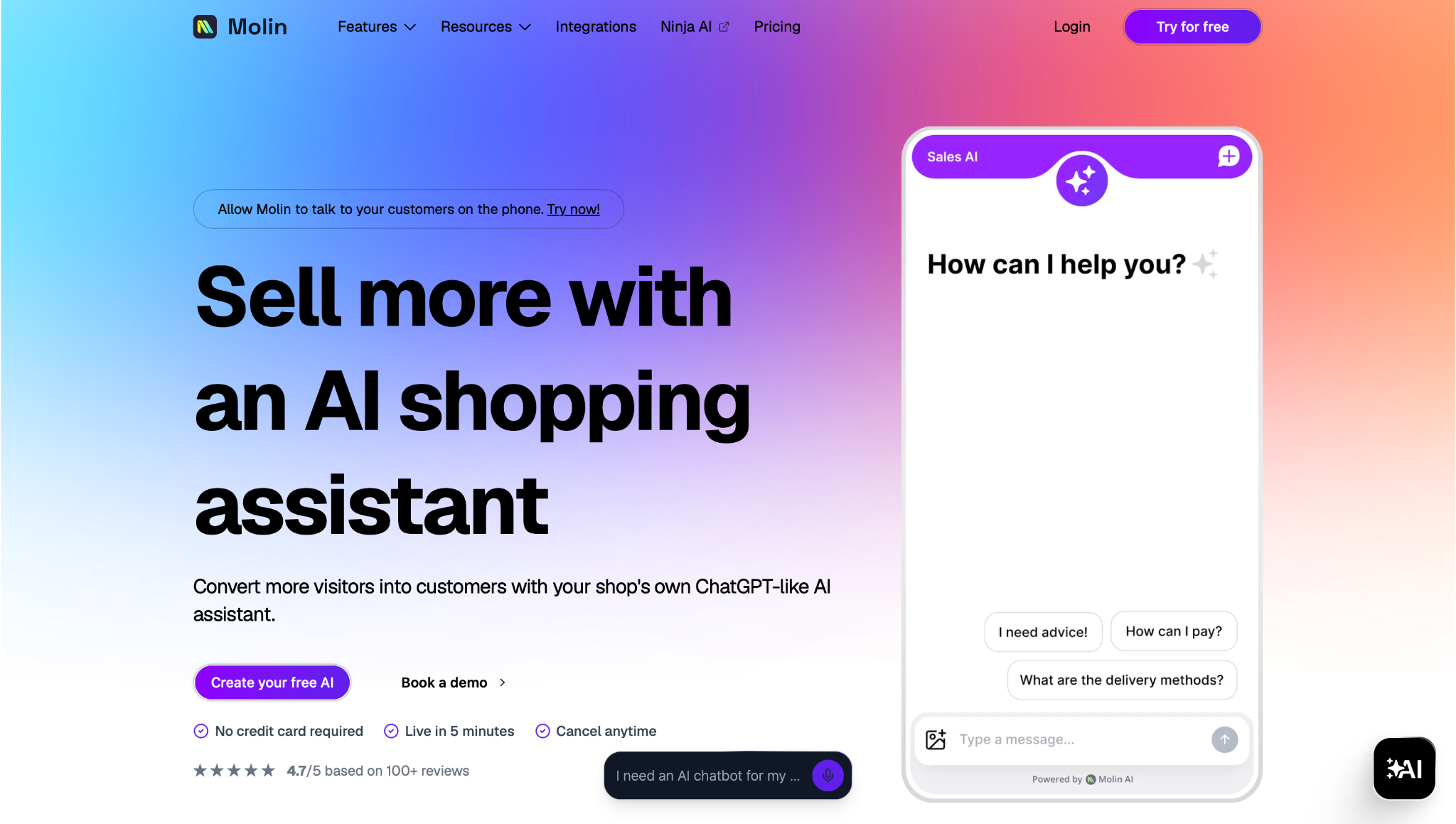
Molin AI is an AI shopping assistant and support agent built for online stores. It is a Chatbase alternative for e-commerce teams who want a single AI to answer product questions and handle orders. Molin learns your product catalog, then recommends items, tracks orders, and processes returns in chat.
Why I picked it
I connected Molin to a test Shopify store, and it learned the full product catalog in one setup. When I asked for a warm jacket within a set price range, it recommended two matching products, each with a link. The answers came from live catalog data, since Molin refreshes product information on its own.
Order requests worked just as smoothly. I asked about a test order, and Molin returned the status and tracking link in the same chat. I then switched languages halfway through the conversation, and Molin replied in the new language while maintaining the order context. When I wanted to answer a customer myself, I took over the chat from the live chat view.
Key features
- AI product recommendations: Molin reads your entire product catalog and suggests items that match each shopper's question. Product data refreshes automatically, so prices and stock levels stay accurate. Plans cover 2,000 products on Startup and up to 50,000 on Scale, so even a large store can be searched through one chat window.
- Order updates, refunds, and returns: After you connect your store, Molin looks up order status and tracking links whenever a customer asks. On the Growth plan and above, Molin also sends order updates and tracking codes, and Scale adds order changes and cancellations. Many "where is my order" and return requests are closed in chat and never reach your support inbox.
- 90+ languages: Molin detects the language of each message and replies in that language. If a shopper switches languages partway through a chat, Molin switches too, keeping the full context of the conversation. A store that sells in several countries can therefore run one AI agent where it would otherwise need separate support teams.
- Live chat takeover and lead capture: Your team can step into any conversation from the live chat view and take over from the AI at any moment. When a visitor isn't ready to buy, Molin asks for an email address or phone number and sends that lead to you, so you don't lose interested shoppers after they leave the site.
Limitations
Molin is built only for online stores, so it does not fit well for SaaS or service businesses. Native shop integrations focus on Shopify and a few regional platforms, including Shoprenter, Unas, and Shoper. PDF uploads are not available on the Startup plan.
Pricing
Molin has a free plan with 25 conversations a month and 500 products. Paid plans come with a 14-day free trial, no credit card required. Startup is $23/month, Growth is $65/month, and Scale is $139/month. All plans are billed per seat, and the per-seat rate decreases as you add seats. Enterprise pricing is custom.
7. Best Chatbase alternative for support work that continues after the chat
Lindy: What is it?
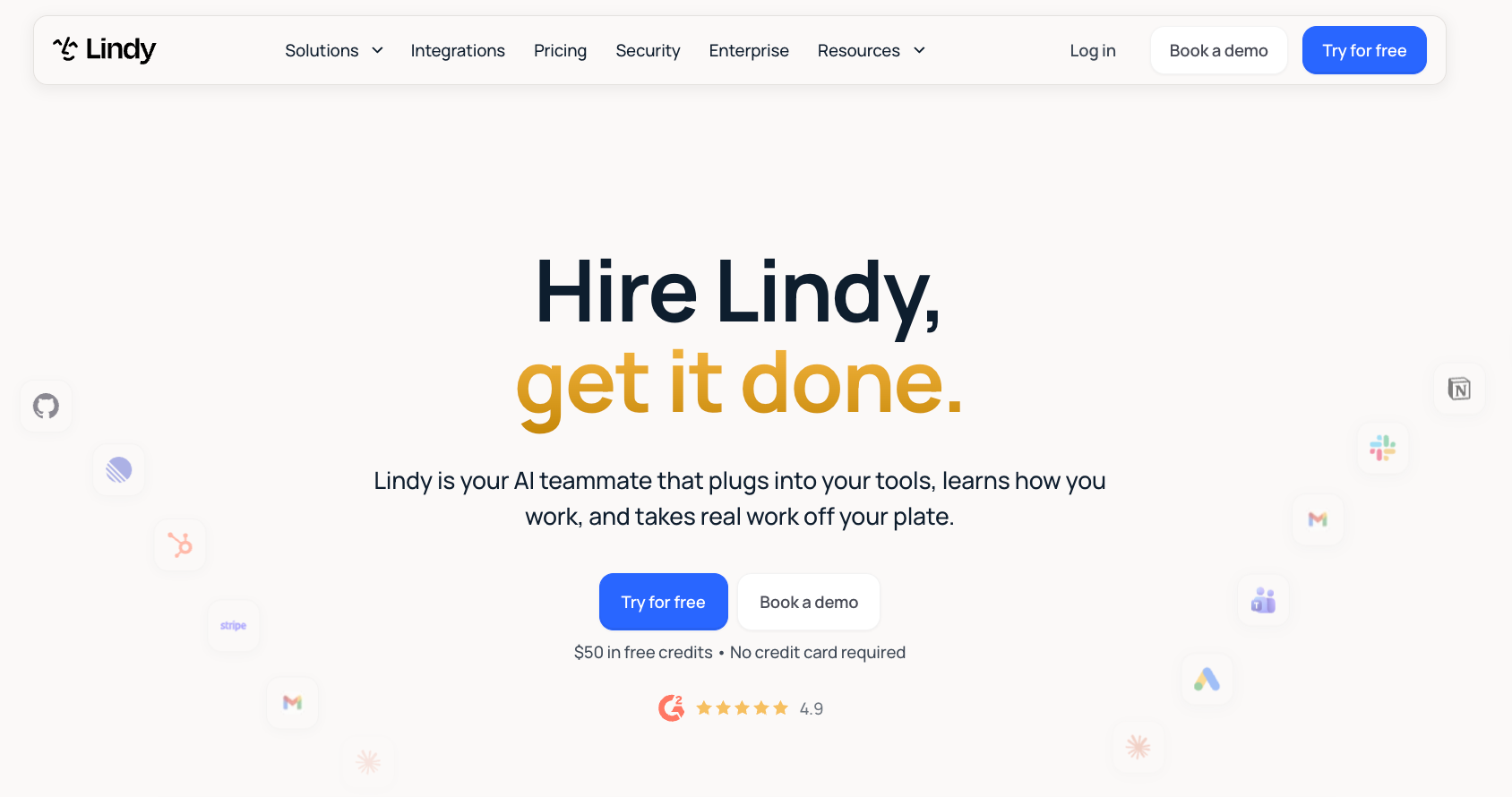
Lindy is an AI teammate that lives in your Slack, connects to your tools, and does real work for the whole team. It handles support triage, CRM updates, and meeting follow-ups without requiring workflow setup. You can also reach Lindy via iMessage, Gmail through the Chrome Extension, and the web app.
Why I picked it
A customer asked for a refund that the support bot could not approve, so I @mentioned Lindy in our support channel with the ticket. Lindy found the customer's record in HubSpot, checked the order history, and drafted a reply in my voice. It waited for my approval before sending the reply and updating the ticket.
Later, I texted Lindy from my phone to book a call with that customer. It checked my calendar, found an open slot, and had the invite ready for my approval. After the meeting, Lindy recorded the call, took notes, and drafted the follow-up email for my approval.
The next morning, I asked Lindy in Slack which support issues came up most that week. The answer arrived in the thread, so I had the week’s top issues without digging through tickets.
Key features
- Support triage and escalations: Lindy handles your support queue by reading new tickets, drafting replies to recurring questions from past cases, and routing more complex issues to the right person. It also watches at-risk tickets, so your team hears about a problem before a deadline is missed.
- Inbox management: Lindy handles inbox triage and drafts replies in your voice from the context of each thread. In Gmail, the Chrome Extension pins a daily brief to your inbox and applies smart labels, so the emails that need you are sorted before you open them.
- Meeting recording and notes: Lindy joins Google Meet, Zoom, and Microsoft Teams as a named participant, then records, transcribes, and summarizes each call. It also books meetings, prepares you beforehand, drafts the follow-up afterward, and lets anyone on the team ask what was decided.
- CRM updates with approvals: Lindy handles multi-step work across 1,500 integrations, such as updating a HubSpot deal, writing a Notion doc, and posting a summary to a channel. Anything with outside impact, such as sending an email or updating a ticket, waits for your approval first.
Limitations
Lindy works inside your team's own tools, so it is the wrong fit if all you need is a chatbot widget on your website. Larger jobs, such as research reports or dashboards, use more credits. When the workspace runs out of credits, Lindy pauses and notifies the team, so there are no surprise bills.
Pricing
Lindy starts with $50 in free credits that last 7 days, and no card is required. The Team plan costs $49.99/month per active user and includes 5,000 credits for each user every month. Extra credits cost $10 per 1,000. Enterprise pricing is custom and adds HIPAA compliance with a signed BAA, SSO, SCIM, and audit logs.
{{templates}}
How to move off Chatbase?
To move off Chatbase, you collect your bot’s training content, load it into the new tool, reconnect your channels and apps, and test the new bot before customers see it. Most small teams can finish the move in a day or two.
Here is how the move works in practice:
- Collect your sources: Gather every file, web page link, and Q&A pair you used to train your Chatbase bot. Also, review recent chat logs and note the questions customers ask most. Those questions become your test list in the final step, so save them in one document.
- Load your content into the new tool: Upload the files and add the page links to your new tool's knowledge base. Paste in your Q&A pairs, then rewrite your bot's instructions so its tone and rules match the old bot. Check that each source has finished syncing before you move on.
- Reconnect channels and integrations: Add the new chat widget to your website and remove the Chatbase embed code. Then reconnect each channel and app the old bot used, such as WhatsApp, Slack, Zendesk, or your CRM. Confirm that tickets and leads land in the right place.
- Test before you switch: Ask the new bot every question on your test list and compare its answers with your sources. Check that the handoff to a human works and that actions such as order lookups return correct data. Cancel Chatbase only after the new bot has passed all tests.
How to choose the right Chatbase alternative
Match the tool to your main support job. A visual builder handles complex flows. A single inbox combines AI and live chat. A free plan works for your first bot. A direct integration fits teams already running a helpdesk or online store. Each tool below best covers one of these jobs. Our guide to AI chatbots for business covers more options if none of these fit.
Here is the clearest match for each situation:
- Choose Botpress if you want to design every step of a conversation on a visual canvas. Developers can add code cards and API calls inside the same flow, so the bot can check orders or update records during a chat. It suits teams with at least one developer on hand.
- Choose Voiceflow if you want one agent that answers customers on chat and on phone calls. Scripted workflows keep tasks such as refunds in a fixed order, and staging lets you test each change before launch. It suits larger CX teams.
- Choose Tidio if you want AI answers and live chat in one website widget, with a single inbox behind it. Its Lyro AI agent handles common questions, and the live chat and helpdesk catch everything else. Chats from your website, email, WhatsApp, Instagram, and Messenger all arrive in one place.
- Choose Chatling if you want a no-code website chatbot you can run for free. Its free plan includes unlimited chats and 200 AI credits a month, and the agent learns from your website and docs. You can move to a paid plan once you need more channels.
- Choose eesel AI if your team already works in Zendesk, Freshdesk, or Intercom. The agent learns from past tickets and writes replies inside your helpdesk, so your agents keep their current tools.
- Choose Molin AI if you run an online store on Shopify. It recommends products from live catalog data and handles order status, returns, and refunds in chat.
- Choose Lindy if your team loses time to the work that comes after each chat. You @mention Lindy in your support channel once a chat ends, and it drafts the follow-up, updates the CRM, and books the call, then waits for your approval before anything is sent.
If your team only needs a website chatbot, any of the six tools above can handle it, and our guide on building an AI chatbot without coding covers the setup. If the slow part is the work that follows each chat, Lindy handles it from Slack.
{{cta}}
Frequently asked questions
What is the best Chatbase alternative overall?
Botpress is the best Chatbase alternative overall. Every step of a support conversation is built on a visual canvas, and you can add custom code within the same flow. A free plan with 100 conversations is offered, and paid plans start at $189/month. Lindy can be added for the CRM updates and follow-ups that come after each chat.
What is the best free Chatbase alternative?
Chatling is the best free Chatbase alternative. Unlimited chats and 200 AI credits a month are included in its free plan, and the agent is trained on your website and docs. No code is needed to launch it on your site. Paid plans start at $25/month for channels like WhatsApp or Instagram.
What is the best Chatbase alternative for developers?
Botpress is the best Chatbase alternative for developers. Code cards and API calls can be added directly within a visual flow, allowing orders to be checked and records updated during a chat. It stores structured data in Tables and connects to Zendesk or Intercom for helpdesk handoff. The older open-source edition can also be self-hosted on your own servers.
What is the best Chatbase alternative for websites?
Tidio is the best Chatbase alternative for websites. AI answers from Lyro and live chat from your team are combined into a single website widget. Visitors are greeted by Flows when they view a product page, and harder chats are passed to a human with the full history. Plans start at $29/month, and a free plan is offered.
Is Lindy a Chatbase alternative?
Yes, Lindy is a Chatbase alternative for support teams whose work continues after the chat. Tickets are triaged, replies are drafted, and CRM records are updated from Slack, with approval required before anything is sent. Pricing starts at $49.99 per active user, per month, and new users get $50 in free credits that last 7 days.
What is the best Chatbase alternative for e-commerce?
Molin AI is the best Chatbase alternative for e-commerce. Your product catalog is learned automatically, so products can be recommended based on live price and stock data. It handles order status and tracking on Growth and above, and replies in 90+ languages. There is a free plan, and paid plans start at $23/month with a 14-day free trial.