11 Best Demandbase Competitors and Alternatives in 2026 (Tested)
Marvin tested 11 Demandbase alternatives across real GTM workflows, comparing intent data, ABM features, integrations, and pricing.
.avif)

Demandbase is a leading ABM platform, but it’s not always the right fit. It can be pricey, complex to implement, and limiting for smaller or fast-moving teams.
This guide is based on hands-on testing, not just feature checklists. Some tools offered faster setup, better CRM integrations, or more flexible workflows. If you're rethinking your ABM stack, these alternatives may work better for your team’s size, speed, and goals.
What is Demandbase, and who are its competitors?
Demandbase is an AI-enabled, account-based marketing (ABM) platform for businesses. It focuses on helping B2B companies target the right accounts with precision, using data and analytics to engage potential customers more effectively and drive conversions.
It’s known for its depth, especially in identifying in-market accounts and tracking buying behavior across channels. It also connects directly with ad platforms, CRMs, and marketing automation tools to run cross-channel ABM campaigns.
But not every team needs that level of complexity. Some prefer a lighter setup with more transparency. Others want better customer support or more flexibility with pricing.
That’s where its competitors come in. 6sense is strong with predictive analytics, Clearbit focuses on real-time data enrichment, and ZoomInfo is great for deep B2B contact databases. Others, like Lindy, add an automation layer on top of your existing stack. Each one brings something different to the table, depending on what your GTM team needs.
11 Demandbase competitors in 2026: TL;DR
- ZoomInfo: Best for data-driven lead discovery and outreach
- 6sense: Best for predictive targeting and buyer intent scoring
- DemandScience (Terminus): Best for data-backed lead gen and global syndication
- RollWorks: Best for scalable, budget-friendly ABM programs
- Bombora (CaliberMind): Best for deep company-level intent data
- Madison Logic: Best for full-funnel engagement across global accounts
- TechTarget: Best for accessing verified, in-market tech buyers
- Jabmo: Best for global ABM in manufacturing and healthcare
- Clearbit: Best for real-time lead enrichment and form optimization
- Marketo Engage: Best for complex, enterprise-level marketing automation
- Apollo.io: Best for teams running high-volume outbound sales
1. ZoomInfo: Best for Data-Driven Lead Discovery and Outreach
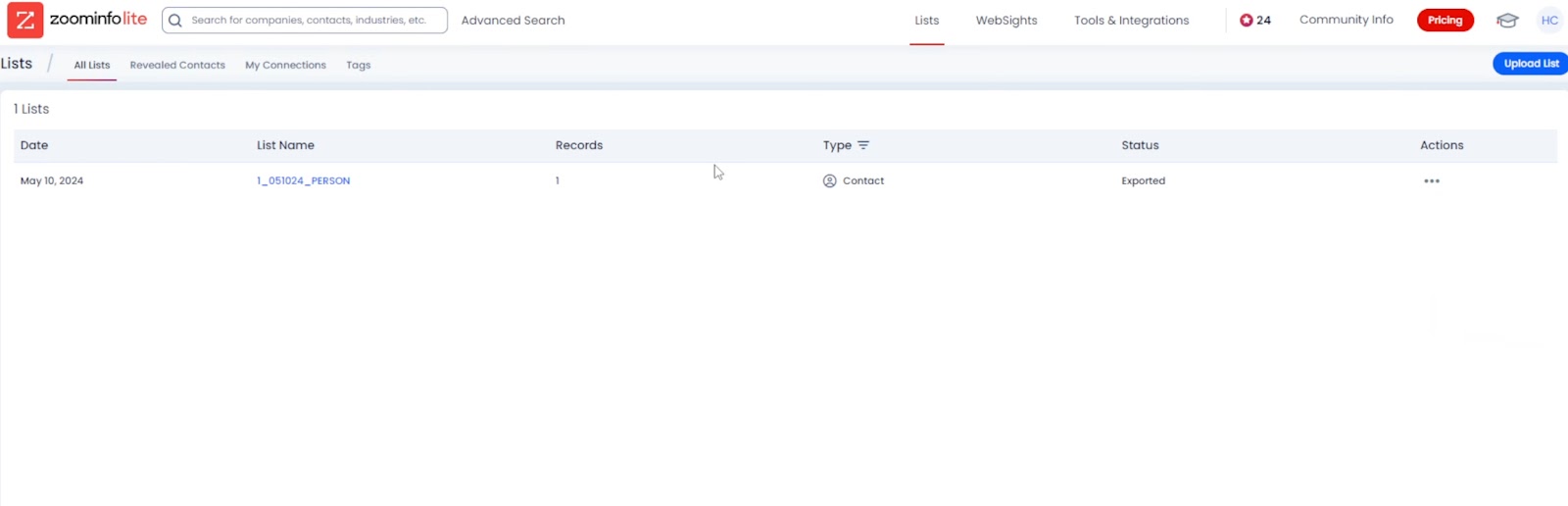
What does it do? ZoomInfo helps you find business contacts, track account activity, and run outreach from one place.
Who is it for? Built for B2B teams that need clean, reliable data to target the right people and act fast.
ZoomInfo helps eliminate guesswork in sales and marketing by giving you access to a large, continuously updated database of business contacts. You can find verified emails, phone numbers, and company details, so you’re not wasting time on outdated or inaccurate data.
It lets you segment leads based on job title, company size, industry, and intent signals. You can also track signals like hiring trends, funding activity, and website visits to identify accounts showing high interest. For example, if a company in your target industry just secured Series B funding, ZoomInfo can flag that account so your team can engage while interest is high.
Outreach can be managed directly, build email sequences, trigger follow-ups, and make calls using the built-in dialer with AI-powered talking points.
ZoomInfo integrates with CRMs like Salesforce and HubSpot to keep contact records, notes, and deal updates in sync across teams. For reps on the move, the mobile app offers quick access to account insights and lead suggestions.
With territory planning and account scoring features, you can define your ideal customer profile and automatically surface matching accounts. This helps prioritize outreach and maintain a healthy, relevant pipeline.
Pros
- Supports deeper filters for complex campaigns
- Account suggestions help with outbound planning
- Admins can control data access for different roles
- Useful for setting up lead handoff rules across teams
Cons
- Data credits can run out quickly with bulk usage
- Smaller companies may find the platform overwhelming
Pricing
Pricing isn’t publicly listed.
2. 6sense: Best for Predictive Targeting and Buyer Intent Scoring

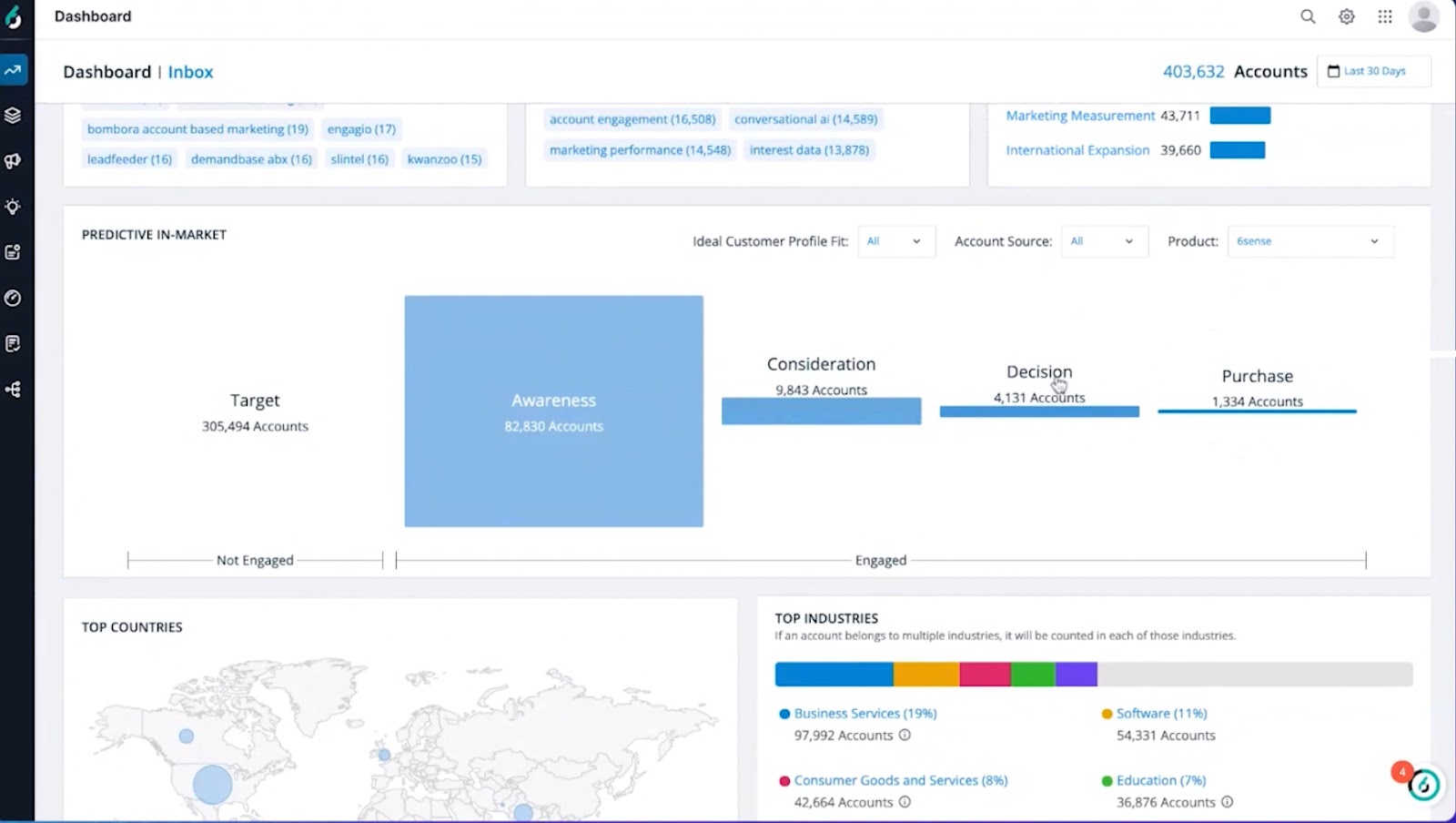
What does it do? 6sense helps you identify accounts that are ready to buy and automates engagement across ads, email, and sales.
Who is it for? Best for B2B revenue teams that run account-based marketing at scale and want to unify sales and marketing efforts.
6sense gives you visibility into which companies are actively looking for solutions like yours, even before they fill out a form. It tracks anonymous buyer behavior across the web, analyzes intent signals, and turns that data into clear next steps for your team.
This makes it easier to focus on the right accounts instead of guessing who’s ready to buy. It organizes everything in one place. Marketing, sales, and operations teams work from the same data and can automate personalized campaigns across different channels.
You’re able to launch targeted ads, send outreach emails, and trigger follow-ups based on buyer activity without switching tools.
Its AI engine, called 6AI, looks at billions of buying signals and ranks accounts by how close they are to making a purchase.
Instead of going through long lead lists, sales reps get a short, ranked view of top opportunities, along with talking points and key behaviors to guide the conversation. 6sense also includes tools for competitive intelligence. It detects when an account is looking at your competitors and lets you take action like launching a specific campaign or sending a message right away.
For teams running large-scale ABM programs, 6sense offers automation at every step, from lead scoring to campaign deployment to deal progression. It removes the need for separate tools and allows everyone to work off the same system, with no data gaps or delays.
Pros
- Helps reduce ad waste through precise targeting
- Custom dashboards support role-specific reporting views
- AI models can prioritize accounts across multiple sales territories
Cons
- UI can feel complex for first-time users
- Initial onboarding may require close vendor support
Pricing
Pricing isn’t publicly listed.
3. DemandScience (Terminus): Best for Data-Backed Lead Gen and Global Syndication

What does it do? DemandScience helps B2B marketers and sales teams generate high-quality leads using data-backed content syndication.
Who is it for? Best for revenue teams that rely on large-scale lead generation.
DemandScience identifies which decision-makers are actively researching topics in your space and distributes your content to them through a global network of vetted publishers. Every lead is opt-in, verified, and delivered with full contact details, so your team isn't wasting time chasing incomplete or outdated data.
Unlike platforms that only provide intent signals, DemandScience manages the entire campaign cycle, from audience targeting to execution to performance reporting. This makes it ideal for teams that want tangible results without needing to build and manage complex workflows themselves.
One of its biggest strengths is reach. You get access to over 200 million verified buyers across 100+ countries, with lead scoring powered by machine learning models that evaluate behavior, engagement, and topic interest.
For example, if you're promoting a cybersecurity solution, DemandScience can identify IT leads who’ve recently engaged with related content and push your whitepaper directly to them.
After merging with Terminus in 2024, the platform expanded its capabilities further across ABM and ABX. You can now activate cross-channel campaigns spanning content syndication, email, digital ads, and outbound, all tracked in a unified dashboard.
While Demandbase emphasizes hands-on, self-managed ABM, DemandScience offers a service-first model. You simply set the outcome, like webinar signups or eBook downloads, and they take care of the rest. If you’re looking for a more execution-focused, done-for-you approach to pipeline growth, this is a strong alternative.
Pros
- Strong performance in multi-channel syndication
- Simplifies demand gen for resource-limited teams
- Regional campaign support and managed execution
Cons
- No self-serve interface
- Reporting transparency depends on the service level
Pricing
Pricing is not publicly listed.
4. RollWorks: Best for Scalable, Budget-Friendly ABM Programs
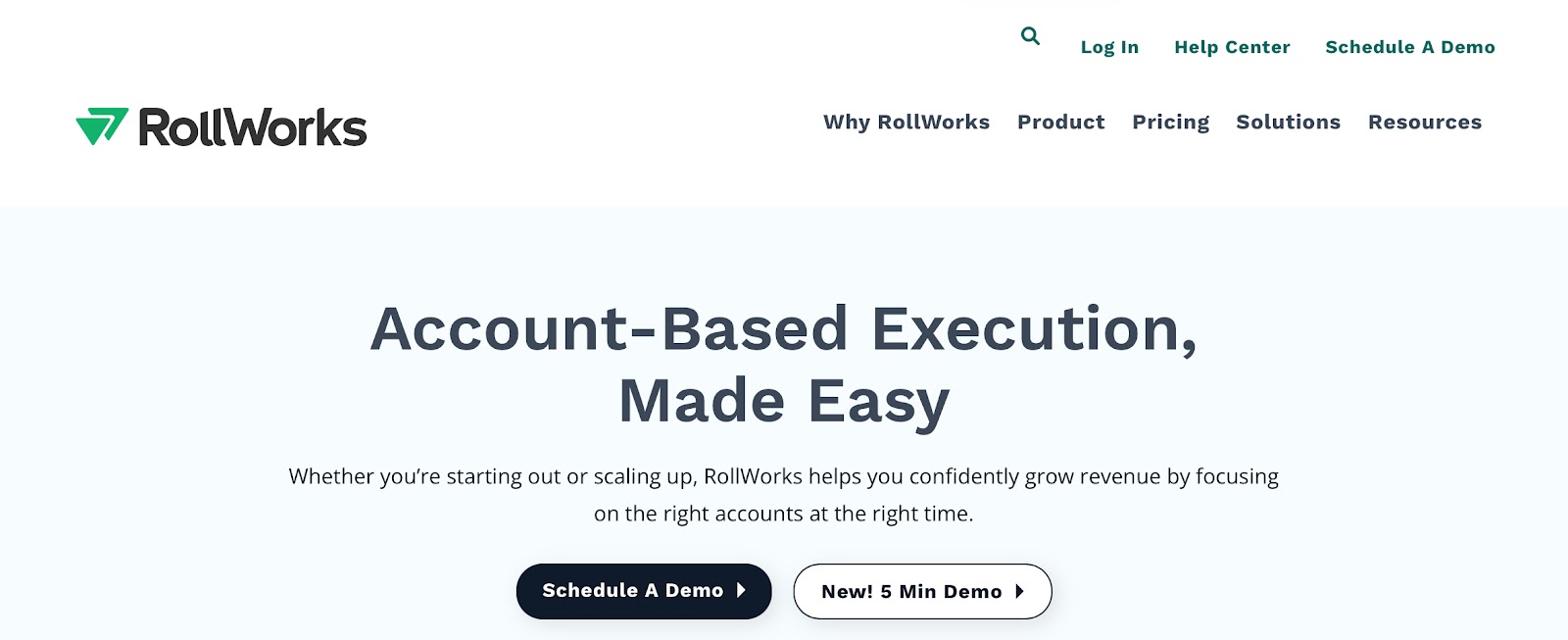
What does it do? RollWorks finds high-fit accounts and runs targeted campaigns across multiple channels using AI-driven insights.
Who is it for? Ideal for B2B teams that are either starting ABM or want to expand it without switching between too many tools.
RollWorks is built for teams that want to target the right accounts without relying on manual guesswork. It starts by helping you identify which companies are worth focusing on by using firmographic data, intent signals, and behavior tracking.
Once your target list is set, it helps you engage those accounts through ads, web, and email from a single dashboard.
The advertising engine lets you run account-based and persona-based display ads. It uses AI to place ads where they’re likely to drive engagement, then adjusts the budget to maximize results.
You’re able to set up multichannel campaigns that feel personal and aligned with each account’s stage in the journey.
RollWorks also includes solid analytics that let you track how campaigns perform, see which accounts are moving forward, and understand what’s driving actual revenue.
The reporting dashboard gives clear insights into ROI and helps you adjust your strategy in real-time.
It works well with HubSpot or Salesforce, so your sales and marketing teams can work from the same data. It also offers pre-built workflows for sales activation, helping reps know which accounts are warming up and what message to send.
If you compare it to Demandbase, RollWorks is often easier to onboard.
While it doesn’t go as deep into AI modeling, it covers most core ABM needs with less complexity and a cleaner setup.
Pros
- Resource library helps teams level up fast
- Tiered account lists simplify sales follow-up
- Budget-friendly entry plans for growing teams
- Ad placements adapt based on real-time performance
Cons
- Some advanced features are locked behind higher plans
- Not ideal for companies needing highly custom workflows
Pricing
Pricing isn’t publicly listed.
5. Bombora (CaliberMind): Best for Deep Company-Level Intent Data
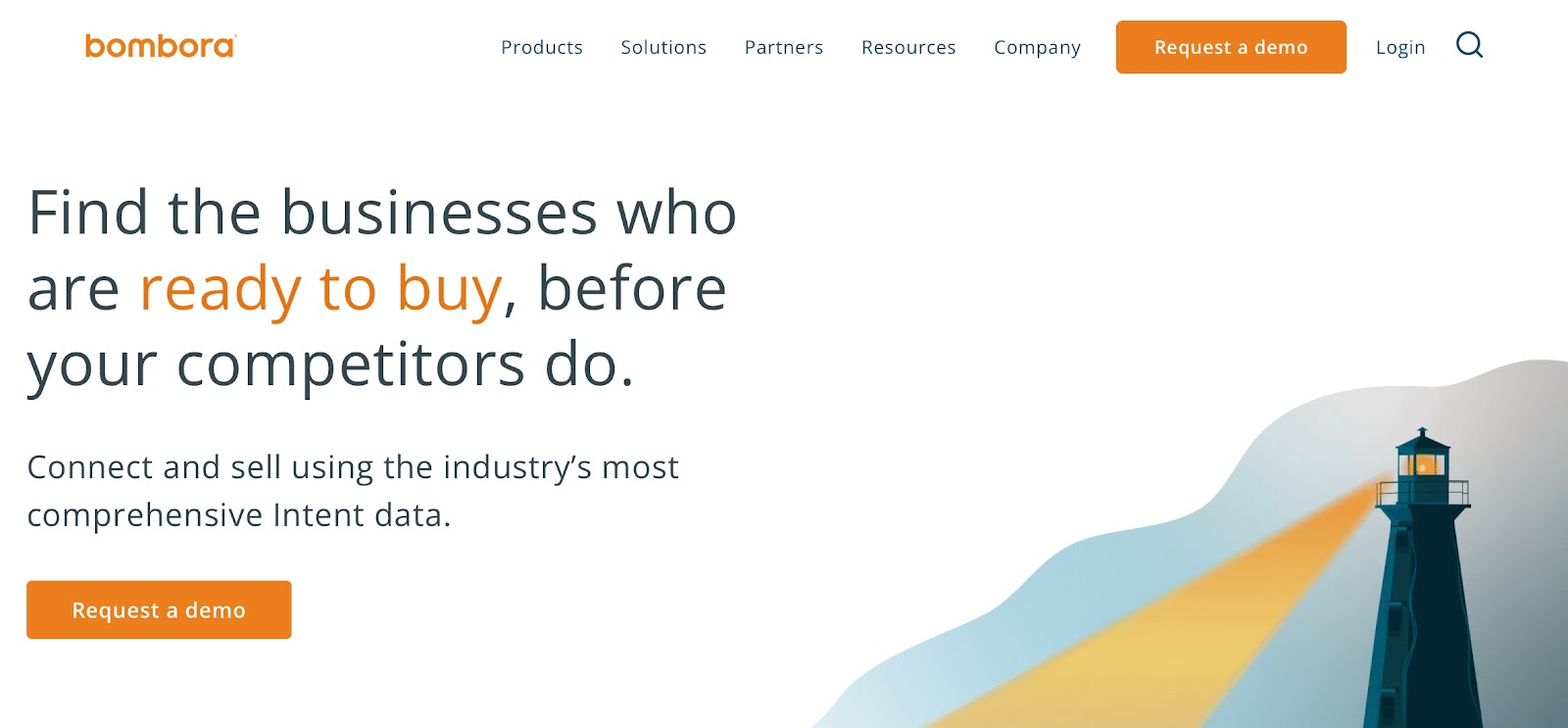
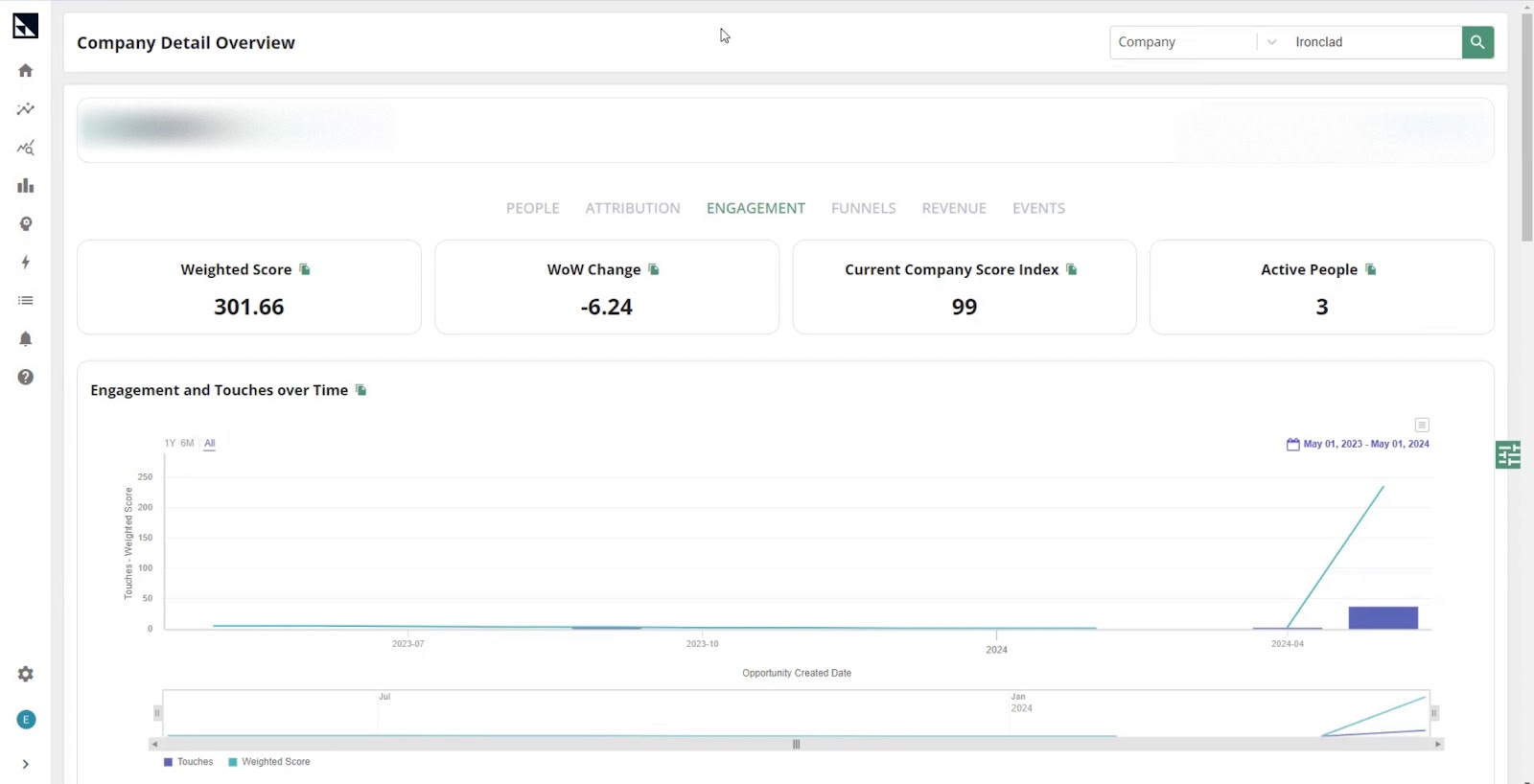
What does it do? Bombora finds companies for you that are actively researching topics in your space, so you know which accounts are showing real interest before they even reach out.
Who is it for? Great for B2B marketing and sales teams that focus on long sales cycles and want better ways to spot active buyers early.
Bombora is centered around one core idea, and that is, that companies show buying intent long before they fill out a form. It tracks content consumption across a massive network of trusted B2B sites to detect when interest in a topic spikes.
This kind of behavior is what Bombora calls a “Company Surge,” and it signals that a company is likely entering a buying phase.
The data is refreshed weekly, so you’re not relying on outdated trends. You’re able to spot shifts in interest across regions, industries, or individual accounts, which helps you prioritize the right companies for outreach or ad targeting. This is especially useful in ABM campaigns where timing and precision make the difference between a lead and a closed deal.
Bombora focuses on company-level data, not individual contacts, so it’s best used alongside CRM or contact databases.
That said, it integrates with over 50 tools, including major martech and sales platforms, making it easier to bring intent data into your existing workflows.
Another strength is how the data is handled. Everything is consent-based and collected according to privacy best practices, which means you can build intent-driven campaigns without worrying about compliance.
Bombora takes a more focused approach than Demandbase, concentrating specifically on company-level intent data rather than offering a full ABM suite. It’s best suited for teams that already have CRM, outreach, and campaign tools in place but need reliable buying signals to guide targeting and timing. By specializing in one area and doing it well, Bombora adds meaningful value without overlapping with the rest of your stack.
Pros
- Content-type segmentation reveals the buyer stage
- Custom surge thresholds help reduce noise from weak intent signals
- Custom topic clusters let you align intent data with your product categories
- Real-time surge alerts can be pushed to Slack or CRM for quick sales follow-up
Cons
- No direct contact-level details included
- May require another tool for outreach execution
Pricing
No public pricing is available.
6. Madison Logic: Best for Full-Funnel Engagement Across Global Accounts
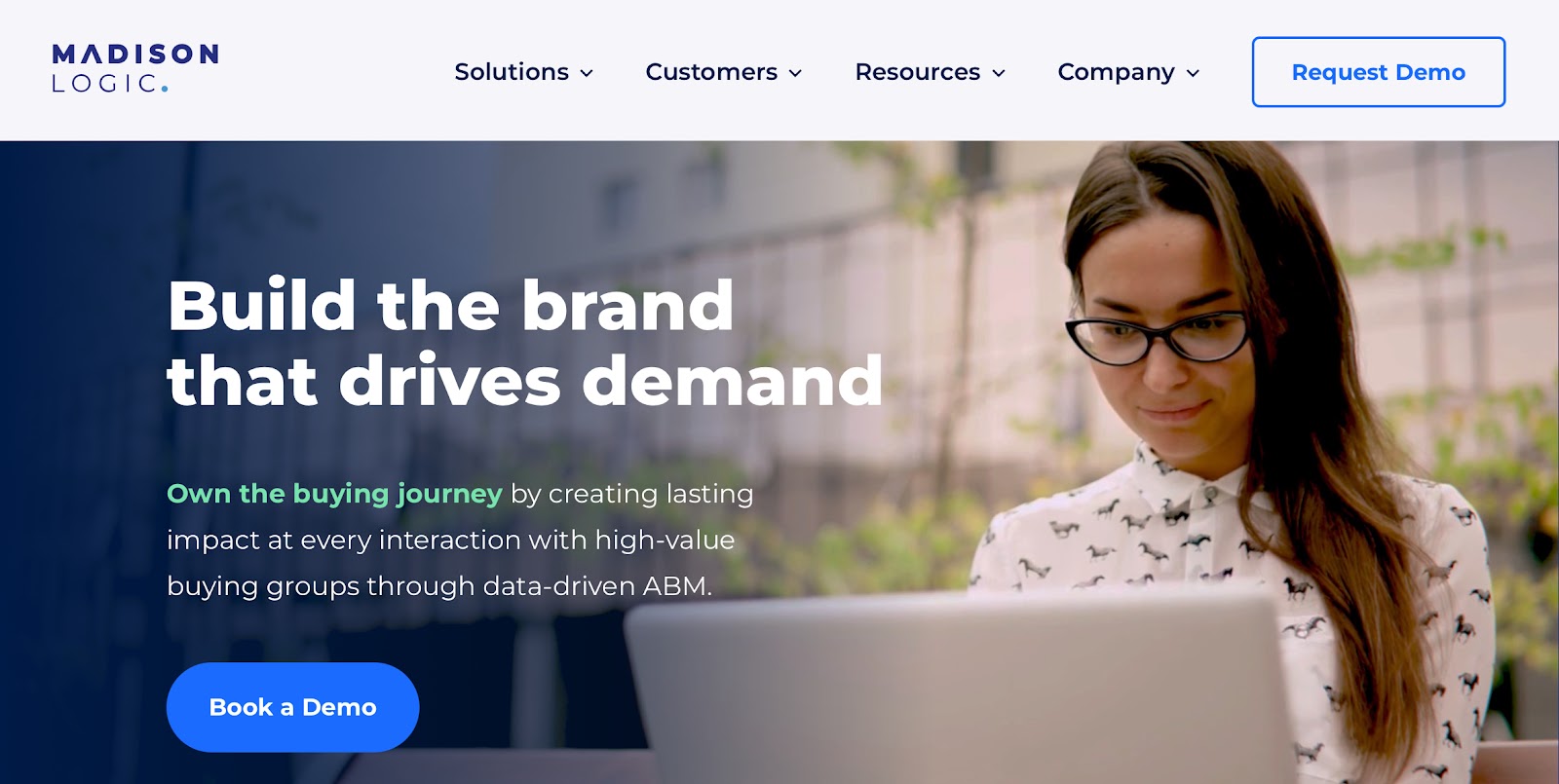
What does it do? Madison Logic helps you reach target accounts across ads, content, and media channels.
Who is it for? Designed for large B2B organizations with complex buying committees and long, multi-stage deal processes.
Madison Logic is designed for enterprise ABM programs that go beyond basic display ads, offering a full framework to engage high-value accounts across channels like content syndication, Connected TV, social media, and display. This helps you reach buyers throughout the funnel, whether they’re in early research or actively comparing solutions.
Using intent data from a broad partner network, Madison Logic surfaces accounts showing strong interest in your category. These insights help prioritize outreach and enable faster follow-ups when timing matters most.
Sales and marketing teams can stay aligned with real-time account alerts and activity updates. Campaign performance is tracked through detailed reporting dashboards, letting you measure ROI, account engagement, and content effectiveness across channels.
For example, if a prospect views multiple syndicated assets and then visits your pricing page, the system flags that activity to your sales team for immediate action.
The platform integrates with major CRMs and marketing automation tools, reducing the need for manual data stitching. It leans into execution and analytics, making it especially useful if you already have a strategy and need tools that can scale delivery.
If you're focused on reaching decision-makers across markets or regions with personalized, multi-channel engagement, Madison Logic offers a structured way to support that at scale.
Pros
- Offers fully managed campaign services for lean teams
- Tailored engagement for multi-stakeholder buying groups
- Built-in GDPR and CCPA compliance tools for safer data handling
- Strong industry segmentation for tech, finance, and healthcare verticals
Cons
- Some setup steps may require technical help
- Reporting tools may need customization for deeper insights
Pricing
No public pricing is available.
7. TechTarget (Priority Engine): Best for Accessing Verified, In-Market Tech Buyers
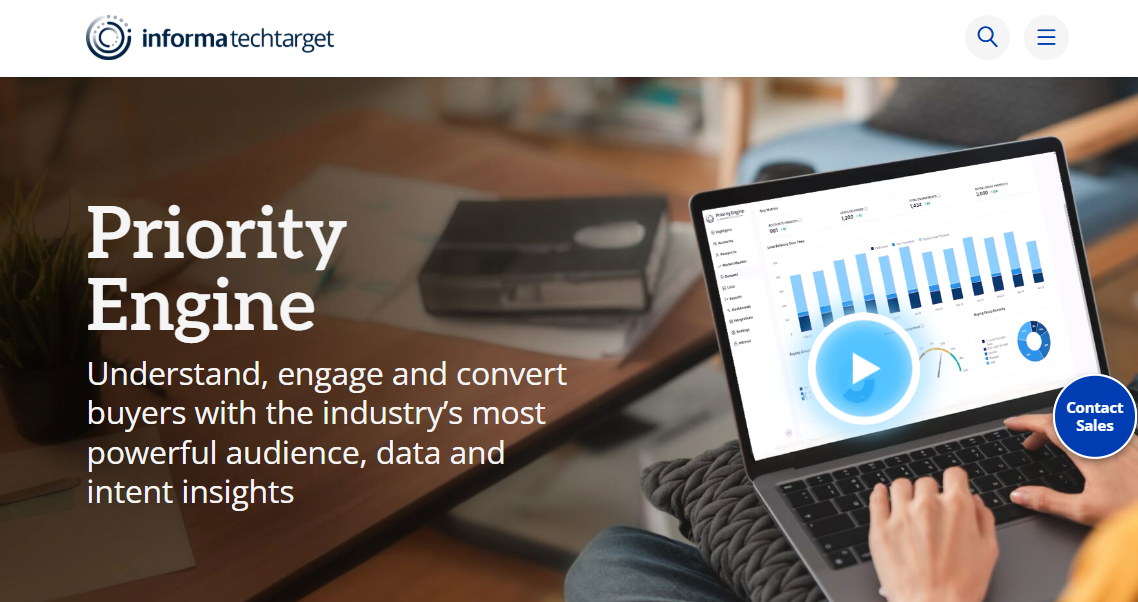

What does it do? Priority Engine gives you direct access to verified tech buyers who are actively researching solutions in your category.
Who is it for? Ideal for B2B tech companies focused on content-driven lead generation and demand capture.
TechTarget’s Priority Engine takes a more targeted approach than broad ABM platforms. Instead of predicting which accounts might be in-market, it gives you real-time access to professionals already engaging with relevant content across TechTarget’s owned network. These aren’t cold leads; they’re actively researching solutions, comparing vendors, and exploring use cases.
Because it collects first-party intent data directly from user activity, the insights are more accurate than third-party alternatives. You can see which topics buyers are reading about, what content they’ve engaged with, and which vendors are already on their radar.
Priority Engine also supports precise segmentation. Whether you're targeting IT decision-makers in cybersecurity or operations leads in cloud infrastructure, you can filter by technology interest, job role, industry, and more to refine outreach and improve conversion.
Beyond discovery, the platform includes tools to activate that data. You can launch campaigns using custom content, targeted ads, and digital programs tailored to each buyer’s behavior. Analyst support is also available to refine messaging and adapt to shifting market trends.
While Priority Engine integrates with most CRMs and marketing platforms, setup may require some technical support. And since it’s based on TechTarget’s ecosystem, it’s best suited for enterprise tech companies. If you want to evaluate fit before committing, you can start with a demo.
Pros
- Integrated content syndication for better lead nurturing
- GDPR/CCPA-compliant, permission-based lead generation
- Data delivery supports both automated integrations and manual CSV exports
- Industry-specific targeting across tech categories like cloud, cybersecurity, and DevOps
Cons
- Lacks advanced predictive AI models for lead scoring
- More focused on top and mid-funnel; not a full ABM platform
Pricing
Pricing is not listed publicly.
8. Jabmo: Best for Global ABM in Manufacturing and Healthcare
What does it do? Jabmo delivers personalized marketing across all touchpoints, such as web, ads, email, and sales, while tracking engagement across global accounts.
Who is it for? Built for B2B companies in manufacturing, life sciences, and healthcare that require a focused, multi-market ABM strategy.
Jabmo takes a vertical-specific approach to ABM, built for companies in regulated or complex industries like manufacturing, life sciences, and healthcare. These sectors often involve long buying cycles, global decision-makers, and the need for highly personalized messaging, areas where general ABM platforms often fall short.
Rather than offering a one-size-fits-all solution, Jabmo tailors its engagement strategies to fit the industries it serves. You can run unified, omnichannel campaigns across web, ads, and email, all informed by real account-level engagement data. Sales teams also gain visibility into these touchpoints, making it easier to coordinate follow-ups and deliver relevant messaging.
A standout strength is Jabmo’s integration depth. It connects with major CRMs and marketing platforms, while also pulling in third-party and IP-based intent data from the broader Expandi ecosystem. This ensures campaigns are backed by timely, accurate signals.
If your team runs multiple ABM models, like One-to-Many for awareness or One-to-One for high-value opportunities, Jabmo supports all three within the same platform.
While its reporting features may not be as deep as those in larger ABM suites, it excels in aligning marketing and sales teams within niche industries where tracking buyer engagement is more challenging.
Pros
- Offers multi-language campaign support
- Allows role-based dashboards so different teams
- Includes anonymous visitor tracking to identify early-stage interest before the form fills
- Provides email health monitoring to track deliverability and sender reputation in ABM campaigns
Cons
- No built-in lead scoring model
- Limited native support for mobile ABM campaign deployment
Pricing
Pricing is not publicly listed.
9. Clearbit (Breeze Intelligence): Best for Real-Time Lead Enrichment and Form Optimization
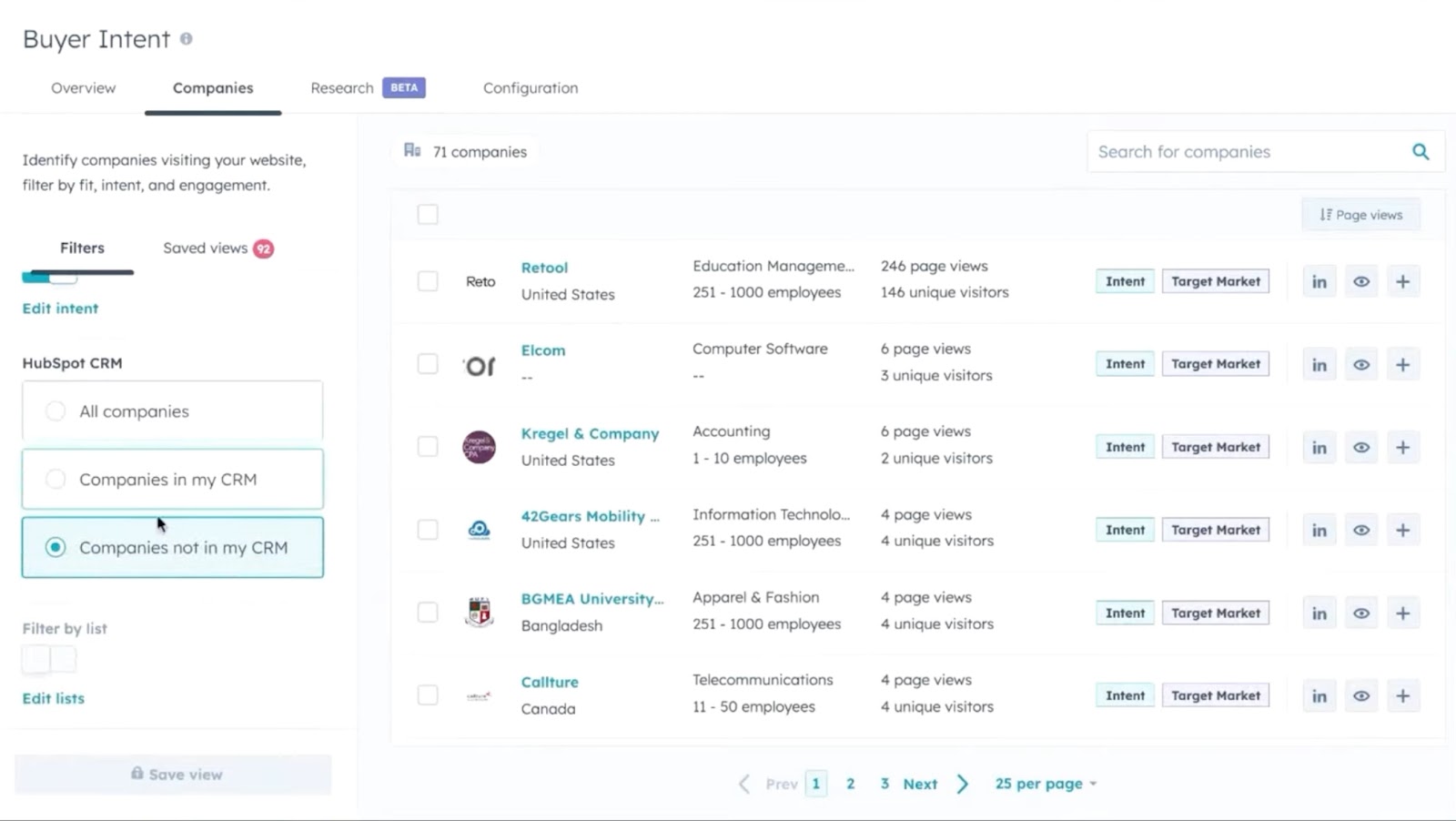
What does it do? Clearbit enriches your HubSpot CRM with live company and contact data, while also identifying anonymous site visitors and triggering lead alerts.
Who is it for? Designed for B2B teams using HubSpot that want to automate segmentation, personalize outreach, and capture leads earlier in the funnel.
Now rebranded as Breeze Intelligence for HubSpot, Clearbit focuses on helping you act on lead data before it goes cold. Instead of relying on long forms or guessing who’s behind anonymous traffic, it fills in the blanks instantly.
By matching IP addresses and email inputs to live company profiles, Clearbit gives your team actionable data the moment someone lands on your site. It pulls from a wide network of sources and surfaces over 100 firmographic and technographic attributes, including company size, location, tech stack, industry, and more. This makes it easier to qualify leads, route them to the right reps, and launch targeted campaigns without delay.
One of the most valuable use cases is form shortening. By pre-filling known fields, Clearbit reduces friction and improves form submissions without lowering lead quality.
While it’s optimized for HubSpot, it also connects with over 400 other tools via API, making it flexible for teams working across systems. This is especially useful for developers and ops teams building custom data flows or enrichment pipelines.
But don’t forget that the credit-based pricing model requires close monitoring, as costs can rise quickly with high usage. And since it’s built for B2B workflows, it may not be the right fit if you’re targeting individual consumers.
Pros
- Real-time Slack alerts keep sales teams responsive
- Pre-filled forms reduce drop-off without losing lead quality
- Easy to set rules for lead routing based on company traits
- Developer-friendly APIs allow flexible usage beyond the UI
Cons
- No built-in campaign tools
- No native mobile experience
Pricing
Pricing isn’t listed publicly.
10. Marketo Engage: Best for Complex, Enterprise-Level Marketing Automation
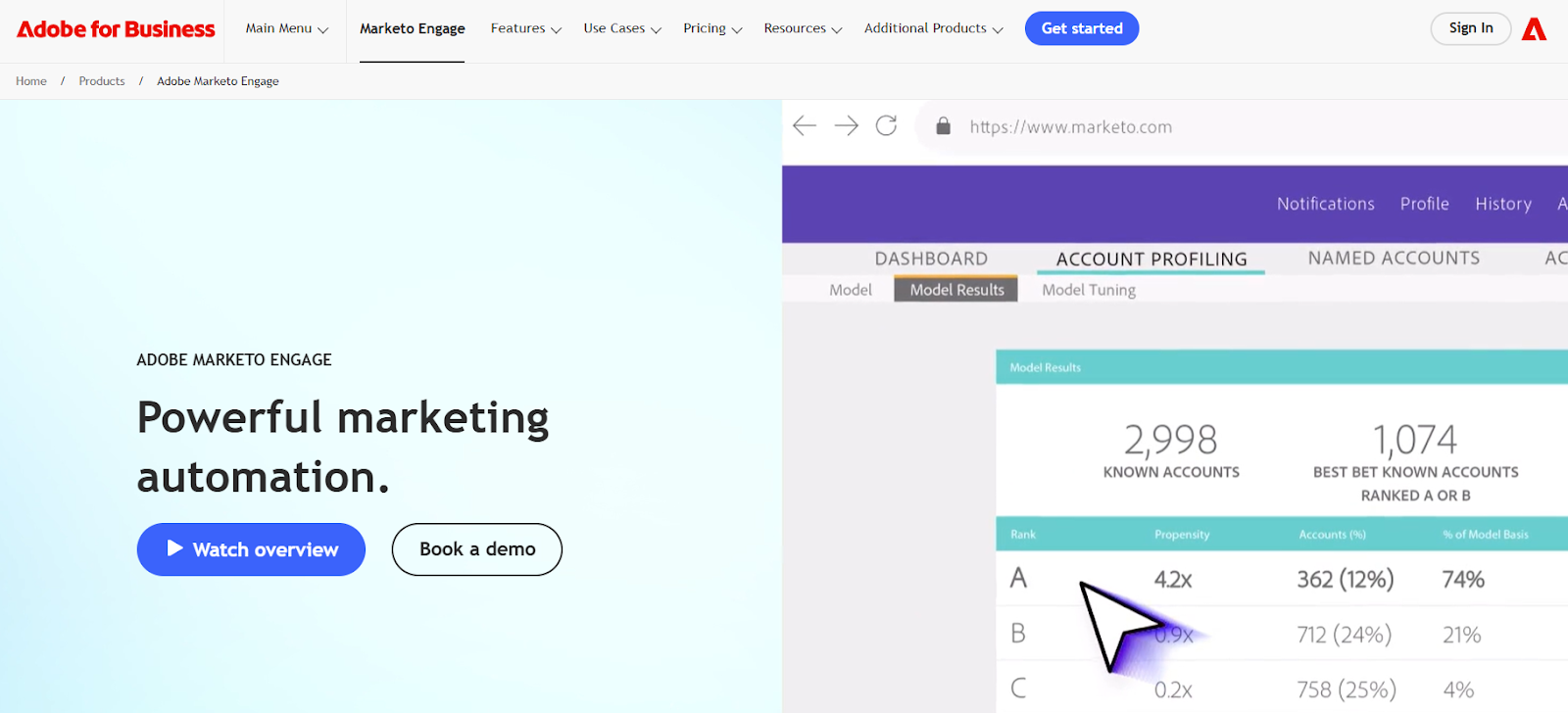
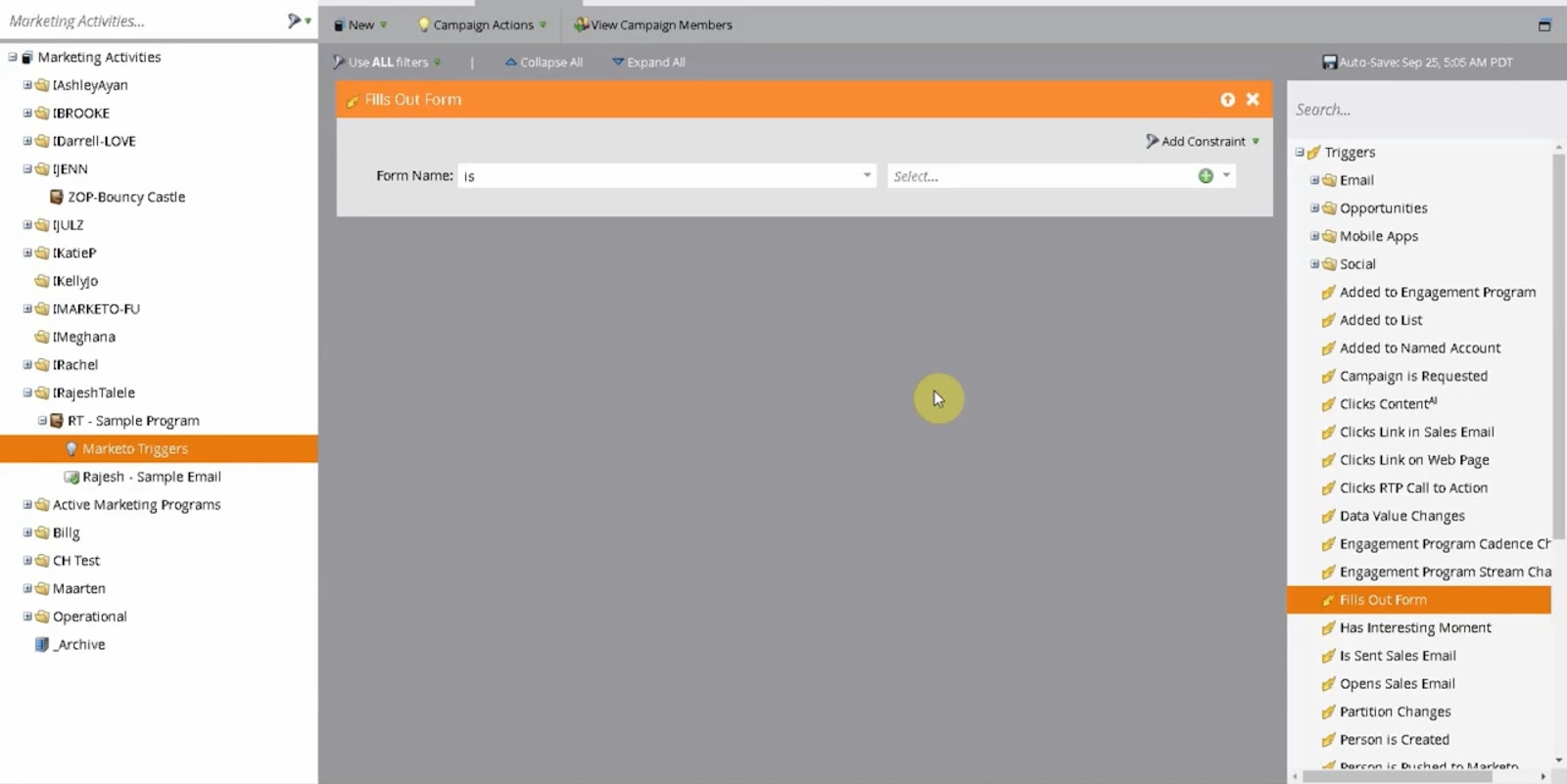
What does it do? Marketo Engage brings together automation, personalization, and lead management to help you run complex, multi-channel marketing at scale.
Who is it for? Ideal for large B2B teams with advanced campaign needs and long sales cycles that require detailed tracking, nurturing, and attribution.
Marketo Engage is Adobe’s flagship marketing automation platform, designed to support sophisticated campaign strategies across email, paid ads, social, and the web. It’s not just a tool for sending emails but a full system for managing leads, delivering personalized experiences, and tracking how marketing contributes to revenue.
At its core, Marketo equips you with tools to segment audiences, build dynamic content, automate campaigns, and trigger real-time alerts based on buyer behavior. You can score leads, route them to sales, or assign them to different workflows depending on their stage in the funnel.
Its predictive AI features help forecast engagement and recommend content that’s more likely to convert. Personalization goes beyond known contacts; Marketo also supports anonymous visitors. With up to 60 audience segments and 60 active web campaigns, you can tailor website content in real time based on behavioral and account-level data.
For attribution, Marketo offers built-in dashboards and the option to add Marketo Measure for deeper revenue insights. You can track how emails, webinars, and paid ads contribute to pipeline and closed deals, giving you the visibility needed to prove ROI, especially across long and complex buying cycles.
There’s also built-in support for events, webinars, and dynamic chat, with usage limits depending on your plan. While it’s one of the more comprehensive platforms in the space, Marketo requires time to set up and train teams. It’s best suited for organizations with the resources and structure to fully use what it offers.
Pros
- Sandbox environments help large teams test and scale safely
- Deep attribution tools help prove marketing’s impact on revenue
- Flexible structure works for regional teams and global campaigns
- Supports both named-account ABM and anonymous visitor targeting
Cons
- Limited UI intuitiveness
- Overlapping modules with the Adobe Suite
Pricing
Pricing is not listed publicly.
11. Apollo.io: Best for Teams Running High-Volume Outbound Sales

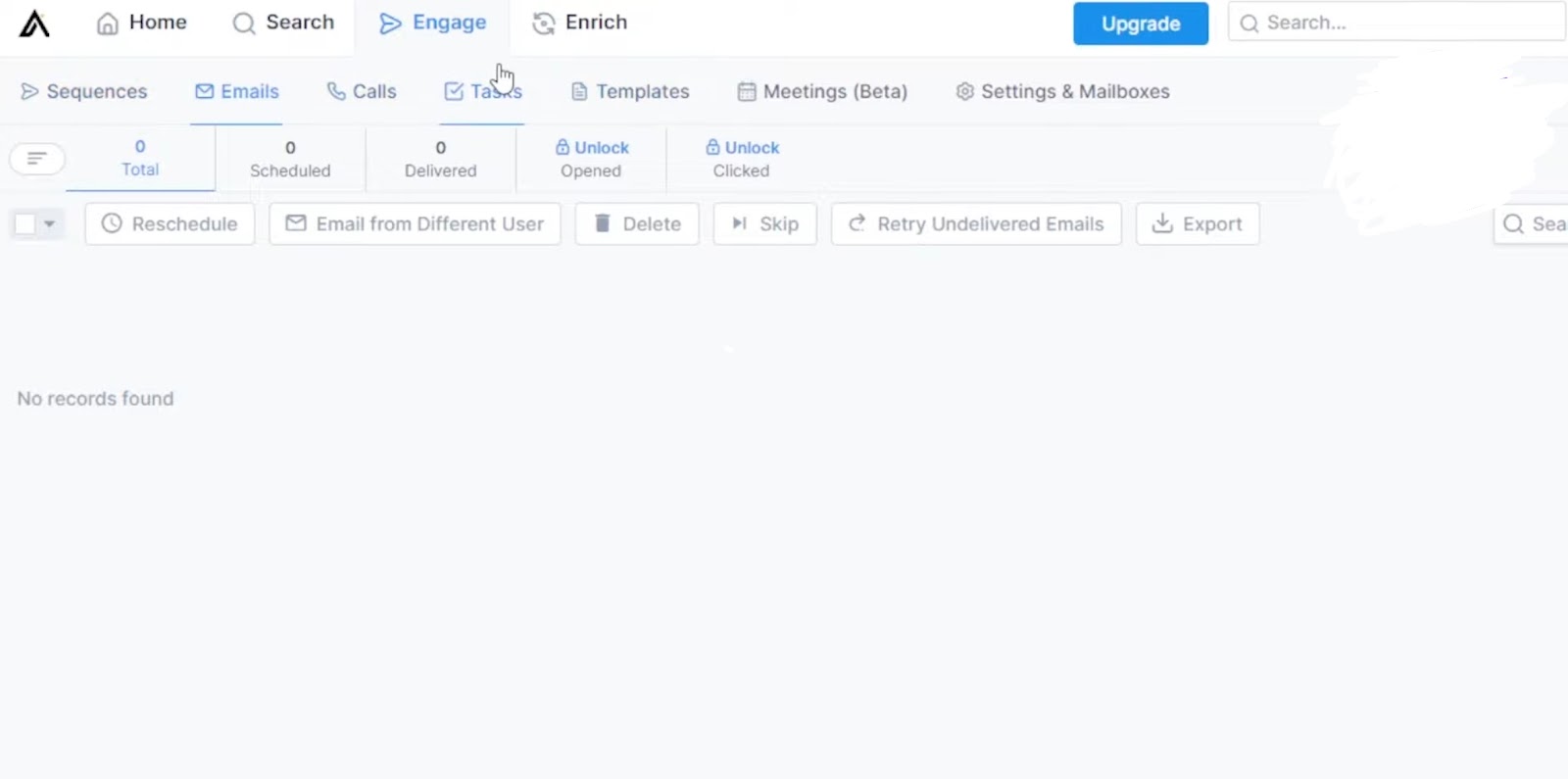
What does it do? Apollo.io helps you find high-quality leads, automate your outreach, and track deals.
Who is it for? Best for B2B sales teams that need accurate data and multichannel outreach without juggling multiple tools.
Apollo.io brings prospecting, engagement, and deal tracking into one streamlined platform. You get access to over 210 million verified contacts and 35 million companies, refreshed monthly to maintain data accuracy. AI features keep your information current, flag job changes, and suggest who to contact next based on relevance.
You can filter leads by job title, seniority, location, company size, tech stack, and more. Once your list is ready, Apollo lets you launch outreach across email, LinkedIn, and phone using either the main dashboard or the updated Chrome extension. The extension also gives you AI-generated call summaries, recent contact history, and meeting insights from your calendar.
Apollo’s AI writing assistant customizes email content based on contact data and prior engagement. You can build sequences with bounce protection, lead prioritization based on prospect score, and multi-step actions that guide prospects through your pipeline.
Automatic conversation summaries help hand off leads between sales reps through Slack or email.
Advanced workflows let you automate contact ownership, post-call actions, and CRM enrichment using keyword tracking and updated logic tools. The refreshed analytics dashboard makes it easier to track performance metrics and create custom reports.
What sets Apollo apart is its ability to combine accurate data with real-time outreach. You are not just discovering leads; you are acting on them with precision and speed.
Pros
- Offers verified direct-dial numbers in addition to email addresses
- Lets you A/B test subject lines and message content in sequences
- Built-in spam filter testing improves email deliverability before sending
- Advanced scheduling options allow emails to land in the recipient’s time zone
Cons
- Export limits on lower-tier plans
- International dialer access is restricted to higher plans
Pricing
- Free: Basic filters, 2 sequences
- Basic ($49/user/month): 2 Sequences, advanced filters, CRM integrations, 6 Intent Filters
- Professional ($79/user/month): Advanced filters, unlimited sequences, US dialer, 5 mailboxes per user
- Organization ($119/user/month): 12 intent topics, 15 mailboxes per user, US dialer and international dialer, SSO
| Tool | Best For | AI Features | Pricing Transparency |
|---|---|---|---|
| ZoomInfo | Data-driven lead discovery and outreach | Yes (lead suggestions, writing assistant) | No |
| 6sense | Predictive targeting and buyer intent scoring | Yes (6AI engine) | No |
| DemandScience | Data-backed lead gen and global syndication | Yes (lead scoring) | No |
| RollWorks | Scalable, budget-friendly ABM programs | Yes (ad optimization) | No |
| Bombora | Deep company-level intent data | Yes (intent scoring) | No |
| Madison Logic | Full-funnel engagement across global accounts | Yes (intent insights) | No |
| TechTarget | Accessing verified, in-market tech buyers | Limited | No |
| Jabmo | Global ABM in manufacturing and healthcare | No native scoring, supports IP data | No |
| Clearbit (Breeze) | Real-time lead enrichment and form optimization | Yes (auto enrichment, Slack alerts) | No |
| Marketo Engage | Complex, enterprise-level marketing automation | Yes (predictive personalization) | No |
| Apollo.io | Running high-volume outbound sales | Yes (AI writing, prioritization) | Yes |
How I Tested These Demandbase Competitors
Choosing the right ABM platform isn’t just about checking off features. It’s about finding a tool that fits your workflow, supports your sales and marketing goals, and can scale as your team grows. Each tool here was tested to see how well it performs in real-world, fast-moving GTM environments.
Here is how I tested these tools:
- Evaluated how well the tools identified in-market accounts: A core strength of Demandbase is its ability to surface accounts that are actively showing interest. So, I paid close attention to how each tool handled intent data, especially platforms like Bombora, 6sense, and Clearbit. I checked how they tracked research activity, how often their data refreshed, and how actionable those signals were for timing outreach.
- Looked at sales and marketing alignment tools: A good ABM platform should help sales and marketing work from the same playbook. I checked for things like Slack or email alerts, lead scoring, and CRM handoffs. Tools that provided in-context sales insights, like when a prospect visited your site or engaged with content, got extra credit for making sales follow-up easier.
- Measured ease of use and time to onboard: Some tools took hours to configure before they became useful. Others had cleaner interfaces and helpful onboarding flows that made it easy to get started. I looked for platforms that small teams could pick up without needing heavy admin support. This was especially important for users evaluating Demandbase cost and considering lighter, more agile tools.
- Checked CRM and integration flexibility: I tested how easily the tools connected with CRMs like Salesforce and HubSpot, and how they handled data syncing. Some tools synced cleanly; others required extra work to get data moving correctly. For any platform to be a serious Demandbase competitor, it had to integrate well with the rest of the GTM stack.
- Paid attention to scalability across ABM models: ABM isn’t one-size-fits-all. I looked at whether each tool could handle One-to-One, One-to-Few, and One-to-Many strategies. Platforms that only worked well for one type of outreach weren’t ideal for companies trying to scale their programs.
- Reviewed pricing structure and transparency: While most tools don’t list full pricing online, I assessed how flexible their models were. If a tool only worked for enterprises with big budgets, it was less useful for mid-market teams. Tools with modular pricing or entry plans stood out, especially for teams rethinking their Demandbase cost without compromising on functionality.
How to Choose the Best Demandbase Competitor for Your Needs
Not every team needs to replace Demandbase entirely. Sometimes, the goal is simply faster execution, better automation, or less manual work without giving up intent signals or coordination across tools.
Start with your biggest gap. If you need deep predictive scoring and enterprise-level orchestration, 6sense and Marketo Engage are the strongest picks. If company-level intent data is the priority, Bombora specializes in exactly that, while TechTarget’s Priority Engine delivers first-party intent for tech buyers.
Teams focused on real-time enrichment and cleaner data should look at ZoomInfo or Clearbit, and those that want budget-friendly, easy-to-onboard ABM can start with RollWorks. For high-volume outbound, Apollo.io combines verified data with multichannel outreach in one place.
Match the tool to your team’s size, stage, and the channels you run. The best Demandbase alternative is the one that closes your specific gap without adding complexity you won’t use.
Frequently Asked Questions
What are the top alternatives to Demandbase for account-based marketing (ABM) in 2026?
Some of the most recommended Demandbase competitors this year include 6sense, ZoomInfo, Clearbit, RollWorks, Marketo Engage, Jabmo, Madison Logic, Bombora, and TechTarget. Each tool offers a different focus. Some are full platforms; others are designed to plug into your existing stack. If you’re comparing tools based on data depth, automation, or execution, these are the top choices in the current B2B market.
How do Demandbase alternatives differ in terms of features and use cases?
Different platforms are built for different priorities. 6sense is strong in predictive analytics and full-funnel orchestration. Bombora leads in company-level intent data. Clearbit and ZoomInfo focus on real-time enrichment and lead scoring.
How much do Demandbase competitors typically cost?
Most Demandbase alternatives use custom pricing based on team size, number of contacts, and features needed. Entry-level tools like Apollo.io start around $49 per user/month, while enterprise platforms like 6sense or Marketo Engage can reach six figures per year. If you’re reconsidering Demandbase cost, expect a wide range depending on your goals.
What kinds of integrations do these platforms offer?
Most top Demandbase competitors integrate natively with CRMs like Salesforce and HubSpot, as well as marketing tools like Marketo, Pardot, Outreach, and Slack. Some are also designed to sit on top of existing ABM stacks and automate tasks between platforms without requiring full migration.
Which platforms offer the strongest intent data and predictive insights?
6sense is widely recognized for its predictive capabilities using AI and billions of buyer intent signals. Bombora offers the most extensive company-level intent data through its B2B co-op network. TechTarget Priority Engine delivers first-party intent directly from its owned content network, making it highly accurate for B2B tech categories.
Can these platforms scale as our team grows or moves to enterprise-level ABM?
Yes. Platforms like ZoomInfo, Marketo Engage, and Madison Logic are built for large-scale programs. They support features like custom workspaces, territory management, multi-language campaigns, and advanced attribution. If you’re planning to scale, choose tools with flexible data structures, sandbox environments, and strong support resources.
How do Demandbase competitors handle multichannel ABM campaigns?
Platforms like Terminus, Marketo Engage, and Madison Logic support multichannel strategies across email, ads, web, and social. Some, like Jabmo, also include Connected TV and IP-based targeting. If your team runs campaigns across multiple touchpoints, look for tools with built-in orchestration or native ad delivery capabilities.
What’s the main reason teams switch away from Demandbase?
Teams often switch because of cost, complexity, or lack of flexibility. Some want a tool that’s easier to use or better suited to their stage of growth. Others already use Demandbase but want better execution, faster workflows, or stronger sales alignment.