AI Marketing Assistant: I Tested 9 to Find the Best (2026)


I used to spend about two hours every morning on things unrelated to actual marketing. Replying to cold leads I'd forgotten to follow up with. Updating the CRM after calls I'd finished hours ago. Researching a prospect five minutes before a meeting because I hadn't had time earlier. By the time I got to the work that mattered, half the morning was already gone.
I started testing AI marketing assistants about eight months ago because I was drowning in the coordination layer.
I tested 9 tools over three months, covering content creation, paid campaign optimization, and text-based assistants that handle outreach and CRM updates. Some saved me real hours, and others just added more tabs to manage. Here's what I found.
What is an AI marketing assistant?
An AI marketing assistant connects to your existing tools and either executes tasks directly or generates output you review and approve.
One tool in this category writes your blog posts and ad copy. Another follows up with cold leads, logs calls into your CRM, and researches prospects before meetings. A third analyzes paid campaign performance and reallocates budget across channels. They share a label but do completely different things.
What separates a true AI marketing assistant from a basic chatbot is the ability to take action. A chatbot answers questions, whereas an AI marketing assistant does things. Text one to follow up with a lead, and it sends the email. Tell it to summarize your last call, and it writes the notes, then updates the deal stage.
The right one for you depends on where you spend your time. Content production and marketing ops are separate problems.
Pick the tool that fits the one you're trying to fix.
What does an AI marketing assistant do?
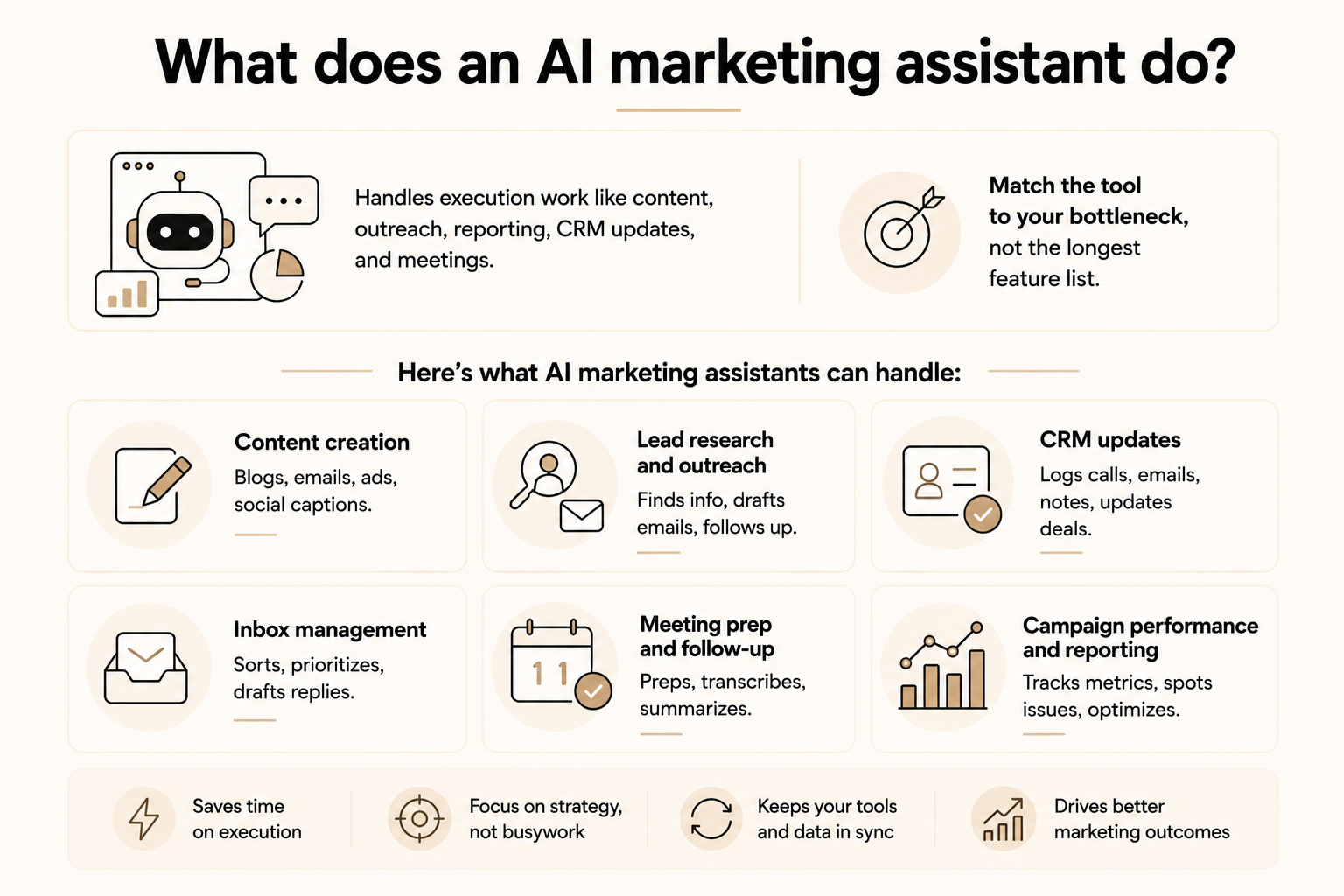
An AI marketing assistant handles the execution work that eats up a marketing team's day. Depending on the tool, it can write content, manage outreach, track campaign performance, update your CRM, or coordinate meetings. No single tool does all of this equally well, which is why matching the tool to your actual bottleneck matters more than picking the one with the longest feature list.
Here's what AI marketing assistants can handle:
- Content creation: Drafts blog posts, email copy, ad headlines, and social captions from a prompt or brief. The output needs human review for brand voice and accuracy, but it gets a first draft onto the page in seconds instead of hours.
- Lead research and outreach: Pulls company info, recent news, and contact details on prospects, then drafts personalized outreach emails based on what it found. Follows up automatically when leads don't reply.
- CRM updates: Logs calls, emails, and meeting notes into your CRM without manual data entry. After a sales call, it records what happened, updates deal stages, and flags next steps.
- Inbox management: Sorts incoming email by priority, flags urgent messages, and drafts replies based on past conversation context. Useful for high-volume inboxes where triage alone takes an hour.
- Meeting prep and follow-up: Pulls relevant notes, emails, and deal history before a call so you're not scrambling. After the call, it transcribes the conversation, writes a summary, and sends it to attendees.
- Campaign performance and reporting: Surfaces what's working across channels, tracks key metrics, and flags underperforming campaigns before the numbers get bad. Some tools reallocate budget automatically. Others surface the insight and let you decide.
4 Types of AI marketing assistants (and how to tell which one you need)
The label covers tools that barely overlap in their functionality. A content generation tool and a text-based AI assistant both carry the label, but one writes blog posts and the other schedules meetings and updates your CRM. The confusion is real, and choosing the wrong category is why many teams feel AI didn't deliver what they expected.
Here are the four main types and when each one makes sense:
How I tested these tools
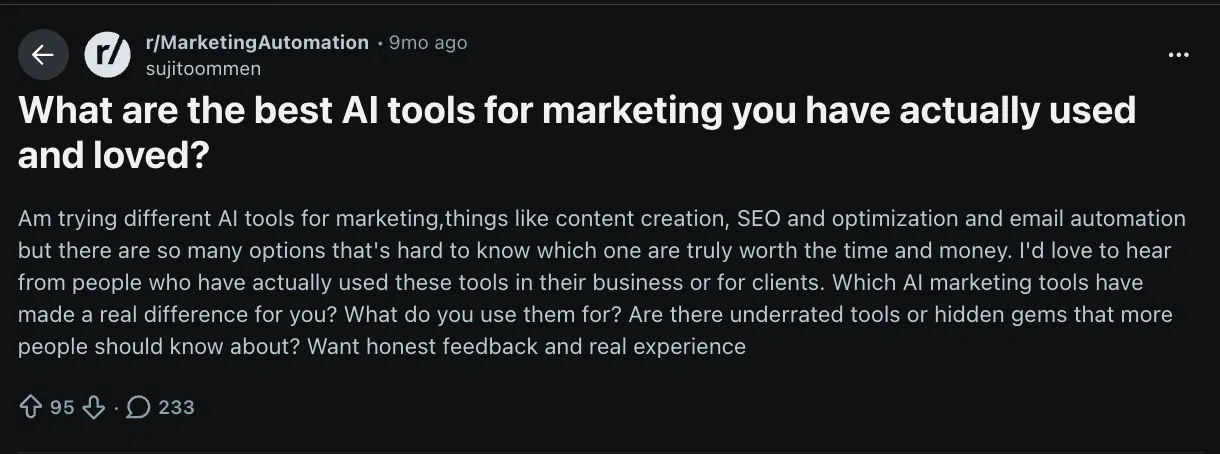
Spend ten minutes on any marketing subreddit, and you will see the same pattern play out. Someone asks which AI tools people use for marketing, and the answers read like a vendor list with no connective tissue. One person uses Perplexity for research and Claude for SEO. Another swears by ChatGPT for writing and a separate tool for video.
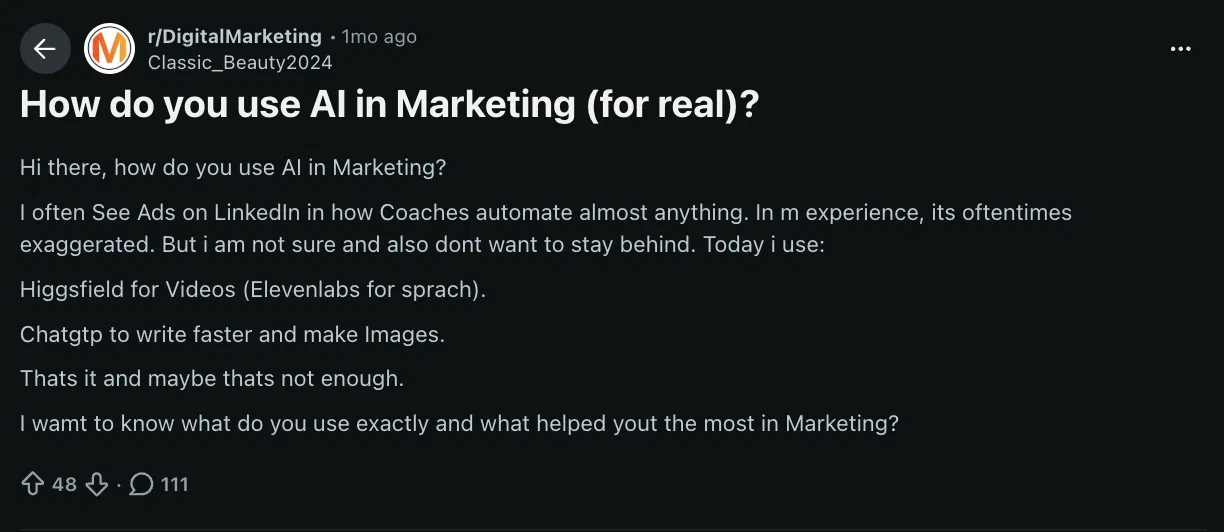
The list grows with every reply, and none of the tools mentioned are built to work together. That fragmentation is the actual problem. You spend time managing the stack rather than doing the work it's supposed to help with.
I tested nine tools in total over three months. Five did not make the final list, and here is why:
- ChatGPT: Useful for ad hoc tasks but not purpose-built for marketing. No CRM connection, no brand voice memory, no proactive features. A starting point, not a system.
- Copy.ai: Strong for short-form ad copy and landing pages. Narrower than Jasper for teams that need a full content pipeline across multiple channels and formats.
- Writesonic: Good for social campaigns and quick drafts, but brand consistency across clients is harder to maintain at scale compared to Jasper's voice training.
- Perplexity: Excellent for research. Not a marketing assistant. It answers questions rather than taking action inside your tools.
- Monday.com campaigns: Capable if you are already inside Monday. Creates more overhead than it removes for teams not already committed to the platform.
The four that made the list each solved a specific bottleneck cleanly without creating a new one in its place.
1. Jasper: Best AI marketing assistant for content production
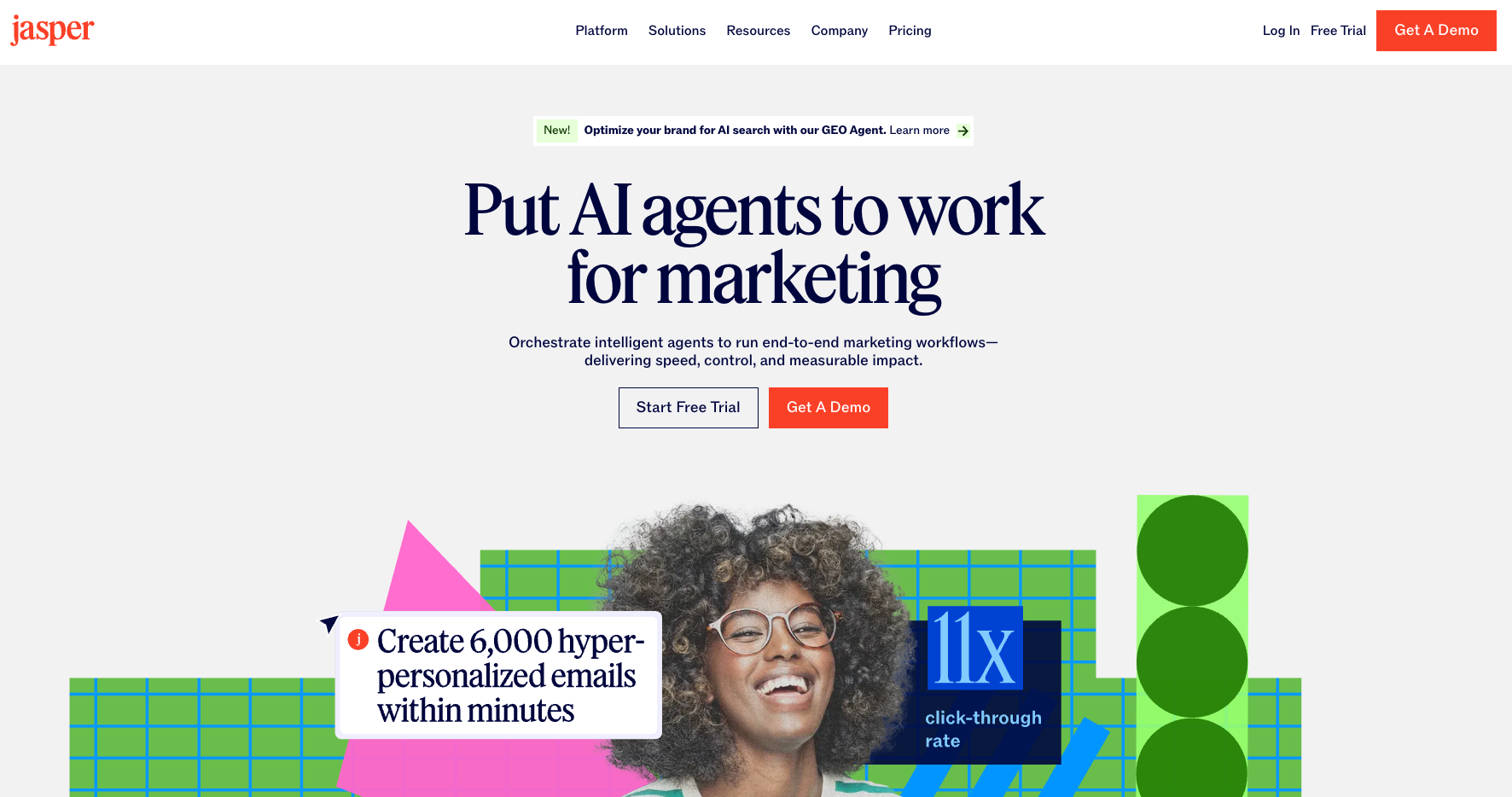
Jasper is an AI content platform built specifically for marketing teams, covering everything from blog posts and ad copy to social captions and campaign visuals.
Who it's for: Marketing teams and agencies producing high volumes of written content across multiple brands or channels, where consistency and speed both matter.
Why I chose it
I tested Jasper for a client running two brands with a 20+ post monthly cadence. Brand voice training gets AI output closer to your actual tone. You feed it a few samples of existing content and outputs start sounding noticeably closer to the brand's actual tone.
I know human editing is still non-negotiable. But the first drafts needed far less rework than anything a general-purpose AI produced. The 100+ purpose-built marketing agents for SEO, campaigns, and GEO optimization also put it ahead of tools that just generate text.
Pros
- Chrome extension brings it into Gmail, WordPress, HubSpot, and any other tab you're working in
- 100+ marketing-specific agents cover the full content pipeline from research to first draft to optimization
- SOC 2 certified and your content never trains their models, a clean data privacy position for agencies handling client content
- Brand voice training gets AI output closer to your actual tone. It learns from samples you upload, so your style stays intact
Cons
- Pro plan is one seat at $69/month; adding teammates requires the Business plan at custom pricing, which catches teams off guard
- Built for content creation only, it won't touch your CRM, outreach, or meeting notes, so you'll need separate tools for that
- Brand voice output still needs a human edit pass; it reduces revision time, but it doesn't eliminate it
Pricing
Pro plan starts at $69/month. Business plan is custom-priced. 7-day free trial available on the Pro plan.
2. Cometly: Best AI marketing assistant for paid campaign attribution
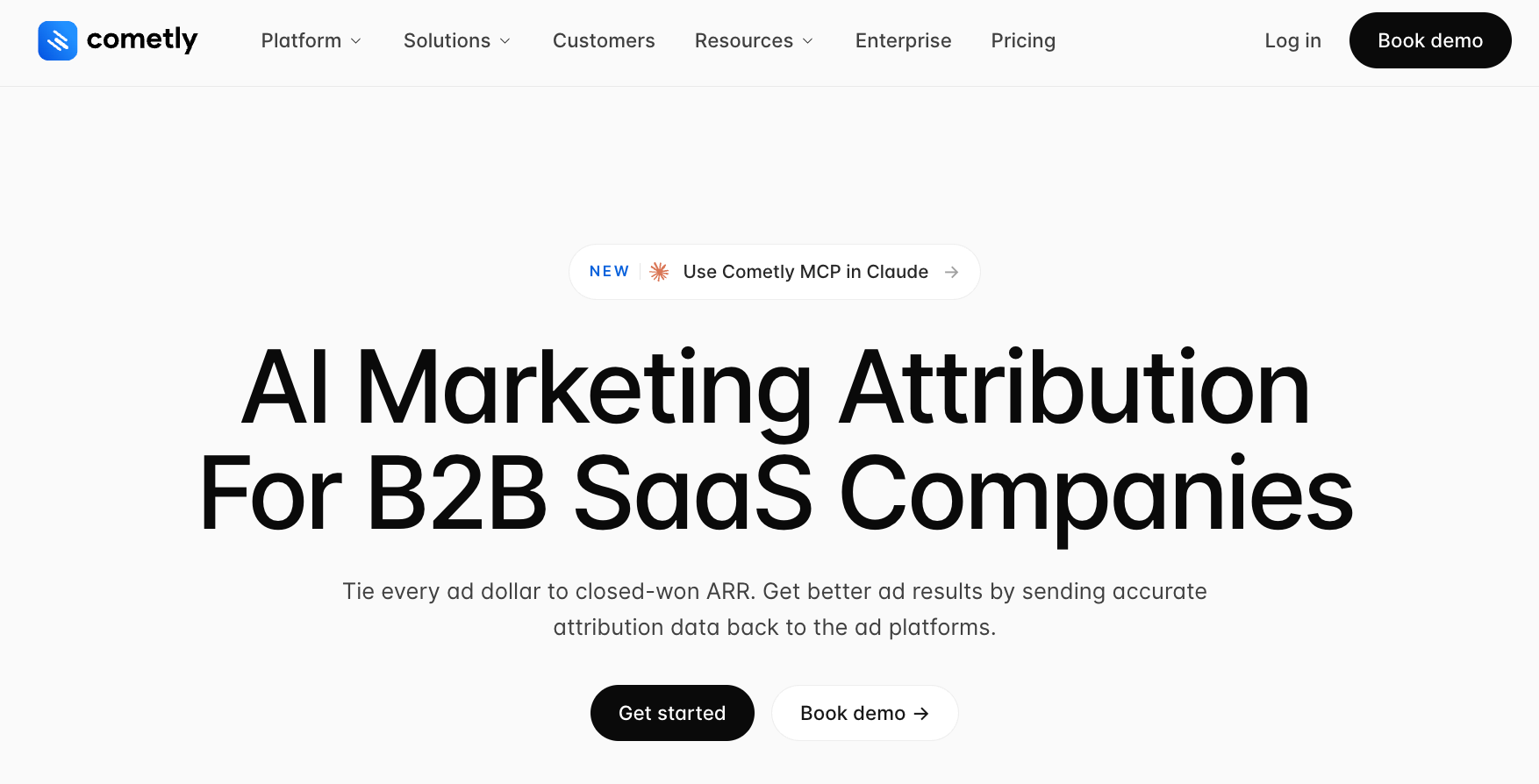
Cometly is a marketing attribution platform that tracks the full customer journey from first ad click to closed revenue and uses AI to surface which campaigns, channels, and creatives are driving results.
Who it's for: B2B SaaS marketing and growth teams running significant paid budgets across Meta, Google, and LinkedIn who need accurate attribution data and AI-driven spend recommendations.
Why I chose it
I ran Cometly on a client account where three channels were all claiming credit for the same conversions. Server-side tracking sorted that out, and the AI Ads Manager made it clear which campaign was driving pipeline and which one just looked good in Meta's reporting. Within two weeks, one campaign was flagged, cut, and the budget moved somewhere it was working.
There is also Agent, a chat interface built into the platform that lets you ask questions about your attribution data. Ask "Which channels produced the highest-LTV customers last quarter?" and Cometly returns a table, cites the underlying metrics and time window, and lets you save the answer as a dashboard widget.
Pros
- 70+ native integrations across ad platforms, CRMs, payment processors, schedulers, etc.
- Server-side tracking catches conversions that browser-based pixels miss due to ad blockers and iOS restrictions
- Eight attribution models (first-touch, last-touch, linear, U-shaped, and more) let you compare credit allocation across the same data set
- Conversion API feeds enriched data back to Meta, Google, and LinkedIn, which genuinely improves their targeting algorithms over time
Cons
- No free trial and no self-serve pricing. You need a sales call to get a quote, which slows down evaluation for teams on tight timelines.
- Useless without existing campaign data and a connected CRM. Onboarding overhead is real.
- Built entirely for paid media attribution. If your bottleneck is content, outreach, or marketing ops, this tool does nothing for you.
Pricing
Usage is based on monthly pageviews. Two plans are Core and Enterprise. There's no public pricing, so you'll need to contact sales for a quote.
3. HubSpot: Best AI marketing assistant for teams already inside HubSpot
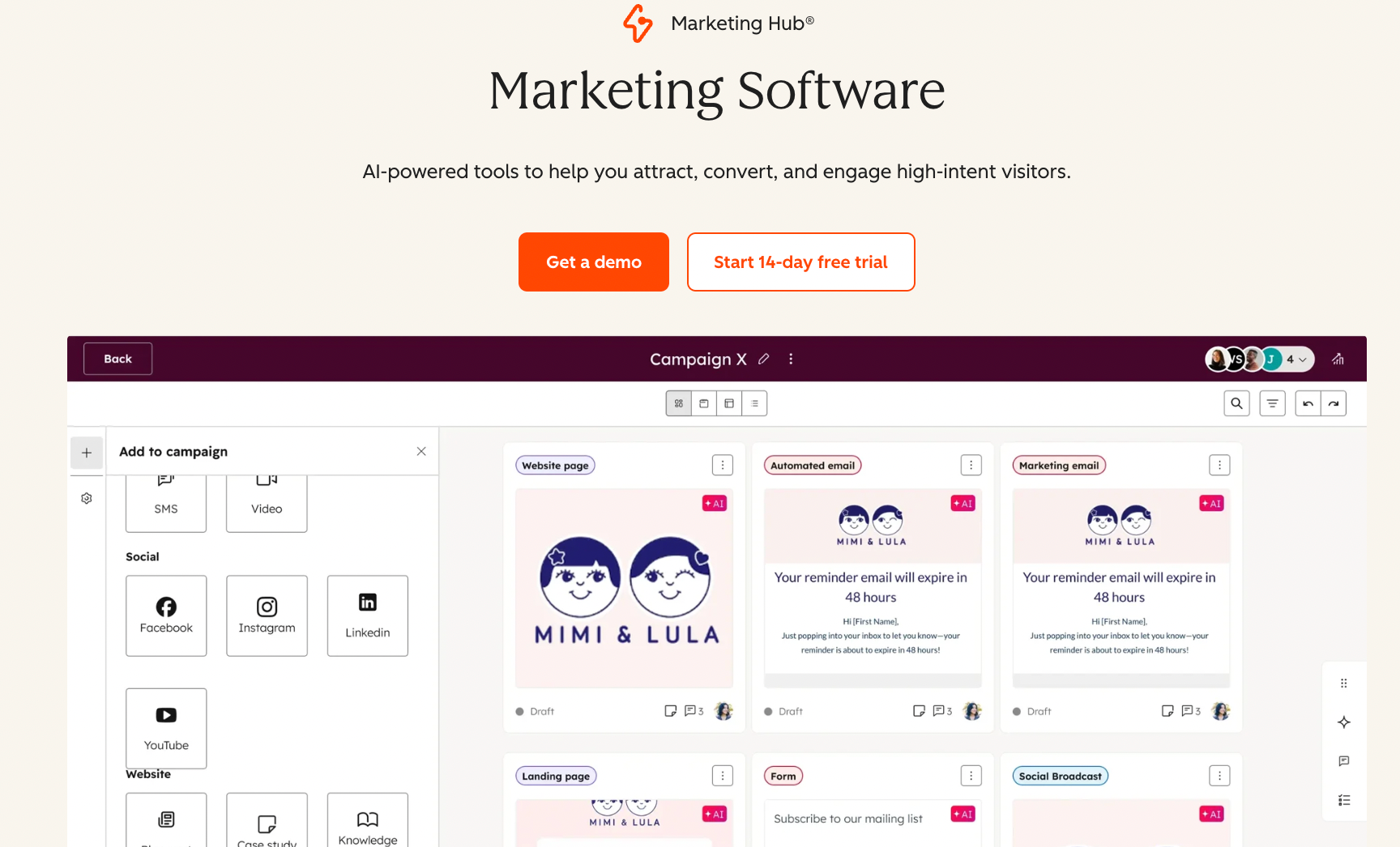
HubSpot Marketing Hub is an all-in-one marketing platform covering email, social, campaigns, and CRM, with AI built in through Breeze to handle drafting, planning, and content generation across all of it.
Who it's for: Marketing teams already running their CRM, email, and campaigns inside HubSpot who want AI without connecting another tool or resyncing data.
Why I chose it
The native integration is the whole argument. Breeze pulls from your existing contact data, deal stages, and past campaign history when generating content, so the output is more relevant than anything a standalone content tool can produce from a blank prompt.
I tested the AI-powered email feature on a nurture sequence, and the drafts needed less editing than I expected, mostly because it already knew the segment's history. If you're not in HubSpot, none of this applies. But if you are, the AI features are useful without any setup overhead.
Pros
- Breeze pulls from your CRM data when drafting emails, social posts, and campaigns, so outputs are grounded in your actual contacts and history
- Loop Marketing plans full campaigns from a described goal, covering channels, timing, and copy in one pass
- 60+ ready-to-use prompts across marketing, sales, and service lower the barrier for teams new to AI
- Free plan available, so smaller teams can test the AI features before committing to a paid tier
Cons
- The AI is only as useful as your HubSpot data. Messy CRM records produce mediocre outputs.
- Breeze's more capable features sit behind Professional and above. The Starter plan AI is limited.
- No reason to move to HubSpot just for the AI. The value is entirely dependent on already being in the ecosystem.
Pricing
Free plan available. Starter starts at $20/month per seat. Professional at $890/month. Enterprise at $3,600/month. Note: Professional includes a required one-time onboarding fee of $3,000.
4. Lindy: Best AI assistant for marketing ops and outreach
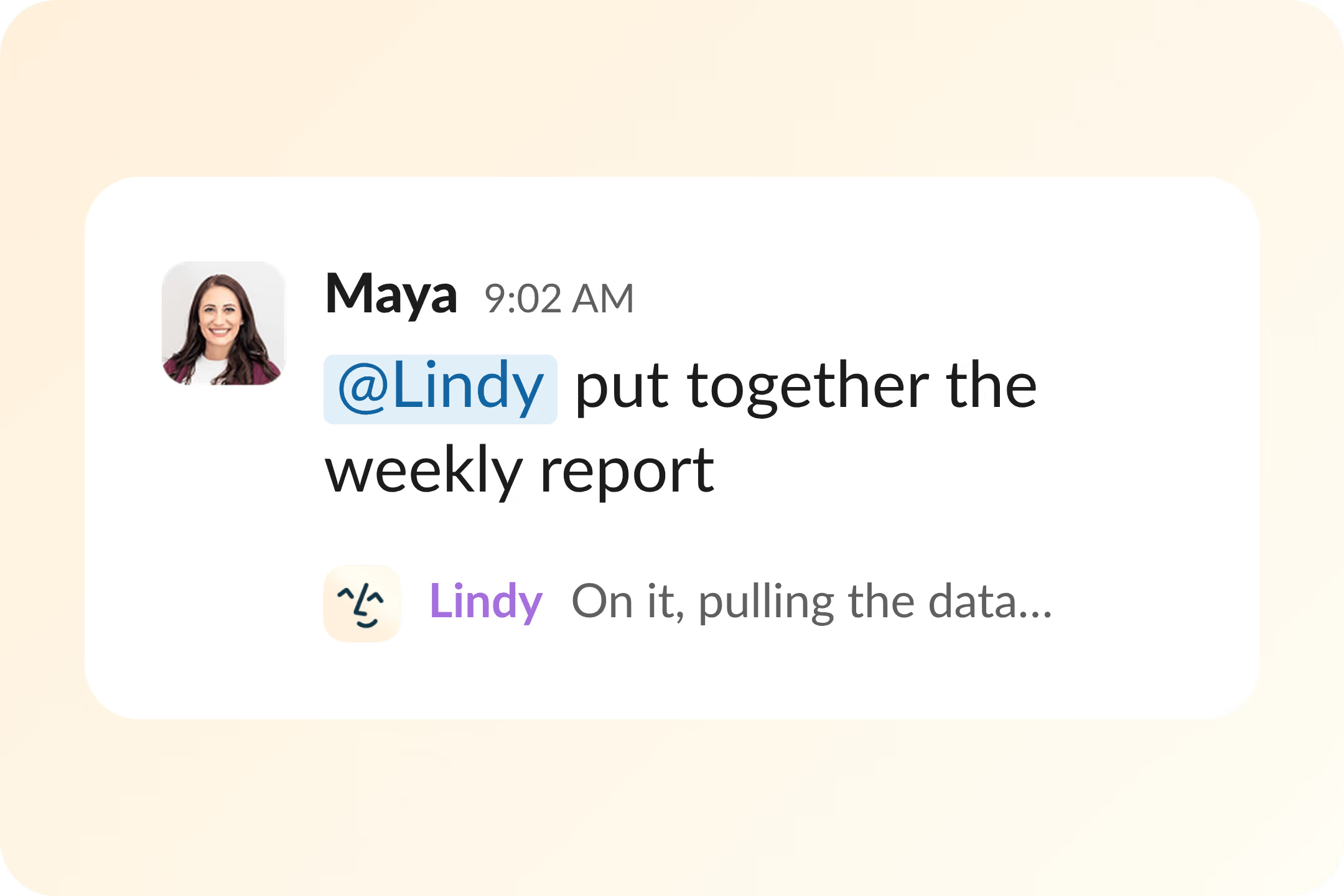
Lindy is an AI teammate that handles the operational side of marketing. Bring it into Slack for your team, or text it directly to follow up with leads, update your CRM, research prospects, and prep for meetings. No code or setup required.
Who it's for: Founders, solopreneurs, and lean marketing teams where the bottleneck is coordination and execution. If you spend more time managing the work than doing it, this is the tool.

Why I chose it
Most AI marketing tools are built for one job. Lindy is built for the work that falls between jobs. The follow-ups that slipped. The CRM entries that never got logged. The meeting you walked into underprepared because there was no time to pull the notes.
Text Lindy "follow up with everyone who didn't reply to my outreach this week," and it drafts personalized messages, checks your sent folder, and queues them for review. That is what execution without overhead looks like.
You can also connect Lindy with hundreds of tools like Gmail, Google Calendar, Slack, HubSpot, Salesforce, and Notion, so everything stays in sync without you switching between tabs.
Pros
- Prospect research is done before every call. Text Lindy a name and it comes back with company background, recent news, and key contacts in under a minute.
- Follow-ups handled automatically. Lindy tracks who hasn't replied, writes personalized messages based on the prior conversation, and queues them for your review.
- CRM stays current without manual entry. After a call, tell Lindy what happened and it logs the notes, updates the deal stage, and fills in missing fields.
- Proactive alerts when things need your attention. Lindy texts you when an urgent email comes in, a lead replies, or a meeting is ten minutes out.
Cons
- Not a content creation tool. It won't write your blog posts, ad copy, or social captions. You'll need a separate tool for that.
- Output quality depends on how clearly you describe the task. Vague instructions produce vague results.
- Best for recurring ops work. If your bottleneck is a one-off project rather than repeating follow-ups and CRM upkeep, you may not get full value from it.
Pricing
Plus starts at $29.99/user/month, Pro at $99.99/user/month, and Max at $199.99/user/month. New Slack workspace members get a 7-day free trial. Direct signups are billed immediately.
{{templates}}
What AI marketing assistants can't do
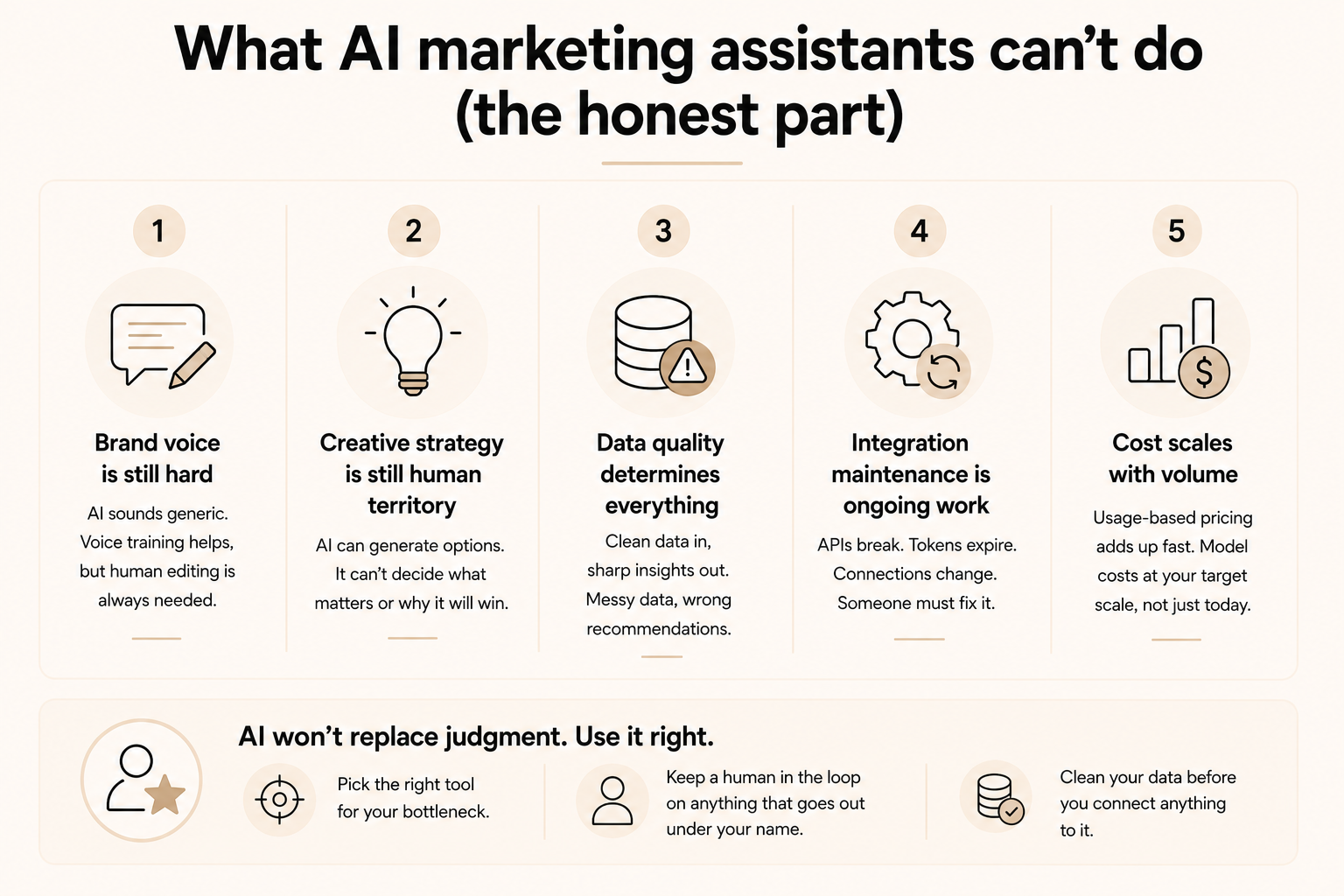
Every tool on this list will save you time, but they can't replace your judgment. What AI marketing assistants promise and what they deliver comes down to five consistent limitations that vendors rarely put on their pricing pages. Knowing them before you commit means you set expectations correctly and plan around them before they surface mid-campaign.
Here is where every AI marketing assistant falls short:
- Brand voice is still hard: AI produces grammatically correct, strategically reasonable content that sounds like no one in particular. Voice training gets you closer but never all the way there. Even after months of use, a human editor reviewing the output stays a permanent part of the process.
- Creative strategy is still human territory: AI can write 50 ad variants in the time it takes you to brief a copywriter. What it cannot do is decide which message matters, why it will land, or when the strategy needs to change. That judgment requires context, intuition, and market awareness that no current tool replicates.
- Data quality determines everything: An AI assistant analyzing your CRM will produce sharp insights from clean data and confidently wrong recommendations from messy data. Before connecting any AI tool to your records, audit what is actually in there. The tool amplifies whatever it finds, including the errors.
- Integration maintenance is ongoing work: APIs break. Authentication tokens expire. Platforms update their connections without warning. The integrations that worked perfectly during setup will fail at some point, and someone on your team needs to know how to diagnose and fix them. Small teams without technical support feel this the most.
- Cost scales with volume: Most AI marketing tools are priced by usage. A tool that costs $70/month during a pilot can cost ten times that at full deployment. Model the cost at your target scale before you commit, instead of just considering the volume you are running right now.
Pick the right tool category for your actual bottleneck, keep a human in the loop on anything that goes out under your name, and clean your data before you connect anything to it.
{{cta}}
FAQs
Is an AI marketing assistant worth it for a small business?
Yes, an AI marketing assistant is worth it for most small businesses if you spend more than a few hours a week on outreach, follow-ups, content drafts, or reporting. The time savings quickly justify the cost. Where it falls short is strategy and creative direction. Those still require human judgment regardless of which tool you use.
What's the difference between an AI marketing assistant and a chatbot?
A chatbot responds to inputs and answers questions, whereas an AI marketing assistant takes action. It can send emails, update your CRM, research prospects, schedule meetings, and handle multi-step tasks across your tools without you doing it manually. The distinction is between response and execution.
Can an AI marketing assistant replace a human marketing hire?
No, an AI marketing assistant cannot replace a human marketing hire for strategic or creative work. It handles execution well: drafts, follow-ups, CRM updates, reporting. But it cannot set strategy, build relationships, or make judgment calls that require context. Think of it as removing the repetitive work from a human hire's plate, without replacing the hire entirely.
Which AI marketing assistant is best for content creation?
Jasper is the strongest option for high-volume written content, with brand voice training and 100+ marketing-specific agents. Copy.ai is better for short-form ad copy and landing pages.
What are the biggest limitations of AI marketing assistants?
Brand voice output still needs human editing even after months of training. Creative strategy requires human judgment. Data quality in your CRM determines output quality. Integration connections break over time and need maintenance. And cost scales with usage, so what you pay at pilot is not what you will pay at full scale. Most vendors don't put any of this on their pricing page.