How to Write a Thank-You Email After an Interview in 8 Steps
Jack walked through writing a thank-you email after an interview in eight steps, with templates for phone, panel, and final-round interviews.


I reviewed the top post-interview thank-you email advice and examples to find what helps candidates most. Here’s how to write a thank you email after an interview, with steps, templates, and mistakes to avoid.
How to write a thank-you email after an interview: The 30-second answer
To write a thank-you email after an interview, follow the structure below:
- Thank the interviewer for their time
- Mention one specific point from your conversation
- Restate your interest in the role
Close with a short, professional sign-off. Keep the email concise, personal, and easy to read. You should write a thank-you email within 24 hours of the interview.
Thank you email template after an interview
A thank-you email after an interview should be crisp, professional, and highlight your interest in the role. Here’s a simple template you can copy and adjust based on the conversation:
Subject line: Thank you for your time today
Hi [Interviewer’s name],
Thank you for taking the time to speak with me today about the [job title] role. I enjoyed learning more about the position and your team.
I especially appreciated hearing about [specific topic from the interview]. Our conversation made me even more interested in the role, especially because [brief reason your experience or background fits].
Thanks again for your time and consideration. I enjoyed our conversation and would be excited about the chance to contribute to your team.
Best,
[Your name]
This template works because it covers the basics without sounding stiff. It thanks the interviewer, points to something specific from the conversation, and reinforces your fit in a natural way.
You should not copy it word for word unless it already sounds like you. Change the middle section so it reflects the interview you had. Even one specific detail can make the email feel much stronger.
Thank you email examples for different interview situations
The structure stays the same across most interviews, but the wording should shift based on the stage and format. Here are a few examples you can adapt:
After a first interview
A first-round thank you email should sound warm, professional, and direct. Your goal is to show appreciation, mention one detail from the conversation, and reinforce your interest in moving forward.
Subject: Thank you for the interview
Hi Priya,
Thank you for taking the time to speak with me today about the content marketing manager role at BrightPath. I enjoyed learning more about the team and how this role supports your product-led growth strategy.
I especially liked hearing about your plan to turn customer success insights into high-converting comparison pages and bottom-of-funnel content. Our conversation made me even more excited about the role, and I can see how my experience building SEO-driven content programs for SaaS teams would help in this position.
Thanks again for your time and consideration.
Best,
Avery Chen
After a phone interview
A phone screen thank you email should stay especially short. At this stage, you only need to show appreciation and confirm your interest.
Subject: Thank you for your time today
Hi Marcus,
Thank you for speaking with me today about the operations analyst role at Northstar Health. I appreciated the chance to learn more about the position, the team structure, and your hiring process.
I enjoyed hearing how the role supports both reporting accuracy and process improvement across departments. Our conversation made me even more interested in the opportunity, and I’d be glad to continue to the next step.
Best,
Daniel Rivera
After a panel interview
After a panel interview, send individual emails when you have each person’s contact information. Keep the structure consistent, but tailor one detail in each message so it feels personal.
Subject: Thank you for today’s conversation
Hi Elena,
Thank you for taking the time to meet with me today. I enjoyed speaking with you, Jordan, and Malik about the customer success manager role at LoopIQ.
I appreciated your comments about reducing churn during the first 90 days and building a stronger handoff between sales and onboarding. That gave me a clearer picture of what success looks like in the role, and it made me even more interested in the chance to contribute.
My background in onboarding and renewal strategy would map well to that goal. Thanks again for your time.
Best,
Nina Patel
After a final interview
A final-round thank you email can sound a bit more confident. By this point, you can speak more directly about your interest in joining the team.
Subject: Thank you for the opportunity
Hi David,
Thank you again for meeting with me about the senior product marketing manager role at Clearbit Labs. I really enjoyed our conversation and learning more about the team’s goals for the second half of the year.
Hearing more about your upcoming enterprise launch and the need for tighter coordination between product marketing, sales, and customer success made me even more excited about the opportunity.
I’d be thrilled to bring my experience leading cross-functional GTM campaigns to the role and contribute to the team’s work.
Thanks again for your time and consideration.
Best regards,
Sophia Lee
If you’re sending it late
If you missed the 24-hour window, send the email anyway. Keep it simple and acknowledge the delay without overexplaining.
Subject: Thank you for the interview
Hi Rachel,
Thank you for taking the time to speak with me on Tuesday about the people operations specialist role at Meadow. I wanted to follow up and say I appreciated the conversation.
I enjoyed learning more about your plans to improve manager onboarding and standardize internal processes as the team grows. The discussion made me even more interested in the role, and I appreciate the opportunity to stay in touch.
Best,
Jordan Kim
With examples out of the way, here’s the process behind writing thank-you emails.
Details you need before you write a thank-you email
Before you write anything, pull up your interview notes and pick one specific detail from the conversation you can mention. It might be a project they discussed, a challenge on the team, or something they said about the role.
You should also decide on one clear point you want to reinforce about your fit. That could be your experience, your interest in the team’s work, or the way your background matches what they need.
Before you start drafting, make sure you have:
- The interviewer’s name and email address
- The job title
- One specific point from the interview
- One reason you’re a strong fit
- 5 to 10 minutes to write and proofread
- A plan to send the email the same day, or within 24 hours
Once you have those details in front of you, the rest gets much easier.
{{templates}}
How to write a thank you email after an interview: 8 steps to follow
A strong thank you email shows appreciation, brings back a memorable part of the conversation, and reminds the interviewer why you fit the role. Here are the steps you can follow:
Step 1: Review your interview notes before you write
Start by looking at the notes you took right after the interview. Find one or two details you can mention in the email. These details matter because they show that you paid attention and stayed engaged during the conversation.
Look for things like:
- Project the team is working on
- Challenge they want the new hire to solve
- Skills or experiences they said matters most
- Shared moment from the conversation
You do not need to mention everything. Pick one detail that feels natural and relevant.
Step 2: Send it within 24 hours
Send your thank you email the same day when you can. If that is not possible, send it within 24 hours. That timing keeps the conversation fresh and shows that you take the opportunity seriously.
Do not wait several days because you want to make it perfect. A clear, thoughtful email sent on time works better than a polished one sent too late.
Step 3: Write a clear subject line
Your subject line should make the email easy to recognize. Keep it simple and professional. You do not need to get clever here.
Good options include:
- Thank you for the interview
- Thank you for your time today
- Thank you – [Job title] interview
- Great speaking with you today
If you want, you can include the role title to add context, especially if the interviewer is meeting multiple candidates.
Step 4: Open with a direct thank you and mention the role
In the first line, thank the interviewer for their time and mention the position you discussed. This gives the email context right away and avoids a vague opening.
For example, you can write something like: Thank you for taking the time to speak with me today about the marketing manager role.
Step 5: Mention one specific detail from the conversation
Your email feels personal when you bring up one specific topic from the interview and connect it to your interest in the role.
For example, you might mention:
- Product launch they are planning
- The way the team works across departments
- A challenge around growth, hiring, or operations
- Customer problems they want to solve
This part should stay short. One or two sentences are enough. You want to sound attentive, not overly detailed.
Step 6: Reinforce why you’re a good fit
After you mention that detail, add a short line about why the role still feels like a strong match for your background. Here’s where you remind them of what you bring without repeating your whole resume.
Focus on one clear connection. For example:
- Your past experience in a similar role
- Your ability to handle the type of work they described
- Your interest in the company’s goals or team
Keep this part grounded. You want to sound confident, not overly eager.
Step 7: End the email professionally
Close with a polite line that thanks them again and shows continued interest in the role. Then use a simple sign-off.
A good closing can be as simple as: Thanks again for your time and consideration. I enjoyed learning more about the role and team.
Then end the email with sign-offs like “Best”, “Best regards”, “Thank you”, or “Sincerely”. Avoid anything too casual or overly emotional.
Step 8: Proofread and send
Before you hit send, check the interviewer’s name, the role title, and any details you mentioned from the conversation. Fix typos, remove anything repetitive, and make sure the tone sounds natural.
Your email should usually stay under 150 to 200 words. If it feels long, tighten it. A short, thoughtful thank-you email almost always works better than a long one.
How to end a thank-you email after an interview
A strong ending should leave the conversation on a polite, confident note. A simple ending usually works best. You can use one sentence to wrap things up, then add a clean sign-off below it.
Here are a few closing lines that work well:
- Thanks again for your time and consideration.
- I appreciated the chance to learn more about the role and your team.
- Thank you again for the conversation. I enjoyed hearing more about the position.
- I appreciate your time and the opportunity to discuss the role.
- Thanks again for speaking with me. I’d be excited for the opportunity to contribute.
Keep the ending short. Do not add extra selling points, repeat your resume, or ask for an update on the hiring decision. You want the email to end with clarity, not pressure.
Common mistakes to avoid
A thank-you email can help your candidacy only when you avoid the mistakes most senders make. Here are the ones you should avoid:
- Sending a generic email: If your message could go to any interviewer, it will not stand out. Mention one specific detail from the conversation to make it feel personal.
- Writing too much: You do not need to recap the full interview or turn the email into a second cover letter. Keep it short and focused.
- Sounding pushy: Do not ask when they will make a decision or press for an update. The goal is to leave a good impression.
- Getting details wrong: Misspelling the interviewer’s name, using the wrong job title, or mentioning the wrong company can weaken the email fast.
- Sending the same note to every interviewer: After a panel interview, keep the structure similar but change one line in each email so it reflects that person’s conversation with you.
If you avoid these mistakes, your thank-you email will already feel stronger than most.
{{cta}}
Try Lindy to stay on top of your inbox and email follow-up
Once your thank-you email is ready, the next challenge is usually your inbox. Interview follow-ups, recruiter replies, scheduling emails, and reminders can pile up fast. That makes it easy to miss something important or forget to respond on time.
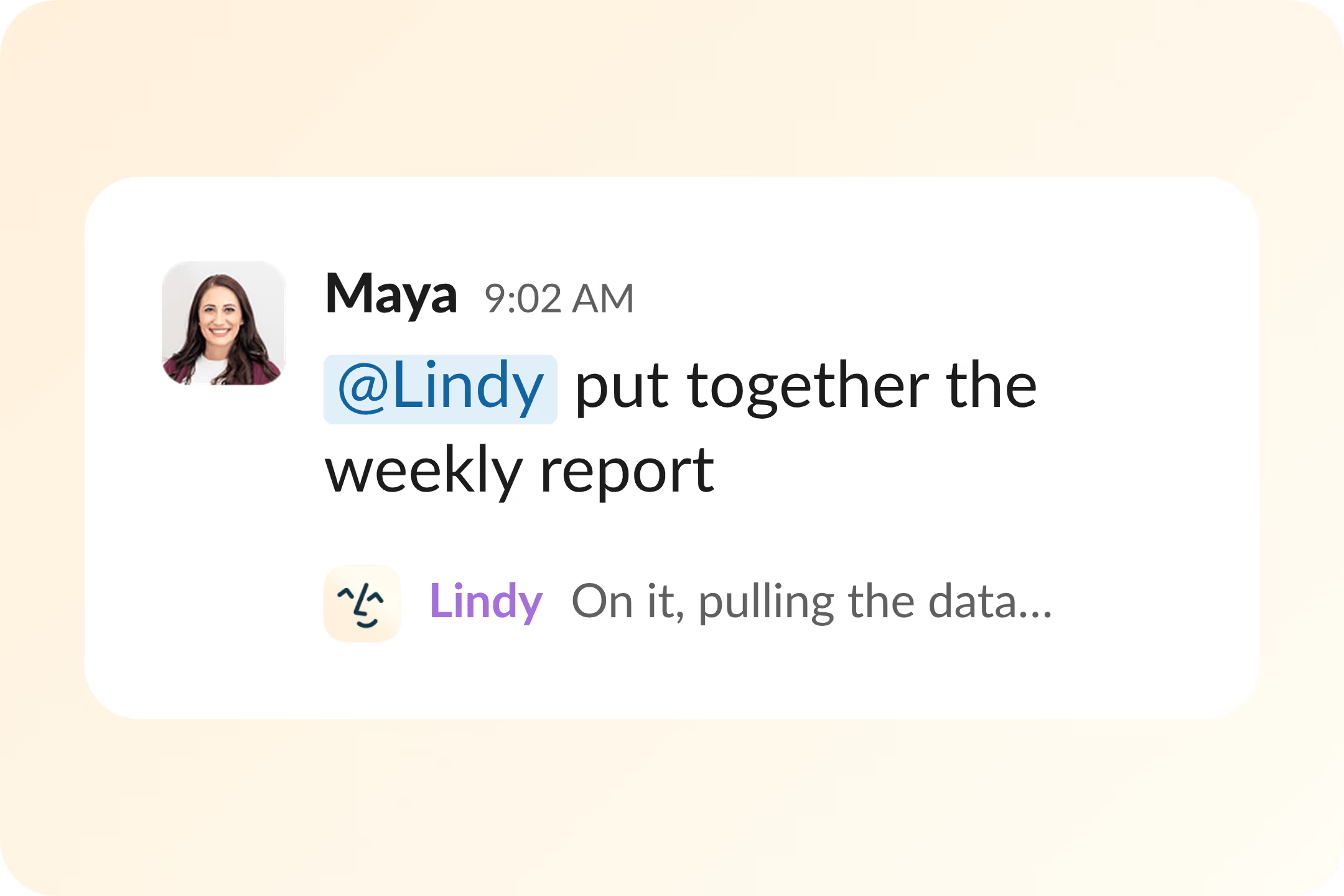
Lindy can help with that. Lindy is an AI assistant you can text to manage your inbox, draft replies, and keep important follow-up tasks moving. Instead of checking every message manually, you can ask Lindy to sort your inbox and help you focus on what needs a response.
You can use Lindy to help with tasks like:
- Highlighting important emails
- Reminding you to reply to time-sensitive messages
- Drafting follow-up emails when you need a starting point
- Replying automatically in the right cases
- Helping with outreach and other repeat email tasks
That makes Lindy useful beyond one thank-you email. It can help you stay organized across your inbox, calendar, CRM, and other day-to-day work.
Lindy also provides ready-to-use skills to help you get started quickly. Whether you need to parse email attachments, triage your inbox, or summarize a thread, you can use these skills and customize them to fit your specific workflows.
It also connects with hundreds of business apps, so your meeting context can move into the places where your team already works.
You also get enterprise-grade security with Lindy, as it’s SOC 2, HIPAA, GDPR, and PIPEDA compliant.
For those new to AI or looking to expand their knowledge, Lindy Docs offers comprehensive guides and tutorials. It helps you learn how to use Lindy for your everyday tasks.
Try Lindy’s free trial and use it to stay on top of your inbox, follow up faster, and handle email tasks with less manual work.
Frequently asked questions
How do you write a good thank-you email after an interview?
Thank the interviewer for their time, mention one detail from the conversation, and restate your interest in the role. A good thank-you email after an interview should be short, specific, and professional. Keep it focused and easy to read.
What is the best subject line for a thank-you email after an interview?
The best subject line for a thank-you email after an interview is simple and clear. “Thank you for your time,” “Thank you for the interview,” or “Thank you – [Job title] interview” all work well.
How long should a thank-you email be after an interview?
A thank-you email after an interview should usually be 150 to 200 words. It gives you enough space to say thank you, mention one specific detail, and reinforce your interest. Keep it short enough that the interviewer can read it quickly.
Should you send a thank-you email after every interview?
Yes, you should send a thank-you email after every interview. It shows professionalism, keeps you top of mind, and gives you one more chance to reinforce your interest. It applies to phone screens, first interviews, panel interviews, and final interviews.
Is it okay to send a thank-you email the next day after an interview?
Yes, it is okay to send a thank-you email the next day after an interview. Sending it within 24 hours still works well and feels timely. Same-day is great, but the next day is completely fine.
Should you send separate thank-you emails to each interviewer?
Yes, you should send separate thank-you emails to each interviewer when possible. Keep the structure similar, but personalize each one with a detail from that person’s conversation with you. That makes the note feel more genuine. It also shows attention to detail.
Should you use AI email tools to send multiple thank-you emails?
Yes, you can use AI email tools to send multiple thank-you emails, especially if you’re facing multiple interviews every day. Tools like Lindy can automate the writing and sending process, saving you time to prepare for the interviews.