Virtual Assistant Automation: 5 Tasks to Automate First
Lindy broke down which admin tasks to automate first, comparing Zapier and Make against AI agents, and covering review rules, ownership, and staged rollout.


A 12-person team I spoke with last year had three virtual assistants producing the same monthly report. Each copied numbers from one spreadsheet into a different manager’s format, and nobody caught the duplication because each assistant only saw their part. Three people were repeating one automatable workflow every month. The fix was to automate the report and free those assistants for higher-judgment work.
Virtual assistant automation uses AI tools, workflow platforms, or AI agents to handle recurring admin tasks a VA would otherwise do by hand. That can include reporting, scheduling, inbox triage, data entry, and follow-ups.
Use this blog to decide what to automate first, which setup fits your team, and how to introduce it without creating more work.
Which admin tasks should you automate first?
Start with the admin work your team repeats constantly and already handles the same way each time. That gives automation clear rules to follow and makes the impact easy to measure. Here are five good places to start:
- Scheduling and calendars: Automate availability checks, meeting creation, reminders, and rescheduling. A request can move from an email to a confirmed calendar event without anyone having to coordinate every step.
- Inbox management: AI can separate urgent messages from routine updates, identify which messages need a response, and prepare a draft using the surrounding context.
- Meeting follow-ups: After a call, automation can generate notes, extract action items, assign owners, and prepare a recap. Sales teams can also send those notes directly into the CRM.
- Data entry and reporting: Information can move from forms or spreadsheets into dashboards, reports, or internal systems. This works especially well for processes that currently depend on repetitive copying and formatting.
- CRM maintenance: Contact details, call summaries, next steps, and deal stages can be updated as conversations happen, keeping the CRM cleaner with less manual work.
Many AI administrative tasks fit this pattern. The more predictable the process is, the easier it is to hand over without creating another layer of work.
Two ways to automate administrative tasks
Most teams take one of two approaches, depending on whether they already have a VA or want automation to take over the routine work itself. Here’s how the two models differ:
- Give an existing VA better tools. A workflow platform like Zapier or Make can handle repetitive steps such as moving data between forms, spreadsheets, and CRMs. This works well when the VA relationship is already strong, and a few repeatable tasks are slowing them down.
- Let an AI agent handle routine work directly. An AI assistant can read emails, prepare replies, update records, and trigger follow-ups across several workflows. This is a better fit when admin work is spread across multiple people or departments.
The main difference is how much ownership stays with a person:
| Approach | Best for | Setup effort | Human involvement |
|---|---|---|---|
| VA + automation tools | Teams with an existing VA and clear repetitive tasks | Low | VA still manages the overall process and judgment calls |
| AI agent | Teams automating work across people, apps, or departments | Moderate | Humans review sensitive actions and handle higher-context decisions |
Many teams eventually use both models together, with a human VA handling relationships and judgment while an AI agent takes care of repetitive execution.
Tools people use for this:
The better fit depends on how much structure your workflow already has and how much autonomy you want to hand over. Teams with fixed, predictable steps may prefer a workflow platform, while more flexible work can benefit from an AI agent.
{{templates}}
Why teams are automating admin work now
Teams are automating admin work now because AI adoption is rising fast and the coordination cost of doing admin by hand keeps showing up.
The U.S. Chamber of Commerce's 2025 small business technology report found that 58% of small businesses use generative AI, up from 40% in 2024 and 23% in 2023.
I also think the appeal becomes clearer once you factor in time zones, handoffs, training, and turnover, especially with offshore teams. Those coordination costs can add up quickly, which is part of the trade-off when comparing an offshore virtual assistant with an AI agent.
Human VAs still make sense for work that depends on judgment, relationships, and nuance. For many teams, the practical setup is a mix of both, with people handling higher-context work and AI taking over the repetitive admin behind it.
Is your team actually ready for this?
Before touching a rollout plan, it's worth a quick gut-check. A few things worth confirming first:
- More than one person handles the same manual task the same way, beyond a single person's personal workaround.
- Someone on the team can own the automation itself, not only use it.
- The team already agrees on which task is broken, without needing a debate to reach that conclusion.
- The people affected most by the change have at least basic buy-in before it starts.
Most of these should hold true before the rollout plan below gets touched. Automating a task nobody agrees is a problem, or handing an ownerless workflow to a team that never asked for it, is how these projects stall before they start.
{{cta}}
How to roll out admin automation across a team
Rolling out admin automation across a team comes down to one thing: getting people to trust the workflow enough to use it. A process that works for one person can fall apart once several people, permissions, and edge cases get involved.
A smoother rollout usually follows this sequence:
Start with one task everyone already agrees is painful
Pick a workflow people complain about regularly, such as scheduling, inbox triage, or copying data into a CRM. Shared frustration gives the rollout a clear reason to exist and makes early adoption easier.
Get one visible win before adding more
Let the first automation run for a couple of weeks and track what changes. If a weekly reporting task drops from two hours to twenty minutes, make that result visible. People trust automation faster when they can see the time it gives back.
Set review rules early
Decide which actions can run automatically and which still need approval. Drafting an internal update may be low-risk, while sending a client email or changing a CRM record may still require a human check.
Give someone ownership
One person should be responsible for monitoring the workflow, fixing broken connections, and updating rules as the process changes. Without an owner, small failures tend to pile up until people return to manual work.
Expand one team at a time
Once the first workflow is stable, look for a similar bottleneck in another department. Sales may start with CRM updates, while operations may get more value from reporting or scheduling automation.
The same rollout logic applies whether you use workflow software or an automated virtual assistant. What matters most is starting with a clear process, proving it works, and expanding only once the team trusts it.
Mistakes to avoid when automating admin work
I've seen automation projects lose momentum for pretty avoidable reasons. Usually it comes down to choosing the wrong workflow, scaling too fast, or giving the system too much freedom too early.
Here are the mistakes I'd watch for first:
| Mistake | What happens | How to avoid it |
|---|---|---|
| Skipping a clear owner | Nobody notices the broken step until three people have gone back to doing it by hand. | Assign one person to own maintenance and updates. |
| Giving full autonomy on day one | One bad client email or incorrect record update can damage trust in the whole system. | Start with human review for higher-risk actions, then loosen controls as performance becomes reliable. |
| Letting tool sprawl grow | Different teams build on different platforms, making handoffs and troubleshooting much harder. | Standardize around a small set of approved automation tools before every department builds its own setup. |
The best rollouts usually feel a little boring at first. One painful task gets fixed, people trust the result, and the scope expands from there. That steady approach tends to create far more useful automation than trying to automate half the company in week one.
Try Lindy: Virtual assistant automation built for a whole team
Most automation tools get set up by one person for their own workflow. Lindy is built to spread across a team from the start.
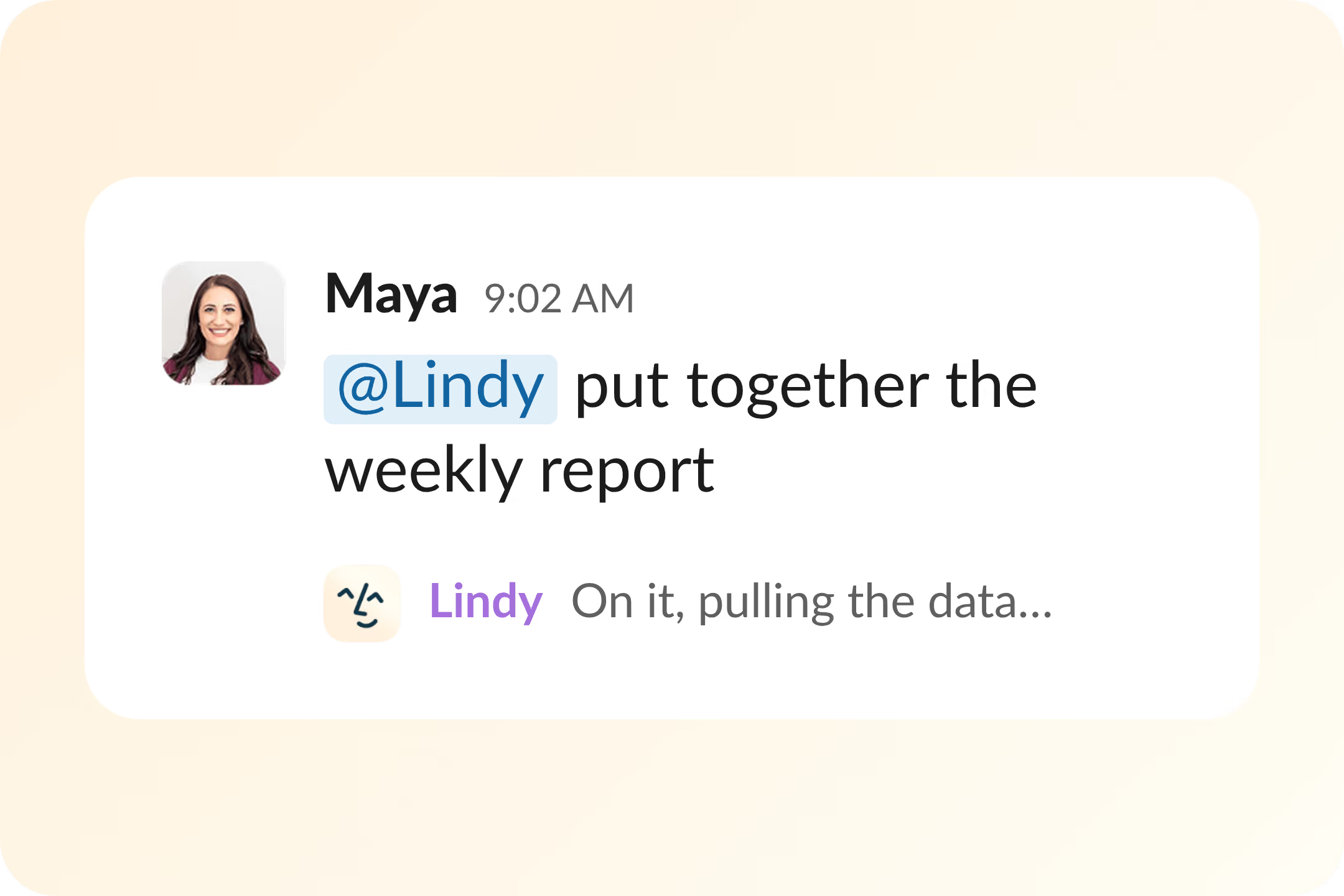
An admin connects Lindy once, and from there, anyone in the company can @mention it in an approved channel or message it privately for their own work. After setup, the day-to-day workflow looks like this:
- Automates the admin layer directly. Email triage, meeting notes, scheduling, and follow-ups are handled without a person routing each task by hand.
- Lives where the team already works. No new dashboard to check. Lindy runs in Slack, and everyone can use it the same way.
- Keeps a shared meeting library. Lindy joins on Meet, Zoom, and Teams as a named participant everyone can see, then records, transcribes, and organizes your meetings in folders you can open and search.
- Answers questions with sources. @mention it in a channel, and it pulls from your connected tools and cites the source of the answer.
- Turns a working process into a reusable skill. Once one team's automation works, the rest of the company can copy it, no rebuilding from scratch required.
- Keeps a review step by default. Any action with external impact, such as sending an email, updating a ticket, posting in another channel, or publishing a document, waits for approval from a named reviewer first.
FAQs
1. How much does virtual assistant automation cost?
Workflow platforms are priced by usage rather than by seat. Zapier's paid plans start at $29.99 a month, or $19.99 a month billed annually, and Make's start at $12 a month, or $9 a month billed annually, both scaling with the number of tasks or credits used.
AI assistants like Lindy are priced per user, starting at $29.99 a month per user. Either way, both cost far less than hiring a second VA, though the real comparison should weigh the platform fee against the hours of manual work it actually eliminates.
2. Is virtual assistant automation secure enough for sensitive data like email and CRM records?
It depends on the tool, not the category. For anything touching client data, health information, or financial records, look specifically for SOC 2 certification and, where relevant, HIPAA compliance before connecting an account.
3. How long does it take to see results from automating admin work?
Most teams see a working result within one to two weeks of automating a single task, since that's enough time to catch errors and build trust in the output. Full department-wide rollouts typically take a few months, expanding one workflow at a time rather than all at once.
4. Do you need technical skills to set up virtual assistant automation?
No, most modern tools are built for non-technical setup. Workflow platforms use visual, drag-and-drop builders, and AI assistants like Lindy start working once you connect an account, with no coding required for either.
5. Which departments benefit most from virtual assistant automation?
Sales and operations teams tend to see the biggest impact first, since their work involves the most repetitive scheduling, data entry, and follow-up. Support and marketing teams follow close behind, mostly for inbox triage and reporting tasks.