 Customer story
“We wanted one place the team could build, share, and improve together. For us, that became Lindy.”
Alex Mannine Global Head of Strategy & AI, Percepture
A digital marketing and PR agency across New York, Chicago and Tampa. Most agencies hand out individual AI subscriptions and let everyone work it out. Percepture built one shared system the whole company works from.
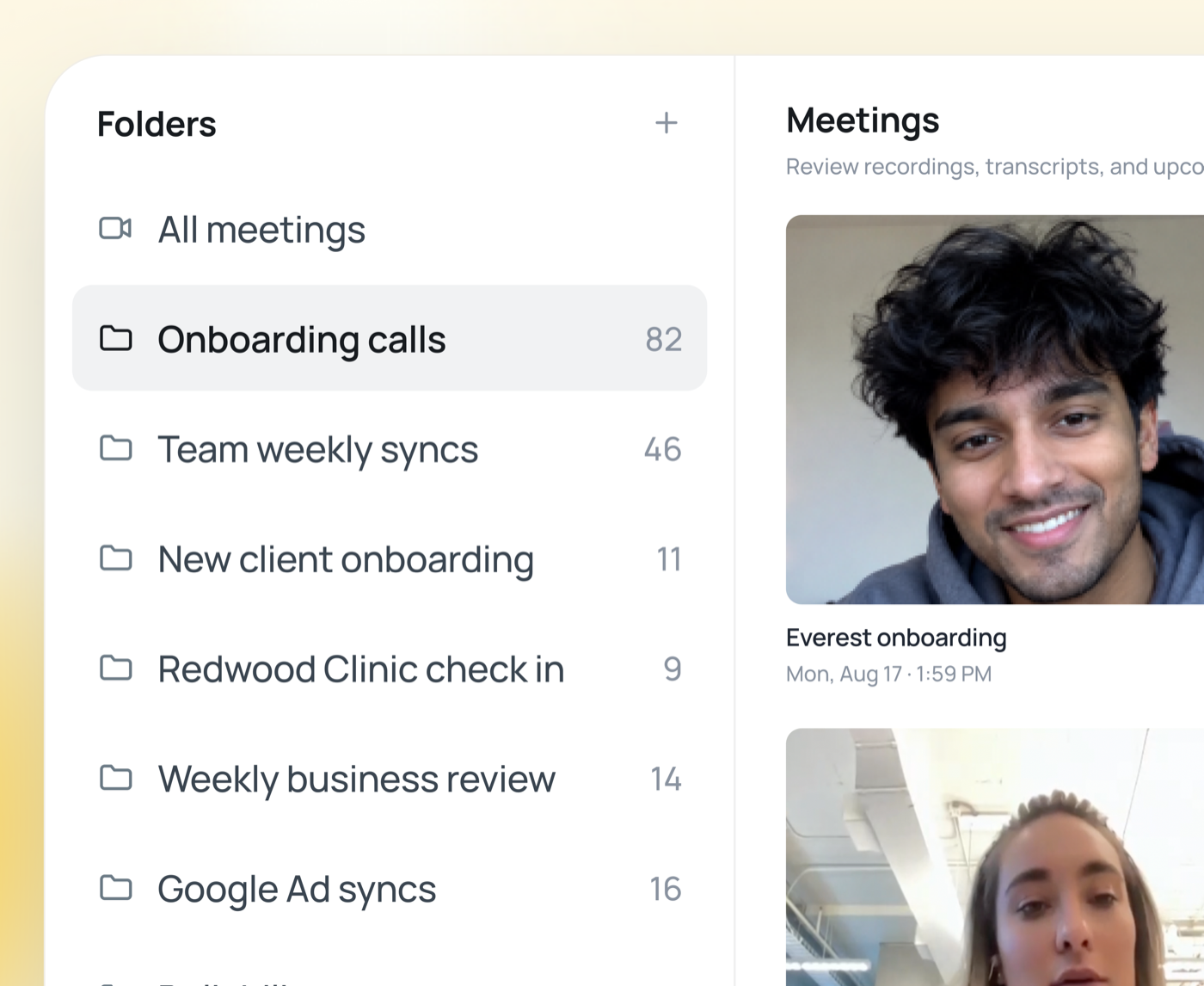
Lindy product UI
Figures as reported by Percepture.
At a glance
One shared system, rather than everyone running their own experiment
Company
Industry
Contact
Global Head of Strategy & AI
Offices
Replaced
Used for
Before & after
The notes existed. Reaching them was the problem.
Before Lindy, the problem was not that we had no notes. We had notes everywhere. The problem was that the context lived across calls, people, and Trello cards, so the next person still had to reconstruct the story.
 Alex Mannine, Global Head of Strategy & AI, Percepture
A client handover can follow four or five business-intelligence calls, on top of check-ins and prospect meetings. Every one produced notes, decisions and follow-ups that somebody had to type into Trello afterwards.
- ✕No way to search past meetings by client or deal stage
- ✕Context stuck with whoever happened to be on the call
- ✕Notes and follow-ups pushed into Trello by hand
- ✕Account teams inheriting work from a blank page
Knowledge the agency owned, and could not reach.
Lindy became the shared baseline across client services, business development and internal operations — one environment rather than a patchwork, with an agent library that gets more useful as the team adds to it.
- ✓Every recording searchable by client or deal stage
- ✓Notes captured, Trello updated, follow-ups assigned
- ✓Onboarding docs arriving as a working draft
- ✓Marketers building their own workflows without engineering
One baseline, reused instead of rebuilt.
Seven recurring workflows in one place the whole agency works from — client services, business development and internal operations on the same baseline, reusing what already works instead of each team starting over.
What Lindy runs
Seven recurring workflows, built by the marketers who needed them
- Meeting captureRecording moved off Zoom — notes captured, Trello cards updated, follow-ups assigned, and every recording searchable by client or deal stage.
- OnboardingContext from the business-intelligence calls carried into the onboarding document, saving 1.5 hours per handover.
- Ad creativeCreative production run as a standing workflow rather than a request each time.
- SEO contentSearch content produced as part of client delivery rather than prepared for it.
- AI-search optimisationThe work of getting clients found inside AI answers, not only in Google.
- Lead outreachOutreach and PR drafting, with people still owning what actually gets sent.
- Client operationsProposals and RFP responses assembled, brand mentions monitored.
Alongside the seven, the team can @-mention Lindy directly in Slack for calendar lookups and one-off tasks — the everyday use that does not need a workflow at all.
The hard part is not giving people access to AI. It is getting the whole company working from the same system.Alex Mannine Global Head of Strategy & AI, Percepture Also CTO & Co-Founder at Pyra AI
Results
What Percepture reported after adopting Lindy
- 27+ hrsExecutive capacity reclaimed every month across the consolidated workflows.
- 1.5 hrsSaved on every client handover, with the onboarding doc arriving part-written.
- 7 workflowsConsolidated into one teammate instead of seven disconnected experiments.
- Client deliveryLindy moved from internal support into the work the agency sells.
That last one is the unusual part. At most agencies AI stays on the internal side — it helps staff prepare, and people deliver. At Percepture it also supports live client delivery, while people stay accountable for strategy, approval, quality and client decisions.
What it connects to
Percepture kept the tools its teams already worked in







What it replaced
Three separate subscriptions, none of them shared



Individual AI subscriptions and a separate meeting recorder, each useful on its own and none of them reusable by anyone else. Consolidating them is what turned scattered experiments into an agent library the agency builds on.
What's next
Three more workflows becoming standing automations
Client reporting that generates the "what happened and why" narrative rather than another static PDF; ad creative distribution across platforms with tracking intact; and invoicing triggered by signed agreements.
Alex is explicit that the target is not an adoption percentage: the shift he is looking for is the agent understanding enough context to notice what is missing, nudge the team, and move the next step forward.
About Percepture
Percepture is a digital marketing and public relations agency built for how search works now. From offices in New York, Chicago, and Tampa, the team connects digital PR, enterprise SEO, and generative engine optimization into one coordinated system that helps companies get found, trusted, and chosen across Google and AI search.
That same strategy shapes its technology: Prime AI Visibility shows how brands appear inside AI answers; Lead Seeker identifies B2B companies already showing buying intent; and Pyra builds practical AI systems that turn those signals into action. Learn more at percepture.com.
Mannine led Percepture’s move from manual handoffs and scattered knowledge to a shared AI operating model. He and the Pyra team also served as design partners for Lindy Teammate, giving Mannine an early view of how shared agents move from experiments into everyday work.
Put a teammate in your Slack.
Free to try. Percepture started with one person.