Athena Executive Assistant Alternatives: My Top 6 Picks for 2026
Everett reviewed six Athena executive-assistant alternatives, including Boldly, Prialto, and Viva, weighing cost, flexibility, and time zone fit for different team needs.


I kept coming back to the same line in Athena’s offer: $3,600 a month, plus an initial 90-day commitment, for one full-time assistant. I wasn’t looking for another full-time hire. I needed a lighter way to keep the calendar moving, clear routine admin, and catch the follow-ups I kept missing.
For that workload, the math didn’t make sense.
So I reviewed 6 Athena alternatives across cost, commitment, time-zone fit, backup coverage, and the kind of management each option requires. Some give you fractional human support. Others offer freelance or remote talent when your needs extend beyond executive admin.
6 best Athena executive assistant alternatives: TL;DR
- Boldly: Best for U.S.-based fractional executive assistants
- Prialto: Best for managed virtual assistant support with backup coverage
- Time etc: Best for part-time assistant support
- Viva: Best for LATAM-based full-time executive assistants
- LatHire: Best for hiring remote talent beyond executive assistant work
- Upwork: Best for flexible freelance assistant hiring
What is an Athena executive assistant?
An Athena executive assistant is a trained remote assistant who supports founders, CEOs, executives, and busy professionals with day-to-day admin work.
Athena matches clients with a dedicated Executive Assistant (EA) and a Partnership Manager. It then helps them with the onboarding and delegation process. The assistant manages calendars, inboxes, travel, meeting coordination, and other recurring tasks.
In simple terms, Athena helps leaders get time back by giving them a human assistant who learns their work style and takes recurring tasks off their plate.
Why do organizations look for Athena executive assistant alternatives?
Organizations look for Athena executive assistant (EA) alternatives when Athena feels too expensive, rigid, or focused on one type of support. These are the main reasons:
- No need for full-time EA support: Athena works best for leaders with enough recurring work to support a dedicated assistant. Teams that only need 10-20 hours per week may prefer part-time services like Time etc or Boldly.
- Want lower monthly costs: Athena is a premium service, with sources commonly citing pricing around $3,000/month or more. That can feel steep for startups, small teams, or operators who mainly need help with repeatable admin tasks.
- Need better time zone alignment: Some buyers want assistants who work the same business hours as U.S. teams. Viva, for example, positions LATAM-based assistants as an alternative for executives who want more real-time overlap.
- Support beyond executive admin: Athena focuses heavily on executive assistant work. Teams that also need admin, ops, sales, customer support, marketing, finance, HR, or legal help may prefer broader hiring platforms like LatHire.
- Want an AI assistant instead of another hire: Some teams don’t need a human assistant for every task. They need help with inbox triage, meeting prep, summaries, follow-ups, CRM updates, and research. In that case, texting an AI assistant can make more sense than hiring a full-time EA.
What type of Athena alternative do you need?
Before you compare tools, decide on the kind of support you want. You may need a human assistant or a remote talent hire. Some teams may want to work with flexible freelance help. And some tools give you an AI assistant you can text to handle tasks.
The Athena alternative you choose will fall into one of these buckets:
Managed executive assistant services
Managed EA services work best if you want a human assistant without running the full hiring process yourself. These services handle matching, onboarding, training, and support. Some also offer backup coverage if your assistant leaves or takes time off.
Choose this model if you want someone who can learn your communication style, manage sensitive relationships, and support your calendar, inbox, travel, and follow-ups over time.
Examples: Athena, Boldly, Prialto, Time etc, and Viva
Remote staffing platforms
Remote staffing platforms work best if you want to hire someone more directly. You get access to pre-vetted candidates, but you still manage the person as if they were part of your team. It makes sense if your needs go beyond executive assistant work.
For example, you may start by looking for an EA, but then realize you need an operations coordinator, sales assistant, customer support rep, recruiter, or finance admin.
Examples: LatHire, Pearl, and Near
Freelance marketplaces
Freelance marketplaces work best if you need short-term help or want maximum flexibility. You can hire an assistant for a few hours, a one-off project, or a trial period before you commit. However, you need to handle the screening, onboarding, training, and quality control yourself.
This model works well for clearly defined tasks like research, data entry, inbox cleanup, CRM updates, or travel planning.
Examples: Upwork and Fiverr
AI assistants
AI assistants work best when your biggest problem is repeatable admin work. Instead of hiring another person, you can set up an AI assistant to help with tasks like sorting your inbox, prepping for meetings, sending follow-ups, or finding information across your work apps.
You can opt for this approach if you want help throughout the day, but you don’t need a full-time human EA to manage sensitive relationships or make judgment calls on your behalf.
Examples: Zapier, Superhuman, and Lindy
Many teams get the best results by combining the two. A human assistant handles nuance and relationships, while AI handles the repetitive work that slows everyone down.
How I evaluated these Athena executive assistant alternatives
I evaluated each Athena alternative based on how well it solves the problems that push people away from Athena. These factors are cost, flexibility, onboarding speed, time zone fit, and task coverage.
I also separated human assistant services from AI assistants and freelance marketplaces, as they solve different problems. A managed EA service gives you human judgment and relationship support. A freelance marketplace gives you hiring flexibility. AI assistants give you help you can text when daily admin work starts piling up.
Here’s what I looked for:
- Task coverage: Can it handle the work executives usually delegate, like inboxes, calendars, meeting prep, follow-ups, research, travel, CRM updates, and admin tasks?
- Speed to value: Can you get help quickly, or do you need to wait through a long matching and onboarding process?
- Management burden: Does the provider handle matching, training, support, and backup coverage, or do you need to manage everything yourself?
- Pricing clarity: Can you estimate the cost before booking a call, or do you need to speak with sales to get basic pricing?
- Flexibility: Can it support part-time, full-time, project-based, or AI-assisted work?
- Best-fit buyer: Does it fit founders, executives, startups, agencies, SMBs, enterprises, or lean ops teams?
6 best Athena executive assistant alternatives: At a glance
| Tool | Best for | Starting price (billed monthly) | Key advantage vs Athena |
|---|---|---|---|
| Boldly | U.S.-based fractional executive assistants | $2,600/month | Experienced U.S.-based support without a full-time commitment |
| Prialto | Managed VA support with backup coverage | $1,600/month | Adds process structure, team support, and coverage |
| Time etc | Part-time assistant support | $390/month | Recurring help without paying for a full-time EA |
| Viva | LATAM-based full-time executive assistants | $3,999/month (billed quarterly) | U.S. time zone alignment and faster onboarding |
| LatHire | Remote talent beyond executive assistants | ~$1,899/month/hire | Hire LATAM talent across admin, ops, sales, support, and other roles |
| Upwork | Flexible freelance assistant hiring | Varies by freelancer | Hiring flexibility if you can handle vetting and management yourself |
Athena works well if you want a full-time human executive assistant with structured delegation support. These 6 alternatives cater to the needs of different teams, whether that’s lower cost, part-time help, time zone overlap, or an AI assistant they can text throughout the day. If your main bottleneck is inbox management, deploying a dedicated gmail ai assistant can help automate repetitive daily emails.
Here’s a quick comparison table before we get into the detailed reviews: For organizations preferring software over human staff, configuring an AI-powered digital assistant can automate many of the same tasks.
Next, let’s look at these top picks in detail.
1. Boldly: Best for U.S.-based fractional executive assistants
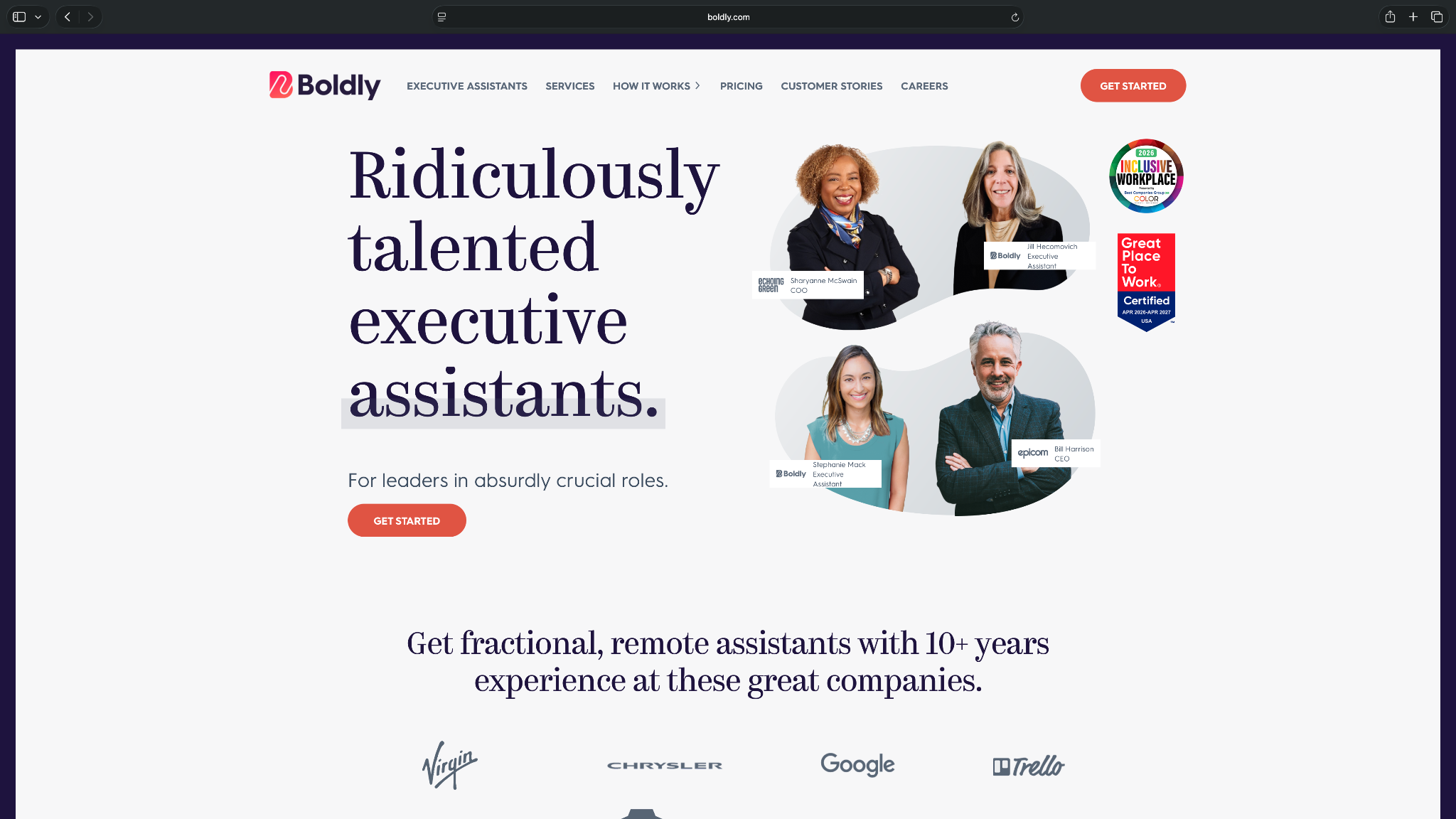
What it does: Boldly matches businesses with experienced U.S.-based executive assistants for fractional support. Its assistants help with calendar management, inbox support, travel planning, admin work, project coordination, and similar executive tasks.
Who it’s for: Best for executives who want senior human assistant support for a set number of hours each month, but don’t need a full-time EA.
Boldly is a strong Athena alternative if you want an experienced U.S.-based executive assistant but don’t need full-time support.
It works more like subscription staffing than a task marketplace. You get matched with a dedicated assistant, choose the person you want to work with, and track tasks and time through a client dashboard.
Boldly also says your assistant trains a backup, so you have cover during vacation or illness.
Why it beats Athena
- Fractional support: Athena works best for full-time EA needs. Boldly gives you part-time support for a set number of hours each month.
- U.S.-based assistants: Boldly is a better fit if you want domestic support for time zone overlap, cultural context, or communication-heavy work.
- Senior assistant experience: Boldly focuses on experienced assistants, so it can work well for executives who need polished support without months of training.
- Backup coverage: Boldly says assistants train backup support, which helps reduce disruption when someone takes time off.
- Lower commitment than full-time EA services: You can get recurring support without building your entire operating rhythm around one dedicated assistant.
Pros
- Strong fit for fractional support: Boldly works well if you need ongoing help, but not enough work for a full-time EA.
- Experienced U.S.-based assistants: Boldly focuses on seasoned assistants, marketers, admin professionals, and project support specialists.
- Backup coverage: Boldly says each EA trains a backup, which reduces the risk of work stopping when your assistant takes time off.
Cons
- More expensive than offshore or AI assistant options: Boldly sits in the premium fractional assistant category, so it won’t be the cheapest Athena alternative.
- Not ideal for high-volume daily support: If your inbox, calendar, and internal ops need attention all day, Athena or Viva may fit better.
- Still requires delegation management: You need to define work clearly and use the assistant’s time well.
Pricing
- No free plan or trial
- Paid plans from $2,600/month, billed monthly
Bottom line
Choose Boldly if you want an experienced U.S.-based assistant for part-time executive support. It’s a better fit than Athena when you want senior human support but don’t want to pay for or manage a full-time EA.
2. Prialto: Best for managed VA support with backup coverage
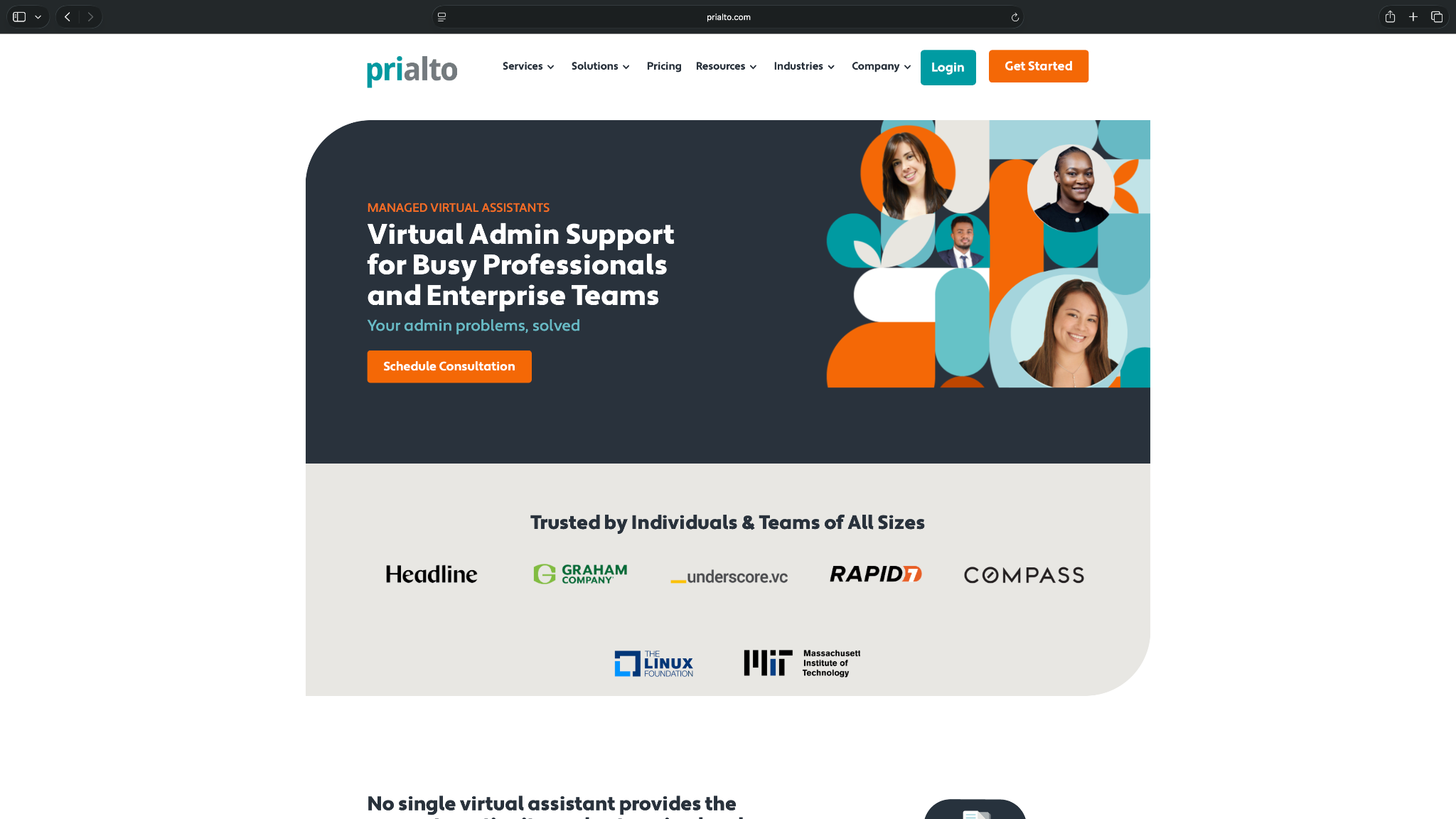
What it does: Prialto provides managed virtual assistant support for executives, sales teams, and operations teams. Its assistants help with scheduling, inbox management, CRM updates, sales admin, travel coordination, and recurring business processes.
Who it’s for: Best for teams that want structured human assistant support with backup coverage and less day-to-day hiring management.
Prialto is a good Athena alternative if you want a managed assistant service, but don’t want your support to depend on a single person.
Athena gives you a dedicated executive assistant. With Prialto, you get a managed support system around the assistant, including process documentation, backup support, and ongoing oversight.
That makes it useful for executives and teams that need repeatable admin work handled consistently, especially across sales, CRM, and operations tasks.
Why it beats Athena
- Backup support: Athena focuses on a dedicated assistant relationship. Prialto adds coverage so work doesn’t stop if your assistant becomes unavailable.
- Process documentation: Prialto works well for recurring tasks because it helps document how work gets done.
- Better fit for teams: Athena often fits one executive. Prialto can support executives, sales teams, and operations teams with repeatable admin work.
- Less single-person dependency: Prialto’s managed model gives you a support system, not only one assistant.
- Good for CRM and sales admin: Prialto fits teams that need help with pipeline updates, scheduling, meeting follow-ups, and other process-heavy work.
Pros
- Backup coverage: Prialto gives teams more continuity if an assistant becomes unavailable.
- Good for process-driven work: It works well for recurring admin, CRM, scheduling, and sales support tasks.
- Less hiring work for your team: Prialto handles more of the assistant management than a freelance marketplace or direct hire.
Cons
- Less personal than a dedicated EA relationship: Prialto may not feel as tailored as a one-to-one executive assistant who works closely with one leader every day.
- Not the cheapest option: Managed support costs more than hiring a freelancer or using an AI assistant.
- May feel too structured for some executives: If you want a highly personal assistant relationship, Athena or Boldly may fit better.
Pricing
- No free plan or trial
- Managed service plans, starting from $1,600/month, billed monthly, for 55 hours of support
Bottom line
Choose Prialto if you want managed human assistant support with process structure and backup coverage. It’s a better fit than Athena when you care more about continuity, repeatable execution, and team admin support.
3. Time etc: Best for part-time assistant support
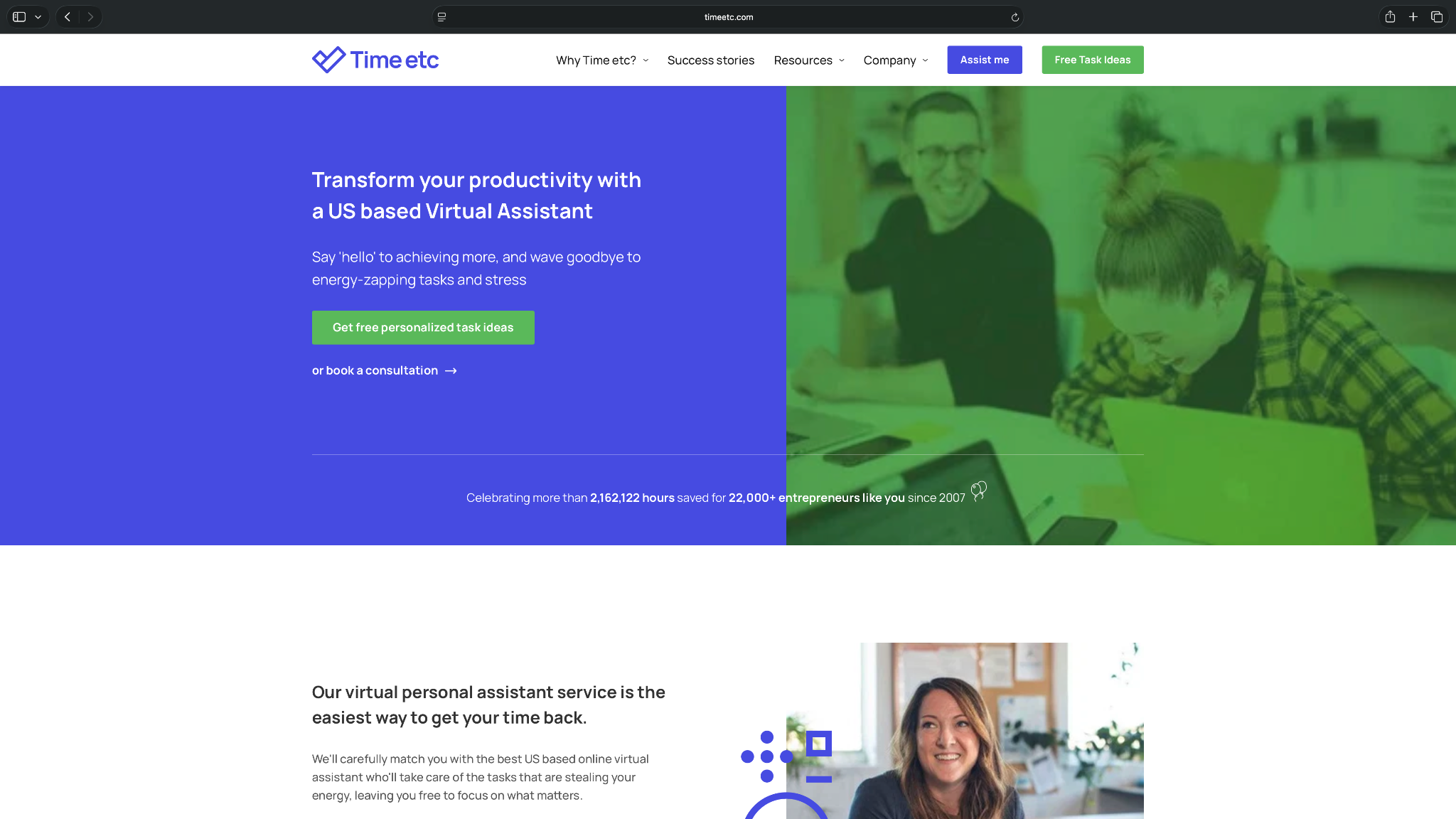
What it does: Time etc matches you with a virtual assistant for part-time help with admin work, scheduling, inbox support, research, writing, travel planning, and basic business tasks.
Who it’s for: Best for founders, consultants, coaches, and small business owners who need recurring assistant support, but don’t have enough work for a full-time EA.
Time etc is one of the most practical Athena executive assistant alternatives if your main issue with Athena is commitment.
That’s a common situation. You may need someone to clean up your inbox, coordinate your calendar, research vendors, book travel, format documents, or chase follow-ups. But you may not have enough work to keep a full-time assistant busy every day. You may need help every week, but not eight hours a day.
Time etc fits that middle ground. It gives you human assistant support in smaller blocks, so you can start delegating without committing to a premium full-time EA service.
Why it beats Athena
- Lower commitment: Athena works best when you need daily full-time EA support. Time etc gives you a lighter way to get recurring help.
- Better fit for smaller workloads: Time etc works well for founders or solo operators who need help with a few tasks each week, not constant coverage.
- Simple task coverage: Assistants can help with scheduling, research, inbox support, travel planning, writing, and admin tasks.
- Good for testing assistant support: Time etc gives you a way to try consistent delegation before you hire a dedicated EA.
- More practical for small teams: If your budget can’t support a premium full-time EA, Time etc can cover the basics without overcommitting.
Pros
- Part-time support: Time etc works well when you need a few hours of help each week or month.
- Good for standard admin tasks: It can handle scheduling, research, travel, writing, inbox support, and similar work.
- Lower lift than freelance hiring: You don’t need to screen hundreds of freelancers or manage everything from scratch.
Cons
- Not ideal for daily executive coverage: Time etc may feel too light if your calendar, inbox, and team coordination need constant attention.
- Limited for broader business hiring: It doesn’t replace a platform like LatHire if you need ops, sales, support, finance, or legal talent.
- Less suited for sensitive executive judgment: A part-time assistant may not develop the same context as a full-time EA.
Pricing
- No free plan, but you can submit your first task free as a trial
- Paid plans from $390/month, billed monthly, for 10 hours of monthly support.
Bottom line
Choose Time etc if Athena feels too expensive or too full-time for your current workload. It’s a good fit when you need recurring admin help, but not a dedicated executive assistant who works with you every day.
4. Viva: Best for LATAM-based full-time executive assistant support
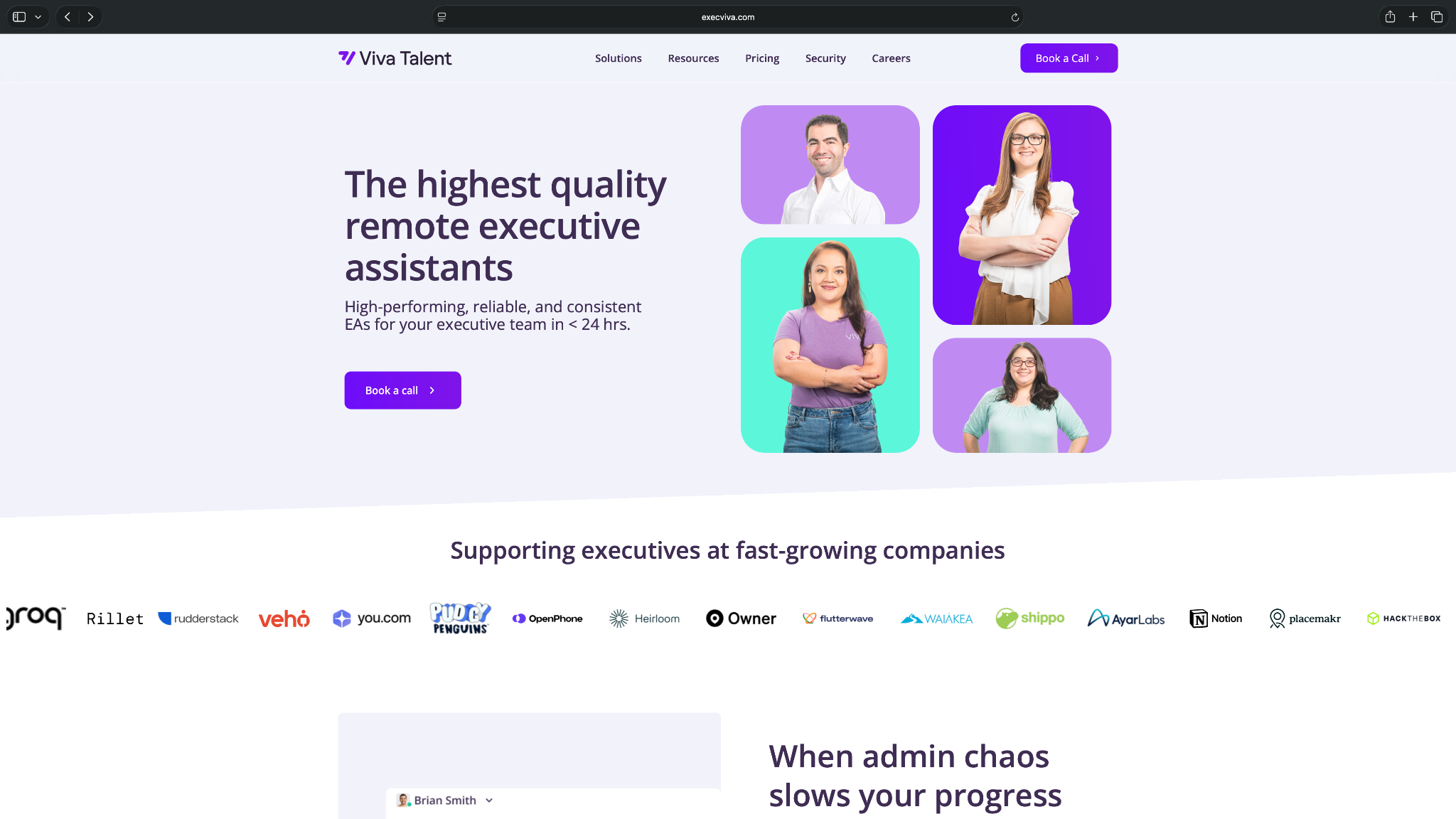
What it does: Viva matches executives with full-time executive assistants based in Latin America. Its assistants support inbox management, calendar coordination, meeting prep, hiring support, internal communication, and daily executive admin.
Who it’s for: Best for startup leaders and high-growth teams that want full-time human EA support during U.S. business hours.
Viva is a strong Athena alternative if time zone overlap matters to you. It positions itself around speed, responsiveness, and LATAM-based assistants who work the same hours as U.S. executives.
You can get paired with an EA in under 24 hours, and its assistants complete thorough business training before they work with clients.
Why it beats Athena
- Better time zone alignment: Viva’s LATAM-based assistants work U.S. hours, which helps with quick Slack replies, meeting prep, calendar changes, and urgent follow-ups.
- Faster matching: Viva says it can match executives with assistants in under 24 hours, while Athena’s onboarding process can take one to two weeks.
- Full-time embedded support: Viva works well when you want an assistant who plugs into your daily operating rhythm, not a few fractional hours each week.
- Good fit for fast-moving teams: Viva focuses on startup and high-growth executives who need proactive help with inboxes, calendars, hiring coordination, and internal communication.
- Stronger fit than Athena for synchronous work: If your assistant needs to respond during your workday, attend meetings, and handle same-day changes, Viva’s LATAM model may fit better.
Pros
- Strong U.S. time zone overlap: Viva fits executives who need real-time support during the workday.
- Full-time assistant model: It works well for leaders who need daily help across inboxes, calendars, meetings, and team coordination.
- Good startup fit: Viva’s positioning focuses on high-growth teams that need fast ramp-up and proactive support.
Cons
- Not ideal for light workloads: If you only need a few hours of help each week, Viva may feel like too much.
- Less useful if your main need is repetitive admin: If your work mostly involves follow-ups, summaries, inbox sorting, CRM updates, and research, an AI assistant may cover that without a full-time hire.
Pricing
- No free plan, only a 1-month free trial
- Paid plans from $3,999/month, billed quarterly
Bottom line
Choose Viva if you want a full-time human executive assistant who works during U.S. business hours. It performs better than Athena when teams rely on real-time collaboration.
5. LatHire: Best for hiring beyond executive assistants
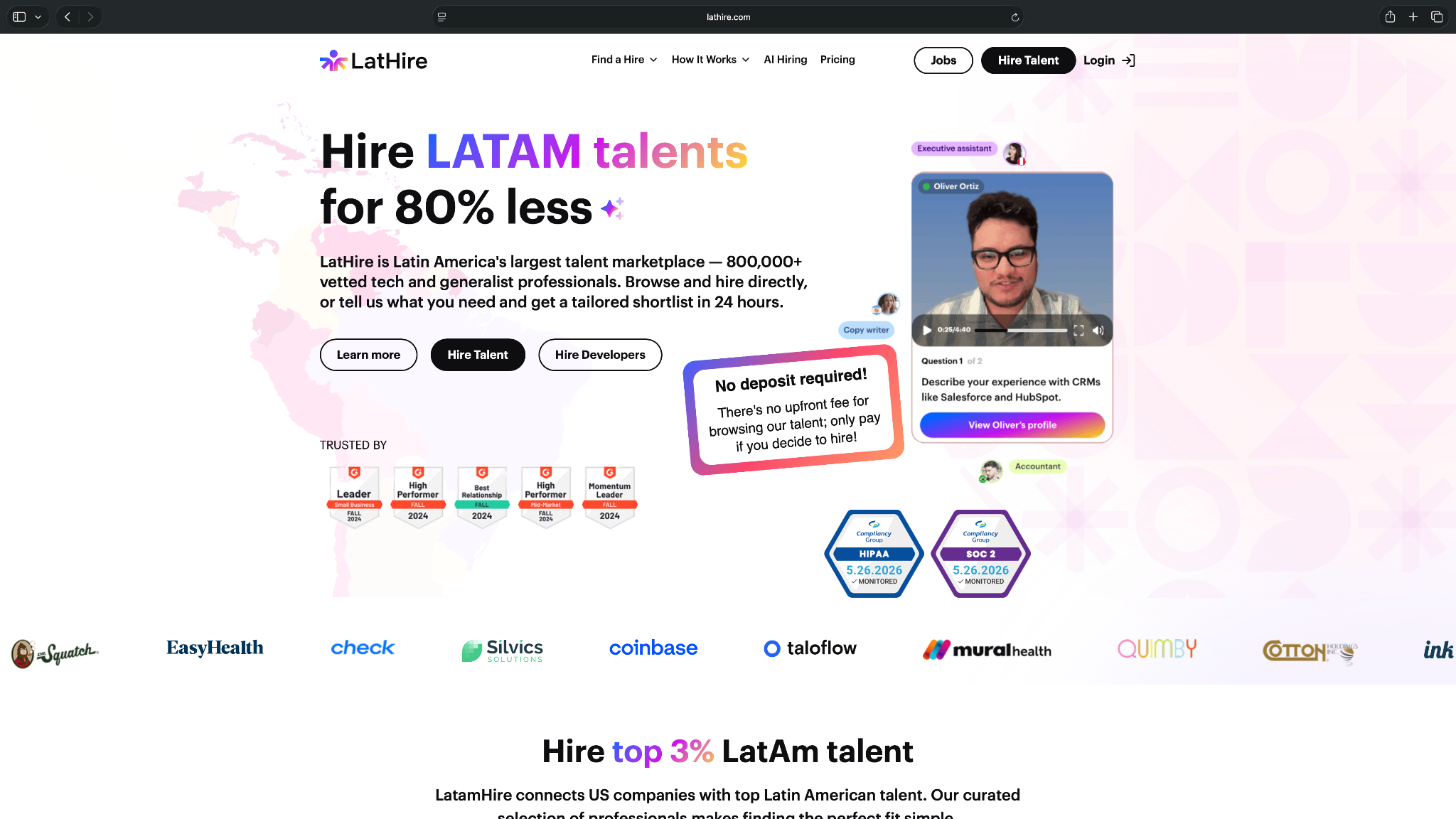
What it does: LatHire helps companies hire pre-vetted remote talent from Latin America, including executive assistants, virtual assistants, admin assistants, operations coordinators, sales support, customer support, finance assistants, legal assistants, and more.
Who it’s for: Best for startups, agencies, SMBs, and remote-first teams that need time zone-aligned talent across more than one role.
LatHire is a good Athena executive assistant alternative if you need broader business support, not just an executive assistant.
For example, you may need someone to manage your inbox and calendar. But you may also need help updating your CRM, coordinating client work, replying to customer requests, supporting sales, or keeping operations organized.
At that point, a broader remote hire often makes more sense than a traditional executive assistant.
Why it beats Athena
- Broader role coverage: Athena focuses on executive assistants. LatHire covers EAs, VAs, admin, operations, sales, support, marketing, HR, finance, legal, healthcare, and tech roles.
- Better time zone fit for U.S. teams: LatHire focuses on Latin American talent, which can give U.S. companies a stronger workday overlap than offshore assistant models.
- More flexible hiring path: LatHire works better when your needs don’t fit neatly into one full-time EA role.
- Good fit for growing teams: Startups and SMBs often need different roles as they grow. LatHire gives them room to hire beyond executive support.
- Potentially lower monthly cost: ~$1,899/month executive assistant example
Pros
- Strong for broader remote hiring: LatHire can help with executive assistant work, but it also covers operations, admin, sales, marketing, support, finance, and legal roles.
- Good U.S. time zone overlap: LATAM hiring works well when assistants need to join meetings, reply quickly, and coordinate with U.S.-based teams.
- Helpful for hybrid roles: LatHire fits companies that need one person to handle admin plus ops, support, sales coordination, or client work.
Cons
- Less focused than Athena for premium EA support: If you only want a dedicated executive assistant with delegation coaching, Athena may feel more specialized.
- More management required: You’ll likely manage the hire more directly than you would with a fully managed EA service.
Pricing
- Option to hire directly for a fixed one-time fee
- LatHire quotes an average monthly staffing cost of ~$1,899/month/hire, inclusive of all fees, onboarding, and legal processes
Bottom line
Choose LatHire if you want to hire remote LATAM talent across more than executive assistant work. It’s a better fit than Athena when your needs include admin, operations, sales, support, marketing, finance, legal, or other business roles.
6. Upwork: Best for flexible freelance assistant hiring
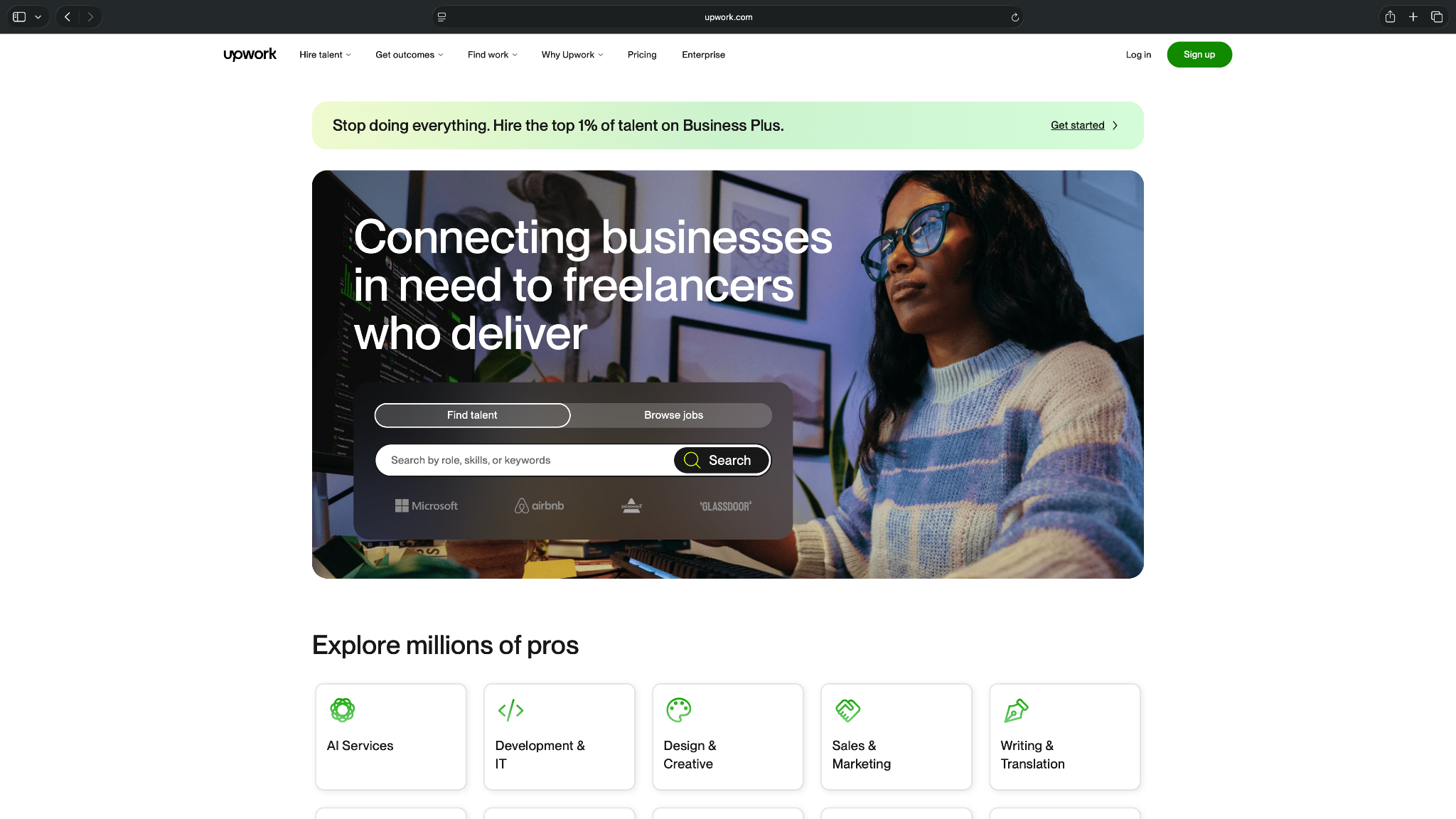
What it does: Upwork is a freelance marketplace where you can hire virtual assistants, executive assistants, admin specialists, project coordinators, and other remote freelancers.
Who it’s for: Best for teams that want flexible hiring and don’t mind screening, testing, and managing assistants themselves.
Upwork is the most flexible Athena executive assistant alternative on this list. You can post a job, review applicants, compare hourly rates, check reviews, interview candidates, and hire someone for a short project or ongoing support.
That flexibility comes with a trade-off. Upwork gives you access to talent, but it doesn’t manage the assistant relationship for you.
Why it beats Athena
- More hiring flexibility: Athena gives you a managed EA service. Upwork lets you hire part-time, full-time, hourly, project-based, or trial assistants.
- Wider talent pool: You can find assistants across many countries, skill levels, industries, and price ranges.
- Better for short-term work: Upwork fits one-off projects like inbox cleanup, CRM updates, research, data entry, travel planning, or document formatting.
- More control over selection: You choose who to interview, test, hire, and keep.
- Useful for testing before committing: You can start small with a trial task before moving into a longer assistant relationship.
Pros
- High flexibility: Upwork works for short-term tasks, part-time support, and ongoing freelance help.
- Large global talent pool: You can compare assistants by experience, hourly rate, reviews, location, and niche skills.
- Good for clear, project-based work: It works well when you know exactly what you need done.
Cons
- You handle vetting yourself: You need to write the job post, review applicants, interview candidates, and test their work.
- Quality varies: Upwork has strong talent, but it also has mismatched candidates. You need a solid screening process.
- Not a managed EA replacement: Upwork won’t give you Athena-style onboarding, delegation coaching, backup coverage, or account support.
Pricing
- Pricing varies by freelancer, role, experience, country, and project scope
- Cost depends on who you hire and how much support you need
Bottom line
Choose Upwork if you want maximum hiring flexibility and feel comfortable managing the process yourself. It beats Athena executive assistants for project-based work, short-term admin help, and testing assistants before a longer commitment.
If you want someone else to handle matching, support, and quality control, choose a managed service like Athena, Boldly, or Prialto.
Human executive assistant vs AI executive assistant: Which one should you hire
| Need | Human executive assistant | AI executive assistant |
|---|---|---|
| Managing sensitive relationships | Better fit | Needs oversight |
| Inbox sorting | Strong | Strong |
| Calendar coordination | Strong | Strong for clear rules |
| Meeting prep | Strong | Strong |
| Meeting notes and summaries | Good | Strong |
| Follow-up reminders | Good | Strong |
| CRM updates | Good | Strong |
| Personal judgment | Better fit | Limited |
| Travel planning | Strong | Good for research and coordination |
| 24/7 availability | Limited | Strong |
| Cost control | Monthly labor cost | Subscription or usage-based |
| Scaling repeat tasks | Limited by hours | Strong |
You should hire a human EA if your work needs judgment, trust, and relationship management. If most of your work follows a clear, repeatable pattern, get an AI assistant. Using a dedicated conversational ai assistant helps handle these predictable tasks through natural dialogue.
Let’s first compare them side-by-side to ease our decision-making:
Here’s my advice on which option to choose depending on your use case:
- Hire a human EA if you need someone to understand your relationships, manage delicate conversations, or make calls based on years of context
- Get an AI executive assistant if your work mostly includes inbox triage, scheduling, meeting notes, summaries, follow-ups, CRM updates, research, and finding information across tools
AI assistants work well in both scenarios. They can work as a standalone option, but they can also help a human executive assistant work more quickly and accurately. If you prefer hands-free interactions, reviewing the best ai voice assistants can help you find tools suited for verbal commands.
Which Athena executive assistant alternative should you choose?
You should pick the Athena executive assistant alternative based on the kind of support you need. Here are a few scenarios to help you choose:
Choose other Athena executive assistant alternatives:
- Boldly, if you want experienced U.S.-based fractional executive assistant support
- Prialto, if you want managed VA support with backup coverage and process documentation
- Time etc, if you need part-time assistant help for a few hours each week or month
- Viva, if you want a full-time LATAM-based executive assistant who works U.S. business hours
- LatHire, if you need remote LATAM talent across admin, operations, sales, support, marketing, finance, legal, or HR
- Upwork, if you want flexible freelance hiring and can manage vetting, onboarding, and quality control yourself
Stick with Athena:
- If you want a dedicated full-time human executive assistant
- If you value structured delegation coaching
- If you need someone to learn your work style, preferences, relationships, and personal operating rhythm over time
- If your workload includes sensitive communication, relationship management, travel, scheduling, and judgment-heavy executive support
- If budget matters less than having a managed, high-touch EA service
My final verdict
Athena still makes sense if you want a dedicated full-time executive assistant and value structured delegation support. It gives founders and executives a human assistant who can learn their calendar habits, communication style, priorities, and personal preferences over time.
But most teams searching for Athena executive assistant alternatives want more flexibility. They may seek part-time support, better time zone overlap, broader remote hiring, or reduced costs. Some teams may not want to hire another person at all.
If you want assistant-style help without the cost or ramp-up of a full-time EA, an AI assistant you can text is worth a look. You ask for what you need in plain English, and it helps with email, meetings, scheduling, CRM updates, follow-ups, research, and other daily tasks that usually eat into your day.
For human executive assistant support, Boldly and Viva make more sense. Boldly works better if you want U.S.-based fractional help. Viva works better if you want a full-time LATAM-based assistant who works U.S. business hours.
If you want managed VA support, Prialto is the stronger pick. It gives you more structure, backup coverage, and process support than a freelance marketplace.
If you want to hire beyond executive assistants, LatHire fits better. It helps with LATAM talent across admin, operations, sales, support, marketing, finance, legal, HR, and more.
And if you want maximum flexibility, Upwork gives you the widest hiring pool. You’ll need to handle vetting and management yourself, but it works well for project-based or trial assistant work.
Pick the alternative that removes the friction you’re tired of dealing with. If your main pain is repetitive admin work, an AI assistant can take a surprising amount of your day off your plate.
Frequently asked questions
What is the best Athena executive assistant alternative?
The best Athena executive assistant alternative depends on your needs. If you want an AI assistant you can text for everyday tasks, an AI executive assistant is the most flexible option. Boldly works well for U.S.-based fractional EA support. Viva fits teams that want full-time LATAM-based assistant support during U.S. business hours.
How much does Athena cost?
Athena costs $3,600/month, billed monthly, for one executive assistant. With yearly billing, that cost drops to $3,000/month.
Is Athena worth it?
Yes, Athena is worth it if you need a full-time human executive assistant and want structured delegation support. It may not be worth it if you only need part-time help, want lower costs, need time zone overlap, or prefer texting an AI assistant for repeatable daily tasks.
Are there cheaper alternatives to Athena?
Yes, Time etc, Upwork, and LatHire are cheaper than Athena, depending on the support you need. An AI assistant also starts at a cost much lower than human EA services because it replaces a full-time hire with software you can text.
Can AI replace an executive assistant?
No, AI cannot fully replace an executive assistant. It can only take over the repeatable tasks that the executive assistant does. An AI assistant can help with scheduling, inbox triage, follow-ups, meeting prep, CRM updates, and research. A human EA still works better for sensitive judgment, personal support, and relationship management.
What should I look for in an Athena alternative?
You should look for task coverage, pricing, onboarding speed, time zone fit, flexibility, and support quality. Also, decide whether you need a human assistant, a freelance hire, a remote staffing platform, or an AI assistant you can text.