


The Top 11 Salesgenie Alternatives & Competitors in 2026
Marvin reviewed the top Salesgenie alternatives, including ZoomInfo, Apollo, and Cognism, evaluating data accuracy, CRM integrations, and pricing for sales prospecting.


Salesgenie promises to help businesses find and connect with high-quality B2B leads through its massive contact database.
However, when you look closer at Salesgenie reviews, you’ll find growing concerns about outdated data, limited integrations, and clunky workflows. Read on for Salesgenie alternatives to explore options to help your sales team.
Why people look for Salesgenie alternatives
Salesgenie, which is part of Data Axle, was once a go-to tool for B2B sales prospecting. It promised an easier way for teams to focus on selling instead of admin work. But over time, cracks started to show, and users began looking elsewhere.
Here’s why more teams are switching:
Outdated or inaccurate data
One of the most common complaints about Salesgenie is inaccurate data.
Leads often have wrong phone numbers, invalid email addresses, or belong to companies that have already shut down. Instead of helping sales teams close deals faster, it wastes their time by chasing dead ends, which drags down ROI.
Instead, you can opt for platforms that offer live data enrichment and real-time verification.
Limited integrations
Salesgenie offers limited CRM integrations, but it’s basic at best. Sales tools need to talk to HubSpot, Salesforce, Outreach, Zapier, and more, smoothly and automatically.
Users are stuck with manual exports, CSV uploads, and repetitive workflows that kill efficiency. You can overcome the problem by using platforms that natively integrate with modern CRMs and allow workflow automation out of the box.
Interface and usability
Users often complain about a clunky, slow, and non-intuitive experience. Filtering, finding, and exporting leads can feel like pulling teeth. Find a platform with a modern UI, guided workflows, and a minimal learning curve.
Is Salesgenie the same as Data Axle Genie?
Yes and no. Salesgenie’s parent company, Infogroup, rebranded itself as Data Axle in 2020. However, Salesgenie is still one of their products, and they now call it Genie on their homepage. They use the same website and domain too.
Let’s now check out the top alternatives of Salesgenie.
Top 11 Salesgenie Alternatives in 2026
We’ve selected our top 5, followed by 6 special mentions.
Our top picks
- ZoomInfo: Best enterprise-grade B2B data platform
- Apollo.io: Best affordable sales intelligence + outreach tool
- UpLead: Best for real-time, verified B2B leads
- LeadIQ: Best for LinkedIn prospecting and CRM sync
- Cognism: Best for GDPR-compliant global B2B lead data
- RocketReach: Best for quick email and phone lookups
- Seamless.ai: Best budget-friendly B2B contact database
- Lusha: Best Chrome extension for fast prospecting
- Clearbit: Best for enriching inbound lead data
- Hunter.io: Best for finding and verifying email addresses
- Skrapp.io: Best lightweight tool for LinkedIn email finding
How We Chose the Best Salesgenie Alternatives
Picking the right Salesgenie alternative isn’t just about who has the biggest database. We focused on tools that help you overcome the drawbacks of Salesgenie.
Here’s what mattered most:
Data accuracy & freshness
If the phone number you dial isn’t correct or in service, it could waste ~120 seconds of your time. More than that, it frustrates your team who were so close to contacting the lead.
We prioritized tools that consistently enrich the leads, update their data, and verify the emails and phone numbers of the prospects, so you’re not chasing dead leads.
Apollo.io and UpLead deliver fresh, verified lead data from live sources.
CRM & tool integrations
Your lead gen tool should fit right into your sales stack. We looked for platforms with native integrations for Salesforce, HubSpot, Outreach, and Zapier, plus API access for custom workflows.
ZoomInfo and Apollo.io integrate natively with Salesforce, HubSpot, and Outreach.
Pricing transparency
No one likes surprise fees. We favored tools with clear, upfront pricing, listed on their websites, without hidden costs.
UpLead is transparent and modular.
Ease of use
You shouldn’t need a 3-hour training call just to run a lead search. We picked platforms with modern UIs, guided workflows, and a minimal learning curve, perfect for busy sales teams.
LeadIQ stands out for intuitive, quick-start experiences.
Other features we considered
Advanced workflow management tools allow teams to customize prospecting logic, automate lead handoffs, and optimize outbound campaigns without technical overhead.
We gave bonus points to platforms that go beyond basic lead lists:
- Advanced Audience Targeting: Apollo.io, ZoomInfo
- Real-Time Enrichment: UpLead, Cognism
- GDPR/CCPA Compliance: Cognism, ZoomInfo
- Free Plans or Trials: UpLead, LeadIQ, Apollo.io
The 5 Best Salesgenie Alternatives: Top Picks
When you spend hefty amounts of money on these tools, you must know them in detail. We broke them down for you.
1. ZoomInfo
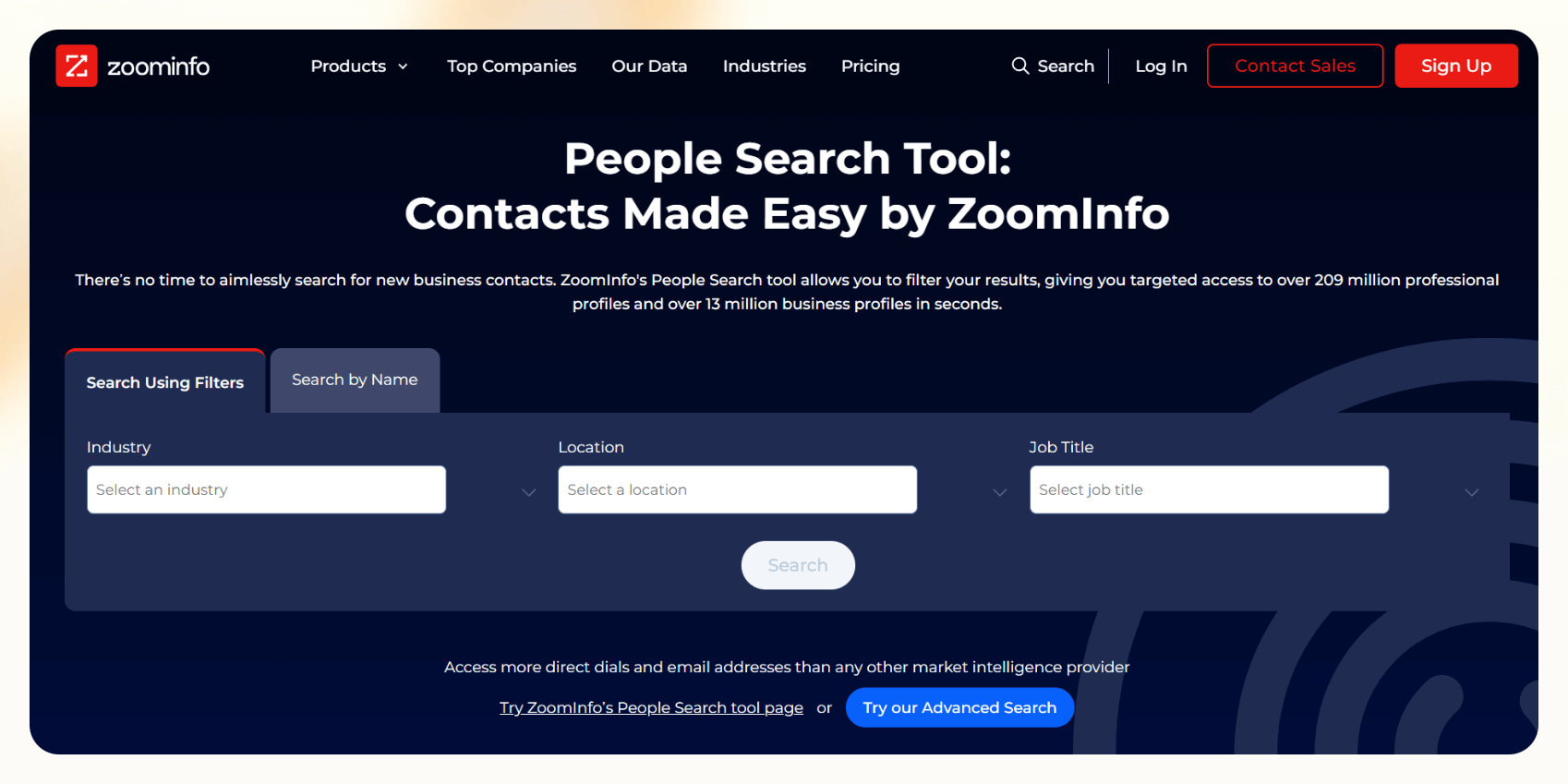
ZoomInfo is known for its extensive contact database, detailed company profiles, technographics, and intent data. Real-time buying signals and advanced segmentation options make it a capable and advanced tool.
It's best suited for enterprises that can afford its higher pricing tiers.
Advantages over Salesgenie
- Access to a massive, constantly updated B2B database
- Deep intent signals and buying behavior tracking
- Seamless CRM integrations with Salesforce, HubSpot, and Outreach
Best For
Enterprise sales teams that need deep market insights and robust data enrichment.
Pricing
ZoomInfo doesn’t publish its pricing. Plans are annual-only with a three-seat minimum, and the entry Professional tier typically starts around $15,000 per year, scaling into the tens of thousands based on your needs. A limited free tier (ZoomInfo Lite) exists, but you’ll need to contact sales for a real quote.
Final Verdict
ZoomInfo is the best choice for large teams that need exhaustive B2B data and are willing to invest heavily in top-tier market intelligence.
2. Apollo.io
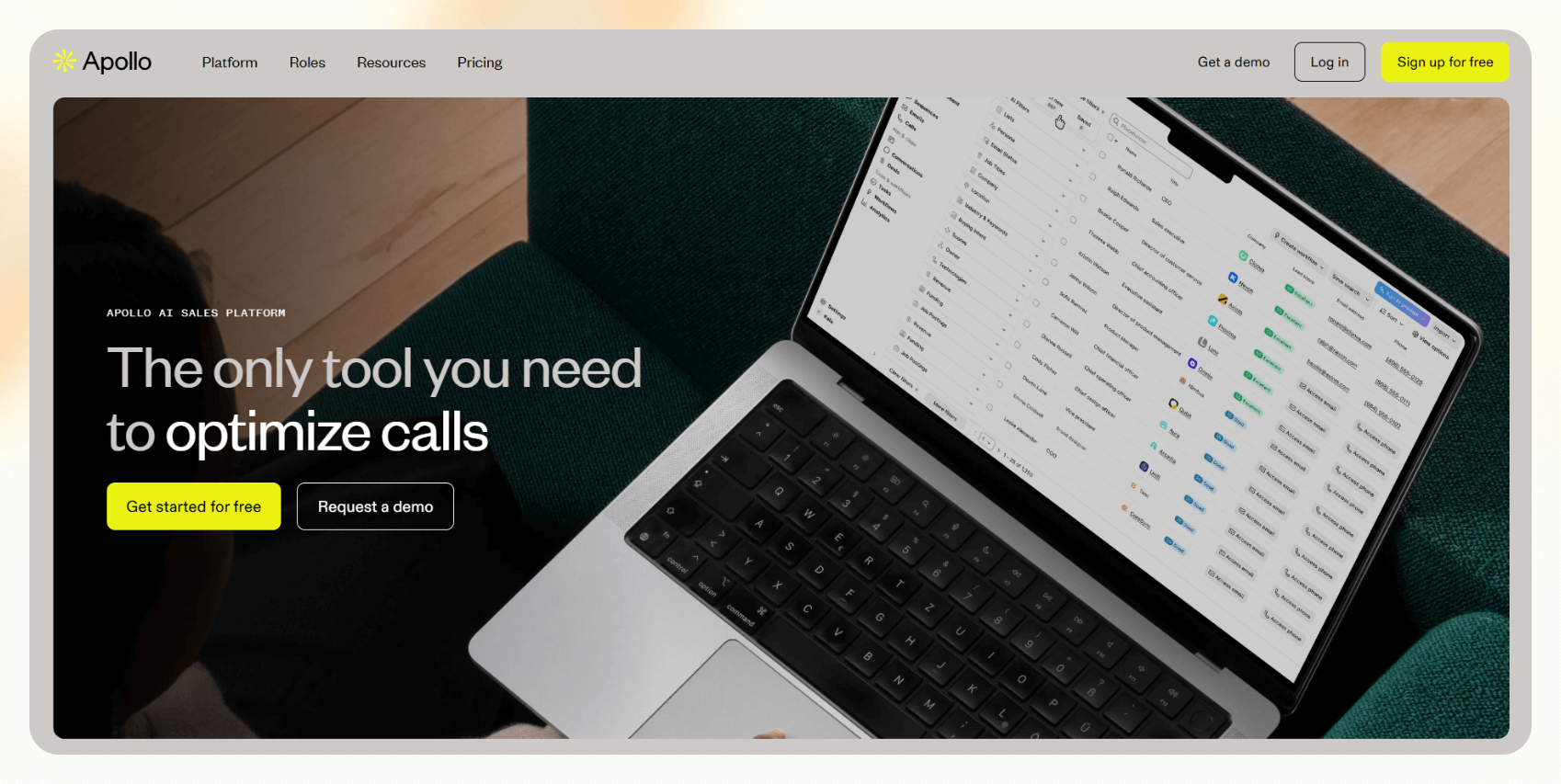
Apollo.io combines sales intelligence, engagement, and outreach tools into a single platform.
It offers advanced persona targeting, automated email sequencing, and affordable pricing tiers, making it a popular choice for smaller, agile sales teams.
Its free plan also makes it very accessible for startups testing outbound strategies.
Advantages Over Salesgenie
- Deep persona and company targeting filters
- Built-in email sequencing and cold outreach tools
- Generous free plan for prospecting and outreach
Best For
Startups and growth-stage companies that need both prospecting and engagement tools without breaking the bank.
Pricing
Free plan available; paid plans start at $49/user/month, billed annually.
Final Verdict
Apollo.io offers a powerful combination of lead intelligence and outreach automation at a price point that startups and scaling teams can afford.
3. UpLead
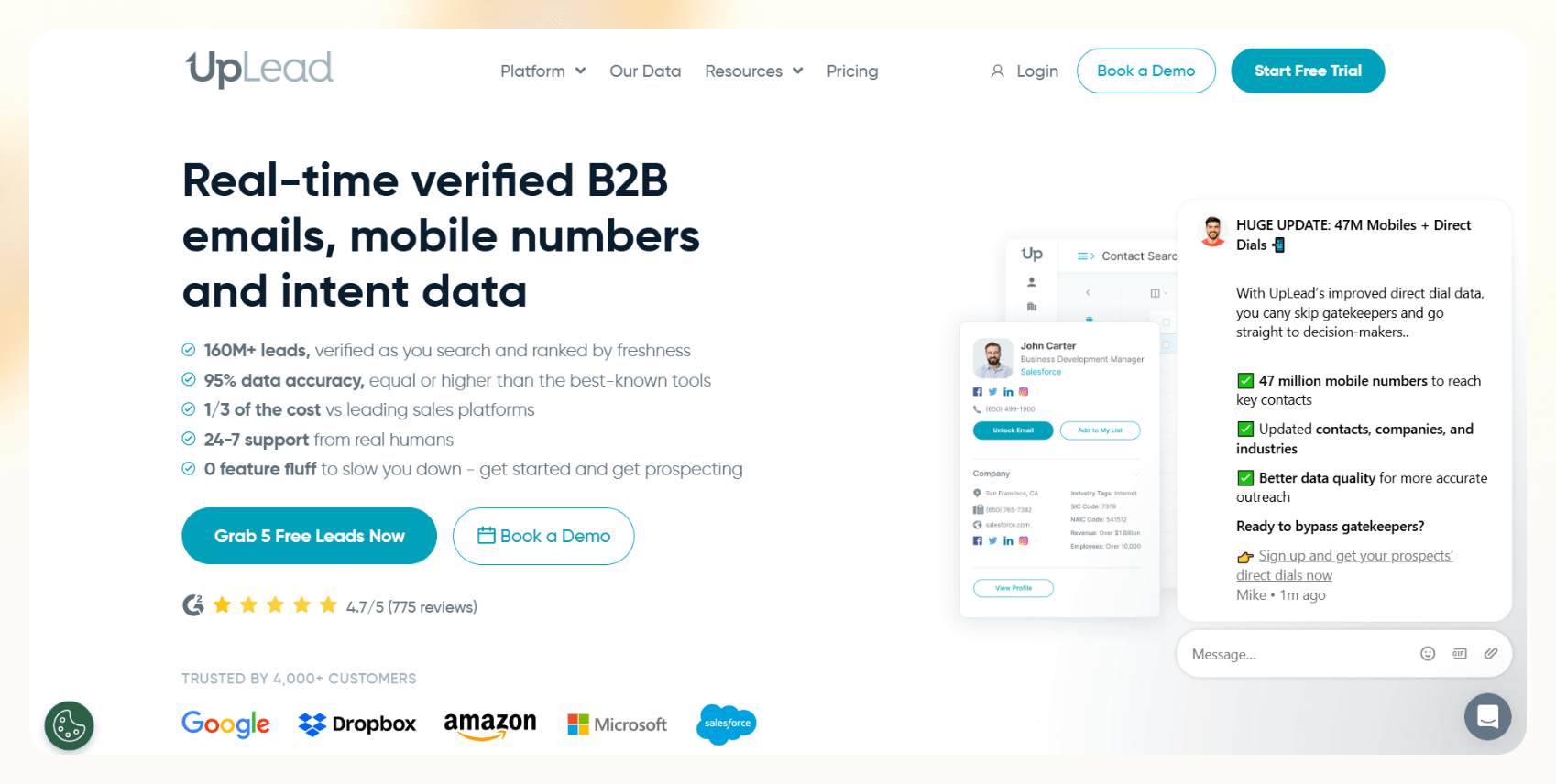
UpLead positions itself as a premium B2B contact database, emphasizing real-time email verification and data accuracy. It targets sales teams who are tired of outdated lists and want a guarantee that their emails won’t bounce.
Its simple interface and no-surprise pricing model also make it easy to adopt.
Advantages Over Salesgenie
- 95% data accuracy guarantee with real-time verification
- Easy-to-use lead search and export workflows
- No hidden fees or opaque contracts
Best For
SMBs and mid-market companies that prioritize high-quality, verified lead lists
Pricing
Offers a 7-day free trial; paid plans start at $99/month for 170 credits ($74/month billed annually).
Final Verdict
UpLead is a strong option for teams that value verified data and want straightforward pricing without any hidden surprises.
4. LeadIQ
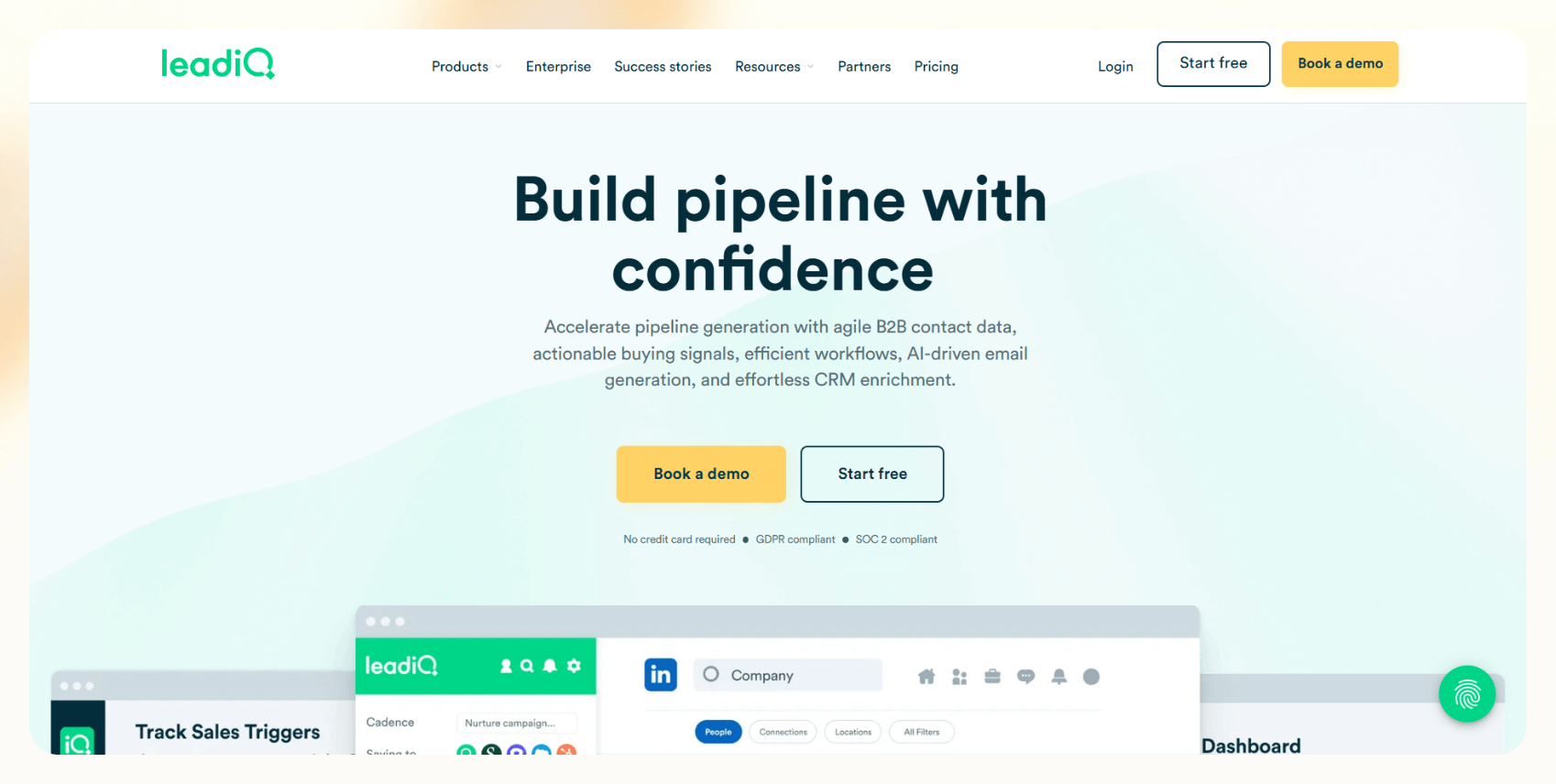
LeadIQ focuses on LinkedIn-based prospecting, letting SDRs and BDRs capture leads instantly from LinkedIn and sync them directly to CRMs. It simplifies the tedious process of building outreach lists and saves reps hours every week.
Its emphasis on ease of use and CRM integration makes it a favorite for outbound sales teams.
Advantages Over Salesgenie
- Instant LinkedIn lead capture with one click
- CRM syncing and enrichment for clean pipelines
- Smart workflows built specifically for prospecting teams
Best For
Outbound-focused SDR and BDR teams that rely heavily on LinkedIn for lead sourcing.
Pricing
A free plan; paid plans start at $45/month/user, billed monthly
Final Verdict
LeadIQ is an excellent choice for LinkedIn-driven prospecting teams that want a faster, smarter way to capture and sync leads directly into their sales tools.
5. Cognism
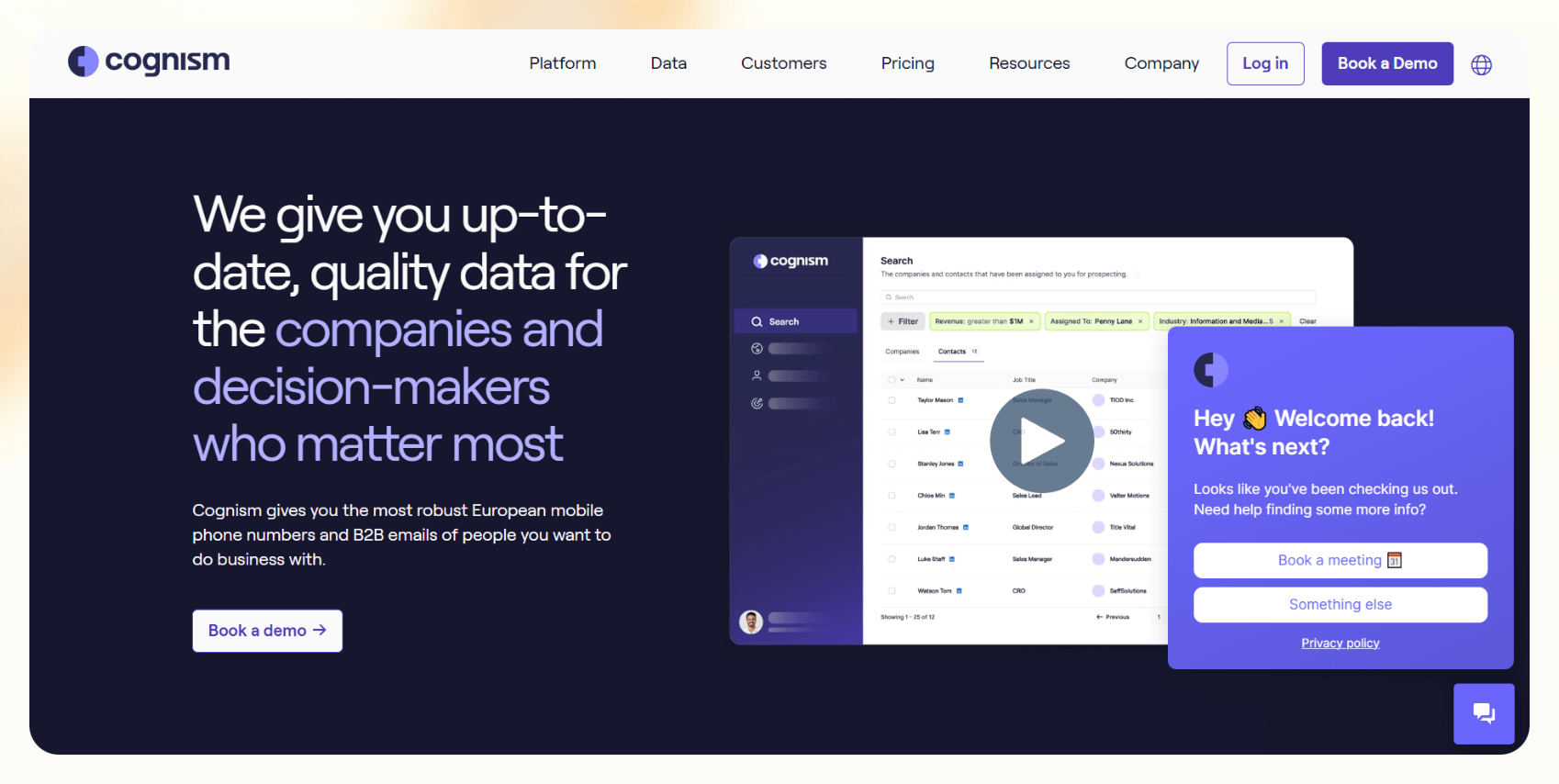
Cognism is known for its focus on compliant B2B lead data, supporting multiple regulations including GDPR and CCPA. That makes it ideal for companies prospecting internationally. It provides intent data, verified mobile numbers, and strong coverage across the US, UK, and EMEA regions.
Its compliance-first approach is a major advantage for teams that prioritize complying with the privacy and data norms.
Advantages Over Salesgenie
- GDPR-compliant, real-time verified lead lists
- Intent data to identify active buyers faster
- Strong EMEA data coverage for global outreach
Best For
Sales teams that need high-quality, compliant lead data across multiple countries.
Pricing
Custom pricing based on usage, seats, and database needs
Final Verdict
Cognism is ideal for global sales teams that want verified data, rich intent insights, and full GDPR/CCPA compliance to avoid legal risks.
How to choose your Salesgenie alternative
The best Salesgenie alternative depends on your priorities.
ZoomInfo suits enterprises that need the deepest B2B database and can invest accordingly, while Apollo.io is the value pick for startups that want prospecting and outreach in one place.
UpLead is strongest when verified, accurate data matters most, LeadIQ fits LinkedIn-driven SDR teams, and Cognism is built for compliant, global prospecting.
Match the tool to your data needs, budget, and workflow, then take advantage of the free plans and trials before you commit.
Frequently Asked Questions
What is the cheapest Salesgenie alternative?
Apollo.io and LeadIQ offer highly affordable entry-level plans, including free options.
Which alternative has the best B2B data accuracy?
UpLead (95% accuracy guarantee) and Cognism (real-time enrichment) top this list.
What’s better for LinkedIn prospecting: LeadIQ or Lusha?
LeadIQ is better if you need tight CRM integration and LinkedIn scraping.
Which tool works best for cold email outreach?
Apollo.io works best for cold outreach at volume, thanks to built-in email sequencing.
Can these tools replace a manual sales researcher?
To a degree. AI-powered lead tools can build customized workflows that act as an automated research engine for your team, looping in human reps whenever necessary.
Apollo.io, with its automated lead finding, has similar capabilities to replace a manual sales researcher.











Blog
Related Articles

.png)

%20(1).png)

%20(1).png)
%20(1).png)
.png)

The AI assistant that runs your work life
Lindy saves you two hours a day by proactively managing your inbox, meetings, and calendar, so you can focus on what actually matters.
