


5 Best AI Tools for Affiliate Marketing + How to Use Them
Lindy broke down five AI affiliate marketing tools including Jasper, Surfer SEO, and Manychat, comparing content creation, SEO research, and outreach automation.
.avif)

I spent weeks testing popular AI tools for affiliate marketing across tasks like content creation, SEO analysis, outreach, and reporting to see which ones help you improve your campaigns. Here are the five tools worth trying in 2026.
Top 5 AI tools for affiliate marketing: TL;DR
| Tool | Where it fits | Starter pricing (billed monthly) | Free plan | Why it’s useful |
|---|---|---|---|---|
| Jasper | Content creation with brand voice | $69/seat/month | ❌ | Consistent tone for blogs, ads, and emails |
| Surfer SEO | Research, clustering, on-page optimization | $49/month (billed yearly) | ❌ | Structured briefs and optimization for SEO pages |
| Copy.ai | Automated research-to-draft workflows | $29/month | ❌ | Repeatable workflows with integrations to Docs and storage |
| ManyChat | Instagram/WhatsApp/Messenger flows | $17/month | ✅ Up to 1000 contacts | Lead capture and nurture in social DMs |
| Systeme.io | Funnels, email, affiliate program hosting | $17/month | ✅ Up to 2000 contacts | Simple way to launch funnels and manage offers |
Some tools handle research and optimization, while others focus on automation or communication. Here’s a side-by-side comparison of the top 6 AI tools:
1. Jasper: Best for brand-consistent content creation
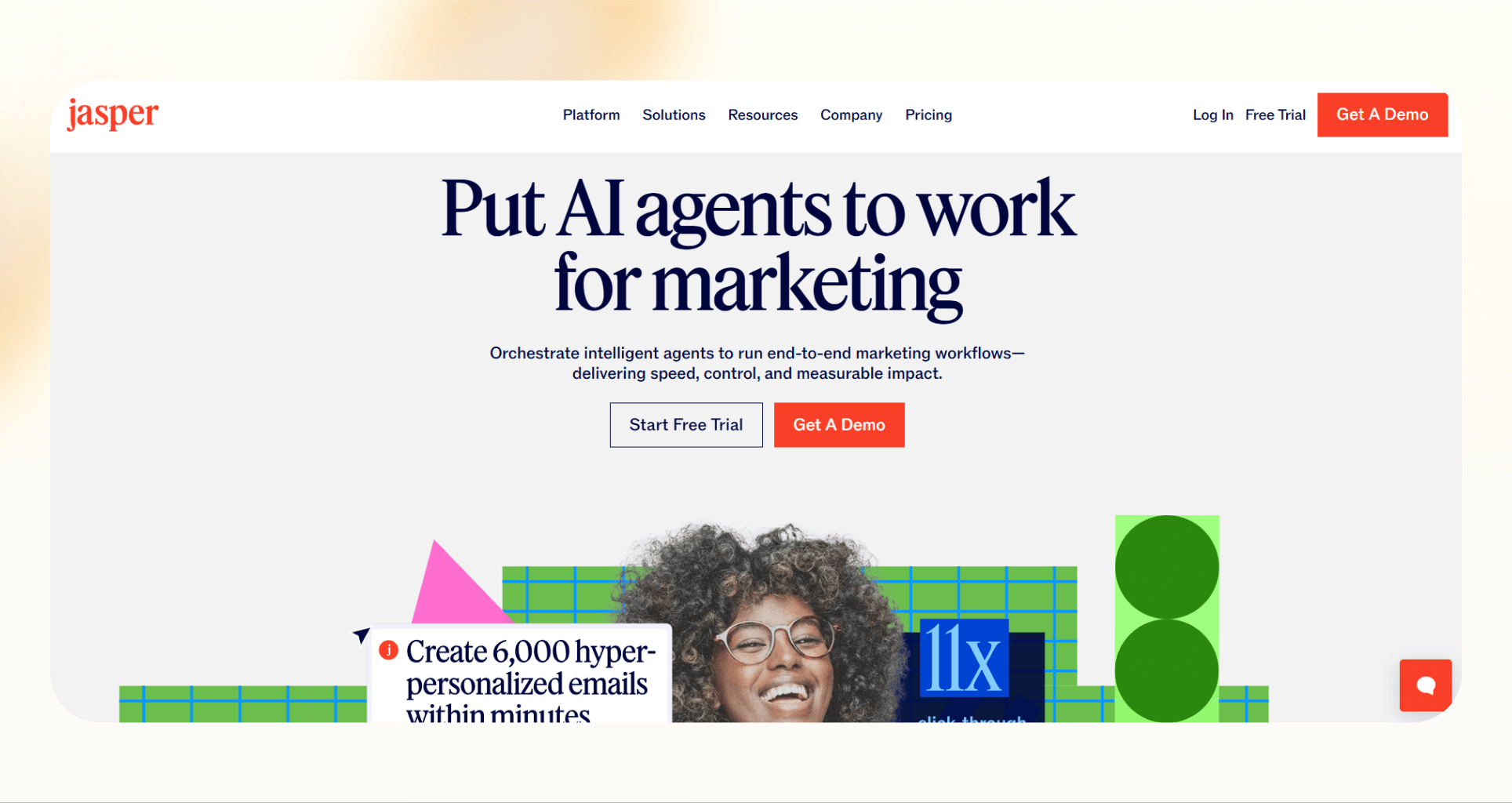
What it does: Jasper creates written and visual content that follows your brand voice across blogs, emails, ads, and social campaigns.
Who it’s for: Branding and content marketers who publish high volumes of content and want a tool that keeps tone and messaging consistent across channels.
I tested Jasper by drafting affiliate product reviews, email promos, and landing page copy for the same offer. It captured my brand voice best when I provided examples and structure, and it was especially useful for repurposing long-form content into shorter formats.
The content still needed editing for accuracy and specificity, and it struggled with highly opinionated sections or vague prompts. The art generator and campaign builder produced workable assets, but they worked better as starting points than final outputs.
Key features
- Brand Voice engine that trains on sample documents and applies tone across all content
- Campaign builder for coordinated blogs, emails, ads, and social posts
- SEO mode that suggests structure, target phrases, and entities
- Memory features that store product details and writing preferences
- Collaboration workspace for teams that share templates and drafts
Pros
- Strong brand voice consistency for multi-channel campaigns
- Useful for affiliates testing multiple offers
- Reliable tools for outlines and long-form content
Cons
- Works well only with strong brand voice inputs
- Pricing increases when you need multiple seats
Pricing
- No free plan
- Paid plans from $69/seat/month, billed monthly
Bottom line
Jasper fits teams that rely on consistent, high-volume content for affiliate programs. It helps maintain tone while speeding up writing and campaign creation.
2. Surfer SEO: Best for SEO research and content optimization
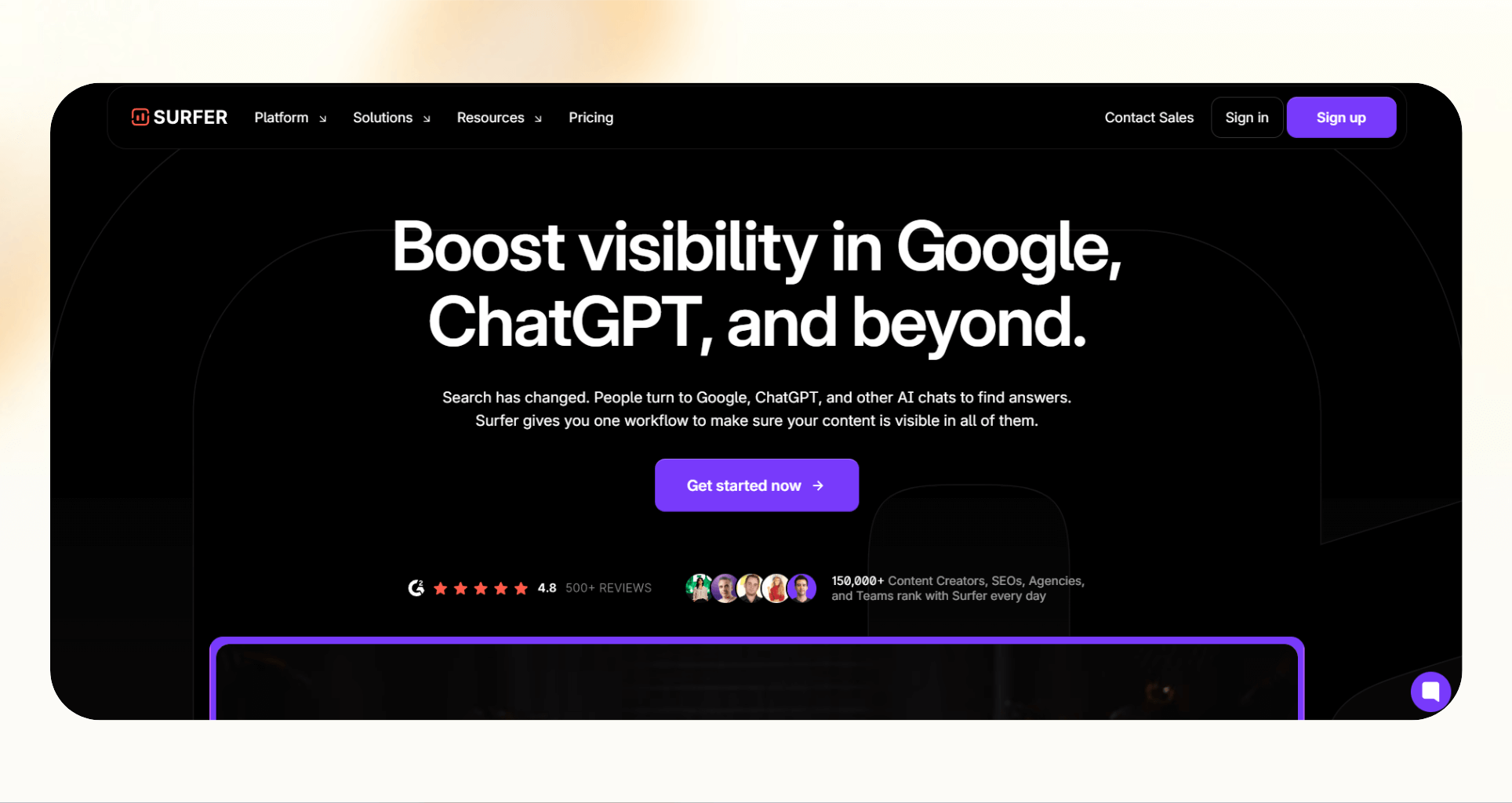
What it does: Surfer SEO analyzes SERPs, clusters keywords, and guides writers on how to structure content for search.
Who it’s for: Content teams who want stronger topical maps, cleaner briefs, and data-backed on-page optimization for ranking product reviews and comparison posts.
I tested Surfer SEO by building briefs for competitive affiliate keywords and editing drafts inside its Content Editor. It was most useful for structuring content, like clustering related terms, suggesting section outlines, and highlighting entities common across top-ranking pages.
The optimization guidance wasn’t perfect. Some recommendations pushed for more keywords or length than felt necessary, so I treated the score as a reference rather than a goal. Audits on older posts helped identify thin sections and internal linking gaps, but they still needed human editing to keep content readable.
Key features
- Keyword clustering for grouping topics by search intent
- Content Editor with real-time scoring and entity recommendations
- SERP Analyzer for comparing structure, headings, and ranking factors
- Outline Builder for suggested H2s and talking points based on top pages
- Grow Flow tasks that send weekly optimization recommendations
- An AI assistant for generating paragraphs inside the editor
Pros
- Clear guidance for ranking affiliate content
- Strong keyword clustering for topical depth
- Helpful audits for refreshing older posts
Cons
- Works best when paired with human editing
- Subscription cost increases when you need multiple tools
Pricing
- No free plan
- Paid plans from $49/month, billed yearly
Bottom line
Surfer SEO helps affiliate marketers build structured, rankable content by pairing keyword data with clear optimization guidance.
3. Copy.ai: Best for automated research-to-draft workflows
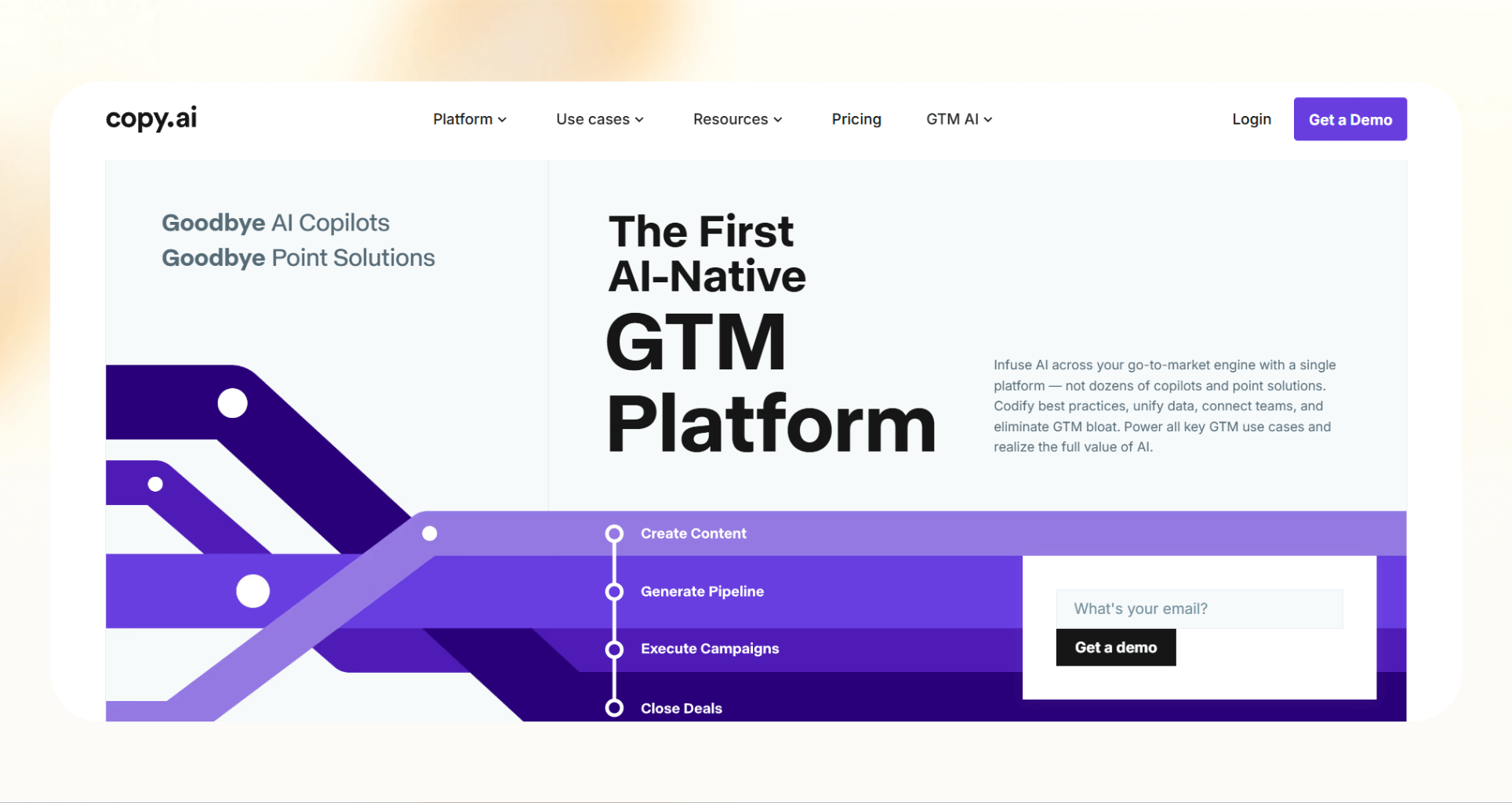
What it does: Copy.ai builds automated workflows that handle research, drafting, and data extraction for affiliate content.
Who it’s for: Marketing teams who want repeatable workflows for briefs, outlines, SERP scans, and bulk content production.
I tested Copy.ai by running workflows that pulled competitor insights, extracted SERP data, and generated outlines for affiliate articles.
The workflow builder helped automate steps that normally take hours. I also tested its chat interface for quick rewrites, structured briefs, and metadata suggestions. It worked best when I provided examples and constraints. When prompts were vague or the topic required nuanced judgment, the drafts felt generic and still needed manual refinement.
It reduced manual research and kept the content quality consistent across multiple drafts.
Key features
- SERP extraction for keywords, competitors, and ranking patterns
- Brief generator for outlines, talking points, and entity lists
- Data extraction from URLs and documents for faster research
- Brand library for voice rules, product info, and style preferences
- Integrations with Google Docs, Sheets, and common storage tools
Pros
- Strong workflow automation for research and drafting
- Helpful SERP extraction for competitive niches
- Consistent tone with brand rules
Cons
- Requires clear prompts for high-quality output
- Workflows take time to fine-tune
Pricing
- No free plan
- Paid plans from $29/month, billed monthly
Bottom line
Copy.ai fits teams that rely on automated research and consistent first drafts for affiliate campaigns.
4. Manychat: Best for Instagram and WhatsApp lead capture
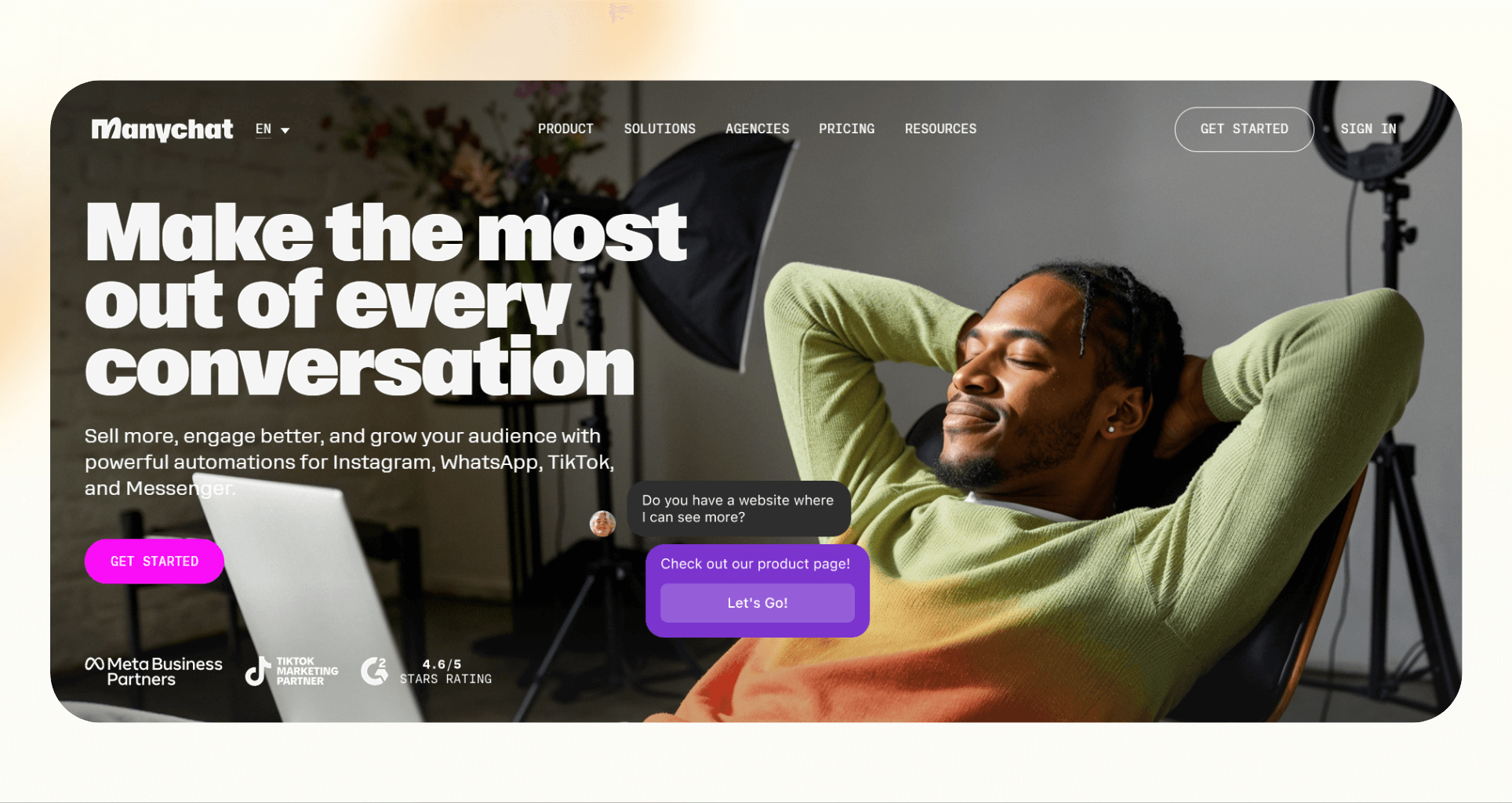
What it does: Manychat automates conversations across Instagram, WhatsApp, and Messenger to capture leads and route users into affiliate offers.
Who it’s for: Social media marketing teams who rely on social traffic and want automated DMs, replies, and follow-ups that turn engagement into conversions.
I tested Manychat by sending Instagram users into DM flows with affiliate links and basic qualifiers by interacting with their comments and stories. It was effective during high-engagement posts and saved time by automating replies that would otherwise be manual.
The AI replies handled simple questions and link routing well, but the tool worked best for short, structured flows. As sequences grew more complex or message volume increased on WhatsApp, the setup became harder to manage and costs rose quickly.
Key features
- Connects natively with Instagram, WhatsApp, and Messenger
- AI chatbot responses powered by integrated ChatGPT models
- Audience segmentation based on behavior and entry points
- Link routing and affiliate offer delivery inside chat flows
- Integrations with Shopify, HubSpot, Google Sheets, and Zapier
- Contact profiles with tags, activity logs, and conversation history
Pros
- Strong engagement tools for Instagram and WhatsApp
- Fast lead capture during active campaigns
- Flexible flows for routing users to targeted offers
Cons
- WhatsApp costs increase as message volume grows
- Limited customization for complex chatbot tasks
Pricing
- Free plan with up to 25 active contacts per month
- Paid plans from $17/month, billed monthly
Bottom line
Manychat fits creators and affiliate marketers who rely on social channels and need consistent, automated DM engagement.
5. Systeme.io: Best for building funnels and managing affiliate programs
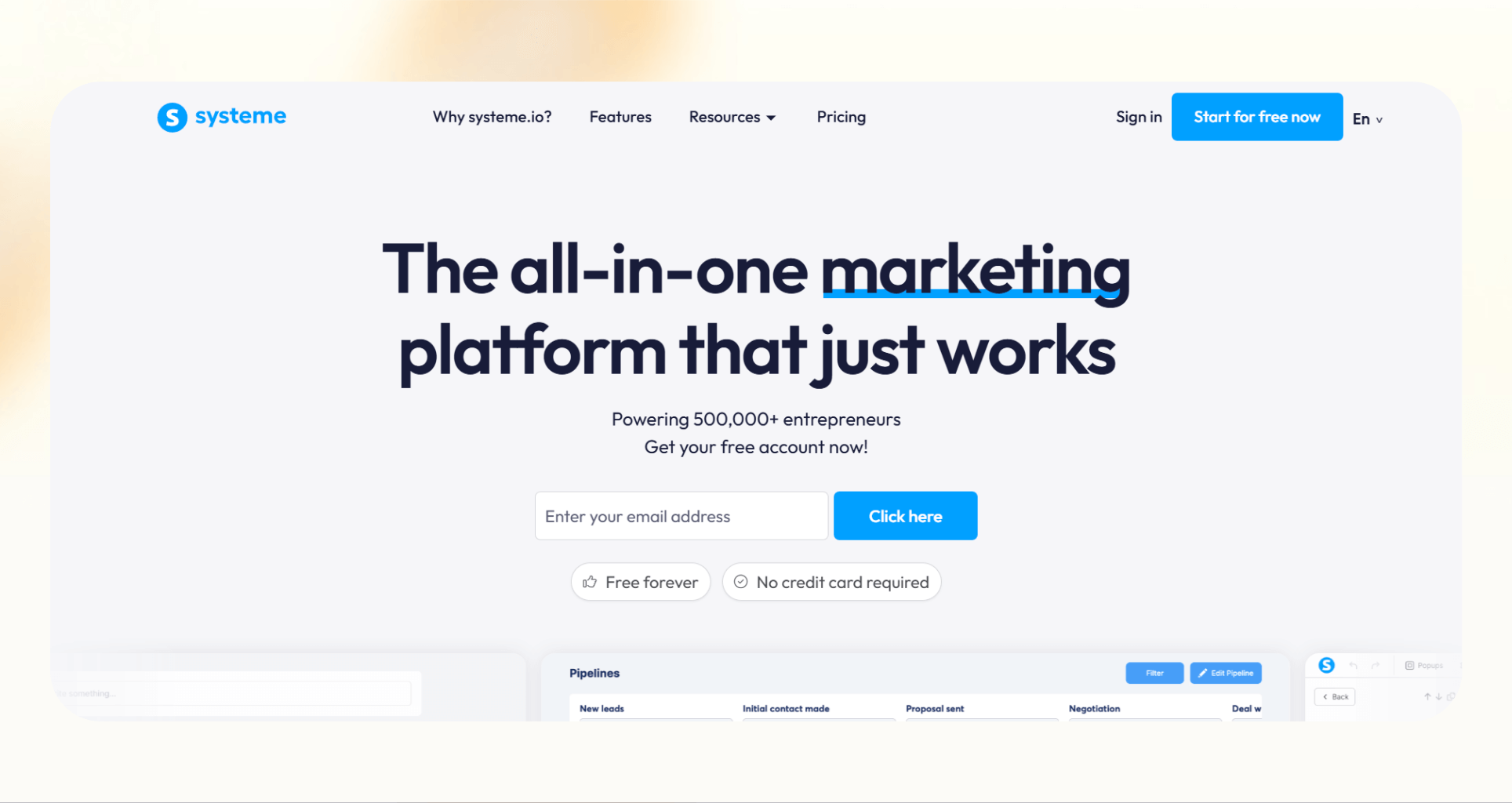
What it does: Systeme.io gives affiliate marketers an all-in-one platform for funnels, email campaigns, automations, and affiliate program management.
Who it’s for: Marketers who want a simple tool to build landing pages, send email sequences, and host their own affiliate programs without managing multiple apps.
I tested Systeme.io by building a simple affiliate funnel with an opt-in page, a thank-you page, and a short email follow-up sequence. The page builder was easy to use for basic layouts, and automations like tagging subscribers and triggering emails ran reliably once set up.
I also tested the built-in affiliate program features by generating tracking links and reviewing partner performance inside the dashboard. It handled link attribution and payouts cleanly, but reporting stayed superficial.
However, as funnels or email logic became more complex, the platform started to feel restrictive. Systeme.io worked best for straightforward funnels and small affiliate setups where speed and simplicity matter more than customization or advanced automation.
Key features
- Funnel builder for opt-in pages, sales pages, and checkout flows
- Email marketing with broadcasts, sequences, and segmentation
- Automation rules for tagging, routing, and campaign triggers
- Affiliate program hosting with links, payouts, and partner dashboards
- Supports Stripe and PayPal for payments
- A/B testing for landing pages and funnel steps
- Integrations with Zapier, Make, and common email providers
Pros
- Easy setup for funnels and email sequences
- Built-in affiliate program tools
- Affordable plans for new marketers
Cons
- Limited flexibility for advanced funnels
- Automation builder stays basic compared to larger platforms
Pricing
- Free plan with up to 2,000 contacts
- Paid plans from $17/month, billed monthly
Bottom line
Systeme.io fits affiliate marketers who want a simple, unified system for funnels, email, and partner management.
How I tested these tools
I tested each tool by running workflows like research, content creation, and email outreach. I created briefs, wrote product reviews, built Instagram flows, and performed a few other tasks to see how each platform performed.
Here’s what I looked for:
Workflow impact
I measured how much time each tool saved during research, writing, and distribution. I tested common tasks to see if the tool removed manual steps or added friction.
Output quality
I generated content, briefs, captions, and emails to check accuracy, clarity, and tone. I compared drafts from each tool to see which ones needed the least editing.
Ease of use
I built automations, created flows, and set up dashboards to understand how quickly a new user could get repeatable results.
Additional factors I considered
These factors weren’t the main focus for testing, but they matter to some teams. I also considered:
- Pricing clarity: I reviewed plan limits, task counts, and message fees to understand how costs scale with active campaigns.
- Integration depth: I checked whether each tool connected cleanly with CRMs, email platforms, social channels, and storage apps that affiliate teams rely on.
Which AI affiliate marketing tool should you choose?
The right tool depends on your workflow, content volume, and how complex your campaigns are. Each platform supports a different part of the affiliate process, so the best choice is the tool that handles your workflows with the least friction.
These scenarios and use cases may help you:
Choose these tools:
- Jasper, if you publish high volumes of content and need a strong brand voice across blogs, emails, and ads
- Surfer SEO, if you want structured keyword clusters, SERP analysis, and on-page guidance for ranking affiliate posts
- Copy.ai, if you need automated research workflows, SERP extraction, and fast drafting for briefs and outlines
- Manychat, if you rely on Instagram or WhatsApp for top-of-funnel traffic and want automated DMs and lead capture
- Systeme.io, if you want simple funnels, email sequences, and built-in affiliate program tools without juggling multiple apps
Avoid these tools:
- If you only need light editing or basic content support
- If you rely on manual outreach and do not want automation in your workflow
- If you run small campaigns that do not need analytics, reporting, or multi-channel systems
9 ways to use AI for affiliate marketing
You can use AI to create content, personalize messaging, and increase the impact of your affiliate marketing campaigns. Here are nine practical ways to do it:
1. Create affiliate content at scale
AI drafts blog posts, product reviews, and landing pages fast. You get more time to refine each piece and add your insights. This helps you keep up with Google’s helpful content standards and test new offers sooner.
Surfer SEO creates content briefs and keyword clusters for stronger topical targeting. Jasper helps you keep a consistent brand voice, and Copy.ai supports multi-step workflows that speed up research and drafting. AI lets you scale content without losing originality.
2. Improve SEO and keyword research with AI
AI speeds up keyword research by clustering related terms and mapping them to search intent. This reduces duplicate content and helps teams build stronger topical coverage. Surfer SEO and similar free tools can create keyword clusters and briefs in minutes.
AI also supports competitor analysis by spotting ranking patterns, common entities, and content gaps. Copy.ai workflows can run automated SERP scans and export results into draft briefs.
3. Personalize email and outreach campaigns
AI tools draft subject lines, test variations, and write follow-up sequences. This leads to more relevant partner pitches and better nurture flows.
Jasper creates content that aligns with your brand and clients using the guidelines you add. AI email assistants can also summarize threads, automate CRM updates, and schedule follow-ups. These tools help teams reach more partners while keeping communication personal.
4. Convert more visitors with AI chatbots
AI chatbots on landing pages or social channels answer questions, route users based on intent, and share affiliate links with clear disclosures.
Manychat supports Instagram and WhatsApp flows that trigger from comments or story replies. AI customer service platforms can also reduce response time and increase sales.
5. Track and optimize performance with AI analytics
AI analytics tools show clicks, conversions, and earnings in one place. They help you spot patterns you might miss, including sudden changes in traffic quality. These tools can pull data from several networks, which reduces manual reporting.
6. Scale social media and influencer campaigns
AI supports social media teams by generating captions, scheduling posts, and drafting short video scripts. This saves time and increases testing opportunities. AI can also score creators by audience fit, engagement, and niche alignment, helping you save time and effort.
Manychat can run Instagram and WhatsApp flows that capture leads from comments or story replies.
7. Find high-value affiliate programs with AI
AI can review affiliate program details such as earnings per click, cookie duration, and payout structure. It ranks programs based on your audience’s intent so you can focus on the strongest opportunities.
Tools like Lindy with a visual interface can track updates to each program and flag changes. This helps you build a mix of mainstream and niche offers that maximize revenue.
8. Boost conversions through AI-powered A/B testing
AI supports A/B testing by suggesting copy, layouts, and creative variations. It can analyze user behavior and point to friction points, then generate options to test. This speeds up the path from idea to insight.
You can upload AI-generated variants into platforms like Optimizely or VWO to optimize conversions. Keep hypotheses simple and verify results with human review. Faster testing leads to higher conversion rates and quicker validation of ideas.
9. Simplify reporting with AI dashboards
AI dashboards give you one view of clicks, conversions, and revenue across networks. They replace manual spreadsheets with automated summaries that show what works and what does not.
Some dashboards also check link health and alert you to expired or redirected URLs. Some can also generate weekly reports and surface your top and bottom performers for easier decisions.
Risks of AI in affiliate marketing
AI can help you bring speed, efficiency, and consistency across your marketing campaigns. But it also comes with risks that marketing teams must manage:
- Duplicate content: AI can produce similar pages that violate Google’s spam policies. Add unique insights, testing notes, and clear affiliate disclosures to avoid issues.
- Compliance gaps: The Federal Trade Commission requires clear affiliate disclosures near recommendations, including in emails or chatbots. Weak or missing disclosures increase risk.
- Accuracy issues: AI drafts can include outdated specs or unsupported claims. Human review keeps mistakes out of published content and emails.
- Data and privacy rules: Respect email opt-outs and follow each platform’s messaging policies. WhatsApp uses conversation-based pricing, so busy periods can increase cost.
- Stack complexity: Too many disconnected tools create brittle workflows. Use a smaller set of integrated tools and assign clear ownership to maintain them.
My final verdict
After testing each tool across affiliate workflows, I found that each tool does one or two things better than any other tool. They’ve picked a niche, and they’re good at it.
Based on my testing, Systeme.io stands out as the most complete pick for affiliate-first teams. It combines funnels, email, and affiliate program management in one place, so you can run a program without stitching together disconnected tools.
That doesn’t mean other tools are useless. When I needed strong brand-consistent content, Jasper and Surfer SEO performed well. For automated research and structured briefs, Copy.ai helped the most.
When I relied on social traffic, Manychat captured leads quickly. Systeme.io performed the best for a simple funnel and email setup.
The right tool depends on your marketing goals and workflows. For targeted tasks, each of the tools above fits a specific job without extra complexity.
Frequently asked questions
Where should I start using AI for affiliate marketing?
Start with tasks that take the most time. Most affiliates begin with content briefs or email follow-ups because these tasks produce immediate time savings and clear results.
Is AI-generated affiliate content safe for SEO?
Yes, AI-generated content is safe for SEO when it is helpful, original, and edited by humans. Add your insights and include clear affiliate disclosures near recommendations to stay compliant.
Can AI help me choose the best affiliate programs?
AI can help you choose the best affiliate programs by comparing EPC, cookie windows, and payout terms and ranking them for your niche. This helps you focus on the programs that offer the strongest earning potential.
Will AI improve my affiliate conversion rate?
Yes, AI can improve your conversion rate when you use it for testing and faster responses. Your results still depend on offer quality, traffic relevance, and user experience.
How do I disclose AI use and stay compliant?
You can disclose AI use and stay compliant by placing clear affiliate disclosures close to your recommendations. Repeat the disclosures in emails or chats where you share monetized links.
What metrics should I track with AI dashboards?
You should track clicks, conversion rate, EPC, average order value, refunds, and link health with AI dashboards. These metrics help you tune your campaigns.











Blog
Related Articles


.avif)

.avif)

.avif)
.avif)
.avif)
The AI assistant that runs your work life
Lindy saves you two hours a day by proactively managing your inbox, meetings, and calendar, so you can focus on what actually matters.
